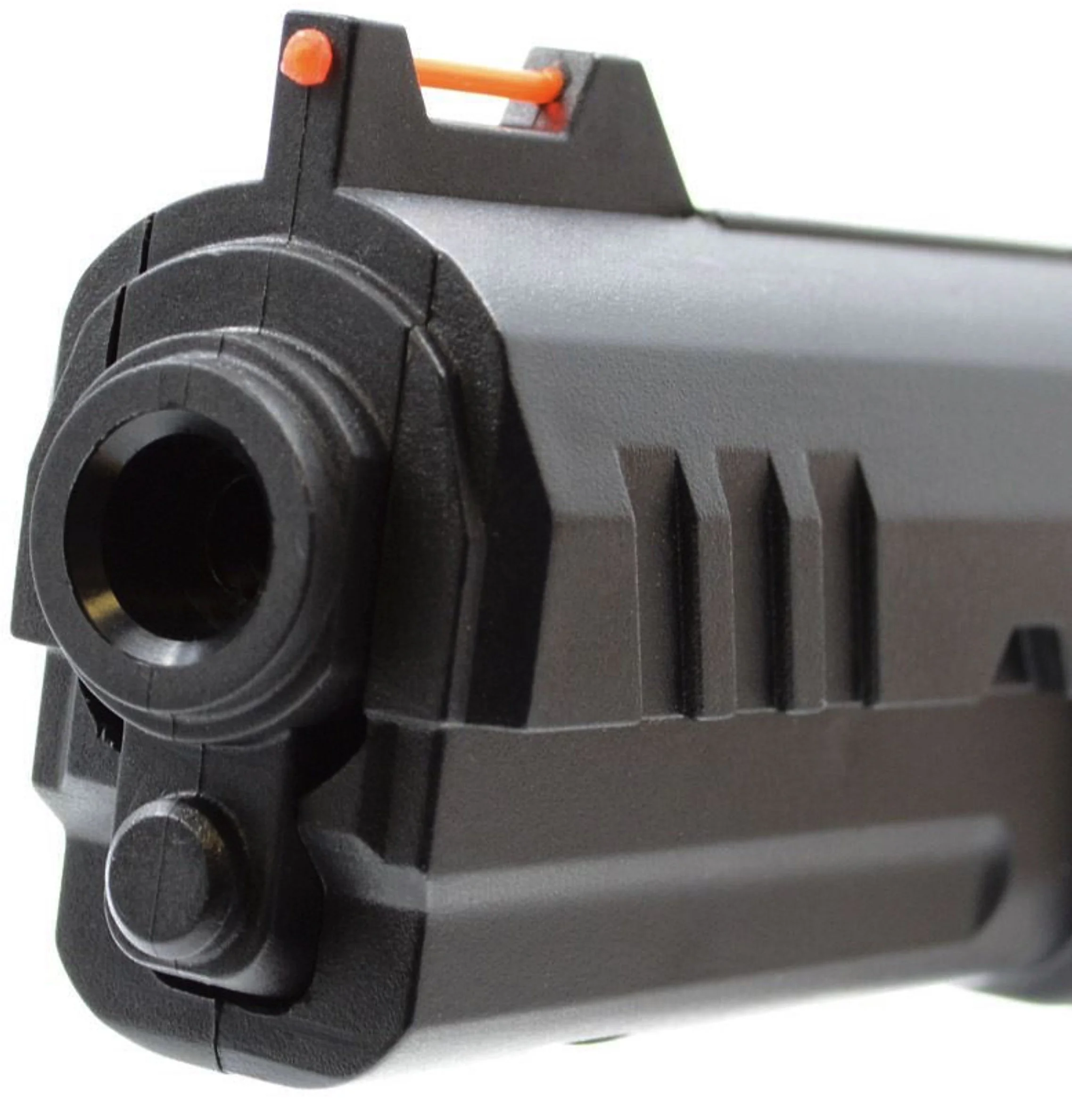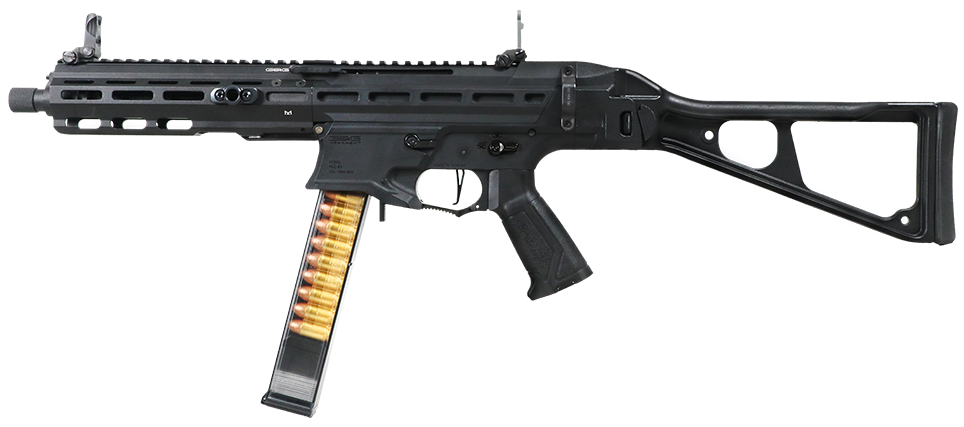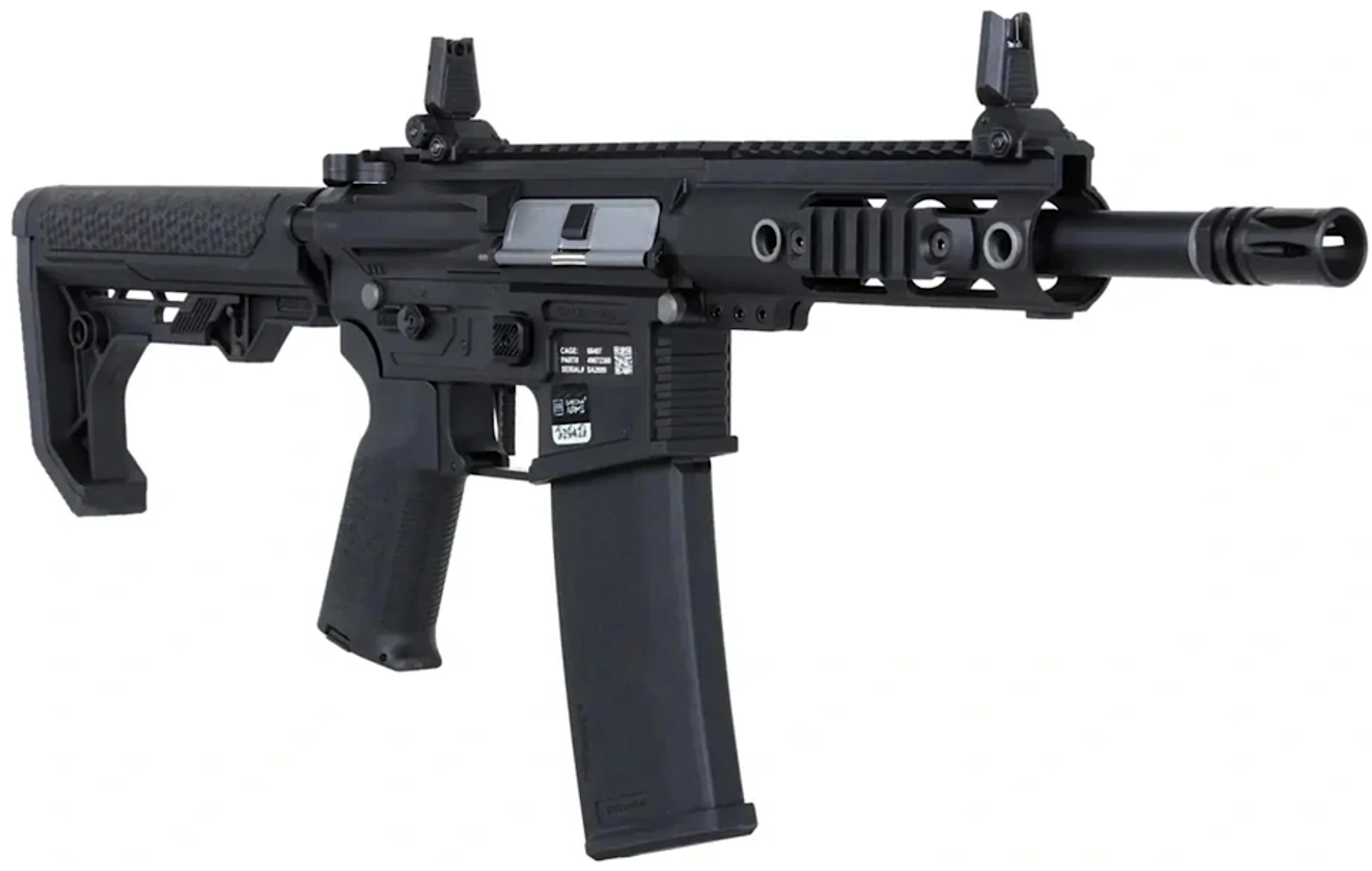

The Sig Sauer P320 Spectre Comp CO2 Blowback Pellet Pistol takes the already popular P320 platform and adds a more tactical, competition-inspired look with the Spectre Comp styling. In this Field Test Review, I focused mainly on real-world shooting performance including velocity, accuracy, trigger feel, blowback action, and overall handling. If you want all the detailed specifications and close-up overview footage, make sure to also check out my Table Top Review video for this model.
For this test I used standard Sig Sauer lead pellets, estimated around 7–8 grains rather than lightweight alloy pellets, giving a more realistic idea of what shooters can expect during normal use. Despite some chronograph frustrations during testing, the pistol delivered fairly consistent velocities once everything settled down. Average readings for my five shots through the Chronograph came in at 270 FPS, with highs reaching about 286 FPS during the initial shots and my slowest shot was 260 FPS. Considering the cooling effect common with CO2-powered airguns, the consistency was actually quite respectable for a blowback pellet pistol.
Accuracy testing was performed at 30 feet using a standard paper target. I fired a full 10-shot group and overall results were solid for a blowback pellet pistol with a higher-capacity belt-fed magazine system. Most shots grouped within roughly 2 inches, although the full spread opened up closer to 2.5–3 inches when including a couple lower shots likely caused by slight velocity variation from CO2 cooldown. Horizontal consistency was very good, with only a slight tendency to drift left. For a rapid-fire capable CO2 pistol with blowback, the accuracy was more than acceptable.
One thing worth mentioning is the trigger feelof the Sig Sauer Spectre Comp. Since the trigger system also advances the pellet belt during firing, there is naturally a bit more friction and a slightly longer pull compared to some rotary magazine designs. Even so, the trigger never felt excessively heavy or unpleasant. Rapid follow-up shots were still easy to manage, and the realistic blowback action adds a lot to the shooting experience.
The 20-round belt-fed magazine system is one of the biggest advantages of the Spectre Comp over many traditional rotary magazine pellet pistols. Instead of dealing with smaller 8-shot or flip-around style magazines, you get a much more enjoyable shooting session with fewer reload interruptions. Combined with the realistic weight, solid balance, and satisfying blowback recoil impulse, this pistol ends up being a very fun and practical option for target shooting and action-style plinking.
If you are looking for a realistic training-style pellet pistol that combines blowback action, higher magazine capacity, and solid handling characteristics, the Sig Sauer P320 Spectre Comp CO2 Blowback Pellet Pistol is definitely worth checking out. It offers a nice balance between realism and shooting fun while still delivering respectable accuracy and consistency for casual target shooting.
You can find more information about Airguns, BB guns, Pellet guns, Airsoft guns, Blank guns, and accessories over at Replica Airguns Canada and Replica Airguns US.
Despite a rocky start, my test with the Specna Arms SA-F249 machine gun did yield some eventual results. Initially, I set up multiple cameras (Three Sony Cameras, Insta360 X4, DJI Neo 2, Looki L1, Meta Ray-ban Gen 2) and planned a full-auto session aiming to empty the 1500-round magazine on a boat load of water filled cans. Unfortunately, the magazine’s feed malfunctioned, preventing the gun from firing as intended. Even so, I pivoted, swapping in an AR-15 magazine and still managed to get some satisfying shots on target. at the end of the video
It’s all part of the process: sometimes you get a lemon, but that doesn’t mean the day is totally lost. We did confirm that the gun itself works very well, and I hope to be revisiting this test with a new 1500 round magazine to give it a proper go. For now, at least we got a bit of action on those water-filled cans. Stay tuned for a follow-up, because I’m determined to show this LMG at its full potential!
The support weapon role in airsoft has always had a certain appeal, and the Specna Arms SA-F249 definitely delivers that intimidating LMG presence right out of the box. This massive AEG support rifle is styled after the legendary FN M249 platform and brings together high-capacity firepower, aggressive looks, and surprisingly good value for players wanting something beyond the typical AR-style airsoft rifle.
At first glance, the SA-F249 looks huge, but despite its size, it’s actually lighter than expected thanks to its reinforced polymer construction. Even so, it still feels substantial in the hands and gives off that true support weapon vibe the moment you shoulder it.
The version reviewed here comes equipped with the GATE X-ASR MOSFET system, a 1500-round auto-feeding electric box magazine, quick spring change capability, adjustable stock, integrated bipod, and multiple Picatinny rail sections for optics and accessories.
One of the first things noticed during the review was how different some components appeared compared to other online reviews. Some reviewers mentioned metal rear stock components while others claimed certain barrel sections were plastic. On this specific version, the rear stock assembly was definitely polymer, while the outer barrel appeared to be metal.
This kind of variation is fairly common with airsoft manufacturers over time as revisions and production updates happen.
Even with the extensive use of polymer, the Specna Arms SA-F249 FN Machine Gun AEG Airsoft Rifle still looks impressive and feels well-balanced considering its overall size. The carry handle, outer barrel, and several internal components are metal, while much of the receiver, stock, and furniture use reinforced polymer to help reduce overall weight.
Electric Auto-Feeding Box Magazine
The standout feature on the SA-F249 is definitely the included 1500-round electric auto-feeding box magazine. This is what transforms the rifle into a true support platform capable of sustained suppressive fire during milsim games or outdoor skirmishes.
The magazine runs on AA batteries and includes three operating modes:
Off
Auto
Sound Control
The “Auto” mode activates the winding mechanism whenever the trigger is pulled, while the “Sound Control” mode intelligently detects pitch changes from the gearbox to determine when BBs stop feeding, automatically rewinding the internal spring system as needed. It’s actually a pretty clever setup and adds a lot to the realism and usability of the rifle.
Another nice touch is that the SA-F249 remains compatible with standard M4-style AEG magazines, allowing emergency reloads if needed.
Build Quality and Construction
The reinforced polymer construction helps keep the SA-F249 from becoming excessively heavy, especially for extended gameplay sessions. While some players may prefer more metal components for realism, there are advantages to quality polymer construction as well.
Polymer can sometimes absorb impacts better than brittle zinc alloy “pot metal” components commonly found in lower-end airsoft guns. The lighter weight may also reduce stress during accidental drops.
That said, there are still some concerns about long-term durability in specific areas, especially considering the rifle’s size and weight. I feel certain parts like the bipod and rear stock would have benefited from additional metal reinforcement.
Quick Spring Change System
The SA-F249 also includes a quick spring change system for easier FPS adjustments. Accessing the spring requires removing the rear stock assembly by pushing out the rear pins.
While the feature itself is excellent, the review sample had extremely tight rear pins that required minor drilling of the polymer mounting holes to improve fitment. Once removed, however, spring access was relatively straightforward.
Field Role and Gameplay Potential
The Specna Arms SA-F249 FN Machine Gun AEG Airsoft Rifle is clearly designed for players wanting to fill a support gunner role. The large magazine capacity, full-auto-only operation, integrated bipod, and intimidating LMG profile make it ideal for suppressive fire and milsim gameplay.
At roughly $400 Canadian, the SA-F249 also offers surprisingly solid value considering what’s included. Many mid-range AR-style AEGs can already approach the $200–$300 range, making the jump to a dedicated support weapon platform more reasonable than some players might expect.
Pros
Super cool!
High-capacity 1500 round auto feeding system.
GATE X-ASR™ MOSFET improves trigger response and protects electronics.
Quick spring change system allows for somewhat easy FPS tuning.
Durable reinforced polymer and metal construction.
Adjustable stock helps stability and comfort.
Multiple rail sections for optics and accessories.
LMG styling and handling make it ideal for support roles and milsim use.
Compatible with M4 style magazines.
Integrated bipod and carry handle add realism and functionality.
Strong overall value for a support weapon platform.
Cons
Large and heavy compared to standard AR style AEGs.
Box magazine can be bulky and somewhat noisy.
Battery and charger sold separately.
Lots of plastic, may experience durability issues.
Rear stock pin fit may require drilling out.
Final Thoughts
The Specna Arms SA-F249 Machine Gun AEG is a very cool support weapon platform that delivers a strong mix of realism, functionality, and affordability. It may not be perfect, and some players will likely wish for more metal construction, but overall it offers excellent value for anyone wanting to step into the LMG support role without spending a fortune.
The 1500-round auto-feeding system alone will make this thing a blast to use, and combined with the MOSFET, quick spring change system, adjustable stock, and M4 magazine compatibility, the SA-F249 brings a lot to the table for milsim and support gun enthusiasts alike.
A full field test shooting review should be especially interesting with this one.
In this table top review, taking a detailed look at the Sig Sauer P320 Spectre Comp CO2 Blowback Pellet Pistol, a modern, competition-style airgun replica that closely mirrors its real steel counterpart. This model stands out with its aggressive styling, compensated muzzle, and optics-ready slide, making it one of the more premium-looking pellet pistols currently available.
This is a pellet-only airgun with blowback action, designed more for realism and handling than raw velocity. If already familiar with the Sig Sauer M17 pellet pistol, this one shares a lot of mechanical similarities, including the magazine system.
Specifications
Caliber: .177 Pellet
Action: Semi-auto, blowback
Magazine: 20-round belt-fed rotary system
Power Source: 12g CO2 (tool-free cam lever system)
FPS: Claimed 340 FPS
Weight: ~2.3 lbs
Overall Length: 8.5 inches
Barrel Length: 4.6 inches (rifled)
Construction: Metal slide, polymer frame
Sights: Fixed white dot front and rear
Optics Ready: Yes (SIG Air RMR compatible)
Rail: Picatinny accessory rail
Safety: Ambidextrous manual safety
Build Quality & Design
The Sig Sauer P320 Spectre Comp CO2 Blowback Pellet Pistol delivers a solid mix of metal and polymer construction. The metal slide gives it realistic weight and feel, while the polymer frame helps keep things balanced. At around 2.3 pounds, it has a substantial presence in hand without feeling overly heavy.
The grip features enhanced texturing along with a flared magwell, adding to both aesthetics and usability. The slide includes light porting and is optics-ready, allowing for easy installation of a SIG Air RMR red dot.
One standout visual element is the compensated muzzle, which adds to the competition-style look. However, it also impacts field stripping, you’ll need to remove it to fully disassemble the slide.
Magazine & CO2 System
This pistol uses a 20-round belt-fed rotary magazine, which is housed within a drop-out mag body. Loading is straightforward:
Remove the rotary belt insert
Load pellets into each chamber
Reinsert into the mag
CO2 is loaded using a tool-free cam lever system, which is fast and convenient compared to traditional screw-in designs.
Important note: the magazine needs to be firmly seated. A light insertion may not lock it properly, and due to the weight, it could fall out if not fully engaged.
Also worth noting, while the outer mag housing has some polymer components, the internal structure is mostly metal. Still, avoid dropping it on hard surfaces.
Handling & Controls
Ambidextrous safety works from both sides, though visual indicators are only clearly marked on one side
Trigger feels closer to double-action due to the rotary magazine indexing
Slide cycles with blowback but does not lock back when empty
Takedown lever is present, but full disassembly is limited by the compensator
The trigger has a solid feel and requires deliberate pull due to the indexing mechanism. This is normal for belt-fed pellet systems.
Sights & Optics
The pistol comes with fixed white dot sights, which are effective for quick target acquisition. However, they are not adjustable.
For those wanting more precision, the pistol supports SIG Air RMR optics, replacing the rear sight with an included plate.
Performance Expectations
The claimed velocity is 340 FPS, which is typical for blowback pellet pistols. Expect slightly lower speeds with lead pellets (recommended) compared to alloy pellets.
Blowback operation will also consume more CO2 than non-blowback models, trading efficiency for realism.
If looking for a performance reference, similar results can be expected to the Sig Sauer M17 pellet pistol due to shared internals.
Pros
Excellent replica accuracy of the P320 Spectre Comp
Realistic blowback with metal slide
Good weight and balance (~2.3 lbs)
20-round high-capacity pellet magazine
Tool-free CO2 cam lever system
Rifled barrel optimized for pellet shooting
Optics-ready (SIG Air RMR compatible)
Flared magwell and enhanced grip texture
Picatinny rail for accessories
Magazine compatibility with M17
Cons
Lower FPS compared to non-blowback pellet pistols
Higher CO2 consumption due to blowback
Fixed (non-adjustable) sights
Pellet-only (no BB capability, though this protects rifling)
Slide does not lock back when empty
Field stripping requires compensator removal
Final Thoughts
The Sig Sauer P320 Spectre Comp pellet pistol is a strong option for anyone prioritizing realism, handling, and modern styling over raw power. It delivers a premium look with solid functionality, especially for training, backyard shooting, or collectors wanting a high-end replica.
While not the most powerful pellet pistol available, it excels in design, usability, and realism, especially if already a fan of the P320 platform.
For those in Canada, availability may already be live, with US availability likely to follow.
A surprise “tiny box” delivery turned out to be a solid addition to the lineup, the SIG Sauer P320 Spectre Comp Pellet Pistol. Despite the small packaging, this is a full-featured CO2-powered pellet pistol with a strong focus on realism and competition-style design.
Right out of the box, the Spectre Comp feels substantial, coming in at around 2.29 lbs with a metal slide and polymer frame. It features a semi-auto blowback action and uses a 20-round belt-style pellet magazine, typical of SIG’s higher-capacity pellet systems.
The pistol leans toward a competition-style setup, featuring a skeletonized trigger, ported slide, and a compensated front end for aesthetics. While the slide does not lock back (common for belt-fed pellet systems), the blowback adds to the overall shooting realism.
Loading is straightforward thanks to the tool-free CO2 system and two-piece magazine design. The trigger pull feels more like a double-action due to the belt cycling, which is typical for this platform.
Overall, the P320 Spectre Comp CO2 Blowback Pellet Pistol looks to be a well-built, feature-rich option for those wanting a realistic training pistol with added competition styling. A full tabletop review and field test shooting results will follow once it’s put through proper testing.
In this table top review, we’re taking a detailed look at the Specna Arms SA-F04 Flex AEG Airsoft Rifle. This is not a shooting test, field testing will come later, but this overview will cover specifications, build quality, features, and overall pros and cons so you can decide if it’s a good fit for your needs.
I can say that right out of the box, this rifle offers a strong balance between price, performance, and features, especially for players looking for a lightweight AR-style platform with modern internals.
Key Specifications
Manufacturer: Specna Arms
Model: SA-F04 Flex
Platform: AR / M4 Style
Caliber: 6mm Airsoft BB
Action: Semi / Full Auto
Magazine Capacity: ~380 rounds (high-cap, spring-fed with winder)
Velocity: ~380 FPS (M120 spring installed)
Weight: ~4.7 lbs (≈2.1 kg)
Length: ~27–30 inches (adjustable stock)
Inner Barrel: ~6.03mm tight bore
Outer Barrel Length: 9 inches
Threading: 14mm CCW
Gearbox: Version 2
Hop-Up: Rotary style (TDC Magnus)
MOSFET / ETU: Yes (HAL system)
Spring System: ESA Quick Change
Battery Recommendation: 11.1V LiPo
Construction: Reinforced Polymer receiver with metal components
Build Quality & Design
The SA-F04 Flex uses a reinforced polymer receiver for both upper and lower, keeping the weight down while still maintaining durability. Key stress components, such as the outer barrel, buffer tube, and controls—are metal where it matters most.
This approach results in a rifle that feels solid without being overly heavy. It’s a practical design choice, polymer absorbs impact better than cheaper pot metal, which can crack or chip under stress.
You also get:
Ambidextrous selector switch
Metal buffer tube
M-LOK handguard with Picatinny rail
Adjustable iron sights (windage & elevation)
Multiple sling mount points
Features Overview
ESA Quick Spring Change System
Allows you to swap springs without full disassembly, useful for adjusting FPS for indoor vs outdoor play.
HAL ETU / MOSFET System
Improves trigger response, protects electronics, and allows programmable trigger settings.
Rotary Hop-Up (TDC Magnus)
Provides consistent BB trajectory and improved accuracy.
Version 2 Gearbox
A widely used, reliable platform with good upgrade compatibility.
Included in the Box
SA-F04 Flex AEG Rifle
High-cap 380-round magazine
M90 spring (lower FPS option)
Orange plastic flash hider (installed but also comes with metal black flash hider)
If you skip this step, the rifle will just beep three times and not fire, making it seem defective.
Performance (Initial Impressions)
With an 11.1V LiPo battery, the rifle delivers:
Fast trigger response
High rate of fire
Smooth cycling
Lower voltage batteries will reduce rate of fire and responsiveness, which may be preferable for some players.
Pros
Excellent price-to-performance ratio
Lightweight but durable polymer build
ESA quick spring change system
MOSFET + programmable trigger (HAL ETU)
Good internal components (V2 gearbox)
High-cap magazine included (380 rounds)
Fully adjustable stock and sights
Strong customization options (AR platform compatibility)
Cons
Polymer receiver may feel less “premium” to some users
Battery space in buffer tube is limited (requires specific size battery)
Does not come with battery or charger at the lower price
Overall Impression
The Specna Arms SA-F04 Flex AEG Airsoft Rifle is a well-rounded entry-to-mid-level AEG that doesn’t cut corners where it matters. You get modern electronics, solid internals, and strong usability at a price point that’s hard to beat.
This is one of those rifles that hits a sweet spot between affordability, performance, and features. It may not have full-metal construction, but in real-world use, that’s not necessarily a downside, and in some cases, it’s actually an advantage.
Field testing will ultimately determine how it performs under real conditions, but based on this overview, it’s a solid option worth considering.
It’s that time again, another Mystery Box unboxing for the Replica Airguns channel. As usual, no idea what’s inside going in, but this one lines up right after SHOT Show season, which usually means some interesting gear starts showing up.
This isn’t a full review, just a first look at what came in. Detailed Table Top and Field Test videos will follow once everything gets properly looked at and tested.
What’s in the Box?
This month’s box included three very different airsoft products:
It also came with a barrel extension, but it arrived with damaged threads. Not a huge loss since those extensions tend to be fragile anyway and aren’t essential for most users.
Takeaway: If you're looking for a Glock-style platform without licensing restrictions, this fits the role well. Likely compatible with some Glock holsters depending on fit.
Battery-powered box magazine with hopper feed system
Integrated bipod and carry handle
Multiple Picatinny rails
Includes extra spring and accessories
The feeding system and internal layout aren’t immediately obvious, it’s one of those guns that clearly requires some setup and understanding before use.
Takeaway: This is not a casual backyard plinker. It’s a full-on support weapon platform, something you’d expect in a tactical or milsim environment.
A much more approachable and practical option compared to the F249.
First Impressions:
AR-style AEG platform
Mostly polymer construction with some metal components
Adjustable stock (buffer tube style)
Picatinny rails and M-LOK compatibility
Comes with both orange and black flash hiders
Includes extra spring (M90) for velocity tuning
Dean’s connector
Takeaway: This looks like an entry-level to mid-tier rifle, compact, lightweight, and ideal for someone getting into Airsoft or wanting a versatile CQB setup.
Overall Thoughts
This box had a good mix:
Pistol platform (KP-13) → familiar, practical
Entry-level rifle (SA-F04) → accessible and versatile
Heavy support weapon (SA-F249) → niche, but very cool
The F249 clearly stole the show just based on size and complexity, but the SA-F04 is probably the one most people would actually use regularly.
What’s Next?
As usual:
Tabletop reviews will come first (closer look, specs, handling)
Field test shooting videos are stacking up and coming next
Where to Find These
If you're in Canada, these should be available through:
Construction: Full Steel Receiver + Real Wood Furniture
Stock: Side Folding Metal Stock
Rail: AK Side Mount for Optics
Battery Compatibility: Deans (adapter included for Tamiya)
First Impressions
Today we are taking a look at the E&L AKS-74N, a full steel and real wood AEG airsoft rifle that leans heavily toward realism and collector appeal.
This is not your typical polymer field gun. Right away, the weight, materials, and finish give it a very authentic AK feel. It closely mimics the real steel AK platform, both visually and in handling.
There are two versions available:
Essential (2.0 version): Focused on reliability
Platinum version (reviewed): Upgraded MOSFET electronics and enhanced internals for better trigger response and durability
The Platinum version also comes with upgraded presentation-style packaging, making it feel more like a premium product out of the box.
In the Box
AKS-74N AEG Rifle
120-round Mid-Cap Magazine
Deans to Tamiya Adapter
Certificate (velocity & joules info)
Instruction Manual
Decorative metal medallion
Small utility bottle
Note: Battery and charger are NOT included.
Walkthrough & Features:
Build Quality
The E&L AKS-74N features a full stamped steel receiver paired with real wood furniture, giving it an extremely authentic look and feel.
No cheap pot metal here, this is solid, high-quality steel construction
Real wood furniture adds to the realism but requires more care
Weight and balance closely resemble a real AK platform
Stock & Handling
Side-folding steel stock
Folds down to under 30 inches for compact transport
Locks securely in both folded and extended positions
This makes it suitable for both transport and tighter CQB-style environments.
Controls & Operation
Selector switch: Safe / Full Auto / Semi Auto
Adjustable iron sights (elevation adjustable front & rear)
Standard AK-style magazine release
Side-mounted optics rail for AK-compatible scopes
Internal Setup
Version 3 full metal gearbox (proven and widely supported)
Adjustable hop-up (accessible via charging handle or dust cover)
Tight bore barrel (6.03mm) for improved consistency
The Platinum version includes a MOSFET, improving trigger response and electrical efficiency.
Battery Setup
Uses Deans connector (adapter included)
Requires stick-style battery to fit inside the receiver tube
Compatible with:
7.4V (2S) for moderate performance
11.1V (3S) for higher rate of fire
Testing showed a very high rate of fire with an 11.1V battery.
Performance Expectations (Pre-Test)
Since this is a tabletop review, performance testing will be covered in a future field test.
Expected performance:
350–400 FPS range (ideal for general field use)
High rate of fire, especially with 11.1V battery
Tight bore barrel and hop-up should provide consistent accuracy
Pros
Full steel construction (very realistic weight & feel)
Real wood furniture (authentic look)
Version 3 gearbox (reliable platform)
Semi & full-auto capability
Adjustable hop-up
Folding stock for compact transport
AK side rail for optics
Strong FPS range for field use
Deans connector with adapter included
Excellent balance of realism and usability
Cons
Heavier than polymer AEG rifles
Battery and charger not included
Real wood requires care (scratches, moisture)
Higher price point
Pricing (At Time of Recording)
Essential Version: ~$517 CAD
Platinum Version: ~$849 CAD
Final Thoughts
If your priority is realism, the E&L AKS-74N is one of the closest AEG representations of an AK platform you can get.
The combination of:
Full steel construction
Real wood furniture
Solid internal components
makes this rifle stand out from typical airsoft options.
While it comes at a premium price and requires separate battery/charger purchase, it delivers a high-end experience that collectors and serious players will appreciate.
For those looking for the most realistic AK-style AEG, this is a strong contender.
In this April 2026 unboxing, there’s a solid mix of power, realism, and variety straight out of the box. Even before opening it up, the size and weight of the package hinted that this wasn’t going to be a light or basic shipment. As usual, this is more of a first look and overview rather than a deep dive, with full tabletop and field test reviews coming later.
The first item out of the box is easily the most substantial: an AT400 compound crossbow kit. This is not one of the smaller, backyard-friendly crossbows—it’s a full-sized, high-powered unit designed for serious use.
Velocity: Rated around 400 feet per second
Energy: Approximately 142 ft-lbs
Features:
Detachable silent crank system for easier cocking
Picatinny rail for mounting optics or accessories
Full kit setup with multiple components included
This level of power puts it well into small-to-medium game hunting territory, making it more than just a recreational piece. Because of its size and power, testing it indoors isn’t really practical, so this one will likely get a detailed tabletop breakdown rather than a traditional shooting demo.
Next up is the Umarex T4E TP50 Gen 2, this time in the all-black tactical version rather than the more recognizable orange training model.
Caliber: .50 caliber
Velocity: Up to 465 FPS
Ammo: Rubber balls (included in the box)
System: CO2 powered with quick-pierce activation
This version stands out for a couple of reasons. First, the higher velocity suggests noticeably more energy compared to earlier or training-focused versions. Second, the all-black design gives it a much more realistic look, closer to a traditional firearm aesthetic.
Functionally, it uses a spring-fed internal magazine and a preloaded CO2 system, allowing you to keep it ready without gas leakage. When needed, a quick strike activates the CO2, making it immediately usable.
Based on typical .50 cal projectile weights and that velocity, this likely lands somewhere in the mid-to-high teens or possibly around 20 ft-lbs of energy, though exact numbers will be confirmed during testing.
The final item in the box is a standout for realism: the E&L AKS-74N AEG airsoft rifle, branded under the “Legends / Legendary Perfection” line.
This is clearly built to replicate the real AK platform as closely as possible.
Construction:
Real wood stock
Stamped steel receiver and metal components
Folding stock (magnetic lock)
Operation:
AEG (Automatic Electric Gun)
Semi and full-auto firing modes
Adjustable rear sight (elevation)
Extras:
Deans connector compatibility
Included specs sheet with velocity in m/s
The weight is immediately noticeable, estimated around 7–8 pounds, which adds to the realism. The combination of real wood furniture and steel construction gives it a very authentic feel compared to lighter, polymer-heavy Airsoft rifles.
The included magazine is polymer, but it should be compatible with standard AK-style AEG mags, meaning upgrades or swaps are likely straightforward.
Final Thoughts
This unboxing delivers a strong mix across three very different categories:
High-power archery platform (AT400 crossbow)
Compact CO2-powered .50 cal pistol (TP50 Gen 2)
Full-metal, real wood AEG rifle (E&L AKS-74N)
Each item targets a different type of user, from tactical training and backyard use to collectors and realism-focused Airsoft enthusiasts.
As always, this is just the first look. Full tabletop reviews, comparisons, and field tests will break down real-world performance, usability, and value.
In this Video I perform the field test shooting review for the SIG Sauer P229 pellet pistol. If you’re interested in the full specifications, features, and a closer look at the pistol itself, make sure to check out my tabletop review where I go over all the details on this gun.
For today’s test I’m going to be shooting SIG Sauer lead pellets, roughly 7–8 grains. Because these are standard lead pellets and not lightweight alloy pellets, they’re not going to produce the highest velocity numbers this pistol can achieve. With lighter alloy pellets you will definitely see faster readings.
You could also shoot steel BBs through this gun, but BBs sometimes don’t seal quite as tightly in the barrel as pellets do. When that happens, some of the CO₂ can slip around the BB as it travels down the barrel which can actually reduce velocity slightly. BBs also generally don’t carry energy to the target as well as pellets, so pellets are usually the better option for accuracy and performance.
With these pellets, I’m expecting roughly around the 300 FPS range, so let’s see how it actually performs.
Velocity Test
For the velocity portion I’m going to put five shots through the chronograph to see what kind of numbers we get.
As you can see, the readings are right about where expected, generally around the 300 FPS mark, with a slight drop toward the last shot. That’s fairly typical for CO₂ powered blowback pistols, since some of the gas is being used to cycle the slide.
Accuracy Test:
For the accuracy portion I’ve set up my paper targets at 30 feet downrange.
The SIG Sauer P229 pellet pistoluses a dual rotary 8-round magazine, so instead of the usual 10 shots I normally use in these tests, I’m going to fire eight shots to keep things simple and consistent.
One thing I like about this pistol is the trigger operation. When you start the trigger pull, the first stage rotates the rotary magazine. This part of the pull is very light and smooth, so there’s very little double-action feel. Once that’s done, you reach the single-action hammer release, which is nice and predictable.
To keep the trigger as light as possible I’m going to pre-cock the hammer, which eliminates most of that initial rotation effort and gives you a much lighter break.
Accuracy Results:
After eight shots at 30 feet, the group measured approximately 1.5 inches.
That’s actually pretty good accuracy for a blowback pellet pistol.
The pistol was shooting slightly low out of the box, roughly about two inches low and just a little to the left at this distance. My aim point was just underneath the bullseye so I could see the target above the sights.
The sights on this pistol are fixed, so you can’t adjust them directly. The easiest solution is simply to aim slightly higher and a bit to the right if you want to hit the bullseye consistently at this range.
Sight Upgrade Options:
If you want more precise adjustment, you do have a couple of options:
Install a slide-mounted red dot using the removable optics plate
Add a laser to the accessory rail under the barrel
Either of those options would allow you to dial in your point of aim exactly where you want it, which is a nice upgrade path for this pistol.
Shooting Impression
The trigger feels really good, and the blowback action is solid and snappy, though not overly fast.
The slide actually has a bit of that heavier, slightly slower 1911-style blowback feel, which I personally like. Some blowback pistols cycle extremely quickly and can feel a bit artificial, but this one feels more substantial because of the heavier slide weight.
The pistol itself also has good weight and balance, coming in a bit over two pounds, giving it a very realistic feel in the hand.
Overall, it’s a solid, well-built pellet pistol, and like many of the SIG Sauer Airgun products, it feels like a lot of attention went into the design.
SIG doesn’t actually manufacture these Airguns themselves, they design them and partner with manufacturers to produce them, but the quality across their pellet pistols and rifles has generally been very good.
Overall, it’s a very enjoyable pistol to shoot and a solid option if you’re looking for a realistic blowback pellet pistol.
Don’t forget to subscribe, and check us out on Facebook, Twitter, and Instagram.
If you’re interested in buying Airguns, BB guns, Airsoft guns, Pellet guns, Blank guns, and Accessories, be sure to visit our online Canada and US Stores.
Available in our Canada Replica Airguns Store. Also check out:
In this Table Top Review we’re taking a close look at the Sig Sauer P229 CO2 Blowback Pellet Pistol. This is the tabletop portion only, no shooting in this review as my Field Test Shooting Video will follow later on.
If you’re familiar with the Sig Sauer ASP P226 platform, the P229 version is the same general system in a more compact package, with one major upgrade: it’s optics-ready!
Magazine: 16 rounds (twin 8-shot rotary clips, loaded on both ends)
Barrel: Rifled inner barrel
Sights: White dot sights
Safety: Manual safety lever with de-cocker function
Claimed Velocity: up to ~380 fps (real-world varies with temperature and cadence)
Shots per CO2: roughly 50–60 (varies with temperature/cadence)
Weight: 35.2 oz / 1.0 kg (2.2 lb)
Overall Length: 7.7 in (P229)
Optics: optics-ready slide / SIG AIR reflex-sight mounting provision
Muzzle threads: M14x1 CCW
In the Box
P229 CO2 blowback pellet pistol
Manual
Sight/plate parts for the SIG AIR reflex mounting setup (for red dot use)
P226 vs P229 - What’s Different?
These two share the same general operating system (CO2 blowback, DA/SA, rotary-mag that works with pellets/BBs), but the P229 version changes a few important things:
Key Differences
Size: P229 is shorter (7.7 in) vs P226 (8.25 in).
Weight: P229 is lighter (35.2 oz / 2.2 lb) vs P226 (~39.1 oz).
Optics: P229 is optics-ready (SIG AIR reflex mounting provision); P226 platform is typically not.
Muzzle threads: P229 uses M14x1 CCW (P226 commonly uses a different thread direction/size).
Bottom line: if you liked how the P226 handled and performed, the P229 should feel very familiar, just more compact, with the bonus of being set up for a dot.
Walk-Around & Handling
The P229 has that classic SIG profile and a very “real pistol” feel in the hand, helped by the mostly-metal build and full weight.
Notable features and controls:
DA/SA trigger system: long/heavier first pull in double-action, then lighter single-action after the slide cycles.
Safety + de-cocker lever: functions like the real-steel concept — you can decock the hammer and run it DA/SA.
Accessory rail: for a light/laser (training-style setup).
Optics-ready slide: set up to accept the SIG AIR reflex-style mounting system (sight sold separately).
CO2 System and Magazine Notes
One of the standout features on this platform is SIG’s cam-lever, tool-less CO2 loading system, designed to make cartridge swaps quick and easy.
The magazine is a 16-shot design using twin 8-shot rotary clips. Practical tip: make sure pellets are seated properly in the rotary clip so they don’t hang up during cycling.
Pros
Mostly metal build with realistic weight and solid feel
Compact P229 size (shorter than the P226)
DA/SA trigger + functional safety/de-cocker system
Blowback action for realism/training value
Rifled inner barrel (pellet accuracy potential)
Tool-less cam-lever CO2 loading system
Optics-ready slide (big upgrade over older-style setups)
Accessory rail for light/laser
Cons
Fixed/non-adjustable sights
CO2 performance is temperature + cadence sensitive (rapid fire cools the system and drops power)
No last-round hold-open on this style of rotary-mag system
Rotary clips require good pellet seating to avoid occasional feeding issues
Final Thoughts
The Sig Sauer P229 blowback pellet pistol is a very “SIG-like” training/plinking platform: realistic controls, DA/SA operation, snappy blowback, and a compact duty-pistol footprint. The biggest tabletop takeaway is the optics-ready slide, which makes this version feel more modern than older CO2 pellet pistol designs.
Field test shooting (chronograph + accuracy) will follow in the next video.
Available in our Canada Replica Airguns Store. Also check out:
It’s been a little while since I’ve done an unboxing, so we’ll call this the February 2026 Mystery Box Unboxing Video.
First up: SHOT Show is officially wrapped on my end, interviews, teaser, the whole run. There should be a playlist available so you can binge everything in one place. Now that the heavy editing grind is done, I’m getting back into regular reviews, unboxings, tabletop breakdowns, and full field tests.
Also: we’re back on YouTube and I’m uploading like crazy. I’m moving the library over from Vimeo one-by-one (lots of clicks, lots of time). We’ve got roughly 1,300 videos total, and I’m already around 500 videos in, so if you’re hunting for something specific, use playlists and search because new uploads can get buried fast. If you can, subscribe and share the channelwith other Airgun enthusiasts so we can build momentum again.
I initially called it a P226, but it’s the P229 (compact). This is a pellet version (not BB), with:
16-round rotary stick magazine (8 per side)
Blowback, semi-auto
Claimed 380 FPS
3.9" barrel, 7.7" overall length
2.2 lb, hefty all-metal feel (mag is plastic)
No slide lock-back due to the rotary setup, but it looks great in-hand. Tabletop and field test videos are coming, and I’ll run it on typical lead pellets to see real-world performance.
This is the TC68 trainer that shoots .68 caliber rounds (rubber, powder, paint, pepper ball options depending on what you choose). Specs and highlights:
Claimed 330 FPS and 16 joules
20-round magazine-fed setup
Supports dual 12g CO2, 88g CO2, and HPA options
Includes multiple configurations (stocks/adapters) plus a hopper-fed option
I’ll confirm operating modes, setup options, and performance in the upcoming tabletop and field tests.
I caught up with Mark at the Umarex booth to check out a stack of new releases for 2026, ranging from backyard BB “fun guns,” to a major upgrade for the Thompson, plus a dual-fuel hunting/pest-control PCP concept and some serious less-lethal / training options.
Storm Line BB Rifle (dual CO2, full auto): A traditional, “tamer-looking” BB rifle that’s anything but tame.
Capacity: 400-round main reservoir + 25-round ready magazine
Action: Full auto
Vibe: Affordable, high-volume backyard fun, while keeping the styling less “tactical,” which could help for markets like Canada.
Ridge Tech Lever Action (CO2): Lever actions are hot, and this one leans modern while staying simple and budget-friendly.
Feed system: 8-round magazine + 120-round reservoir built into the mag
Use case: Tin-can plinking and family backyard sessions, “CO2 Red Ryder for adults” energy.
Thompson M1A1 Drum Magazine Upgrade: The #1 request finally landed: a drum mag for the Thompson.
Capacity: 400 BBs
How it runs: Wind as needed to keep feeding similar to Airsoft High cap magazines
Best part: The drum magazine is planned to be sold separately and should work with the older stick-mag Thompson versions too, so existing owners can upgrade without buying the whole gun again.
Outpost (25 cal) “Dual Fuel” PCP Concept: One of the most interesting items in the booth, a platform aimed at practical use over pure plinking.
Power source: Runs on a nitrogen cartridge or as a traditional PCP-style setup out of the box
Caliber: .25 only
Design notes: Side lever, folding stock for compact carry, onboard spare-mag storage (prototype shown)
Positioning: Built for small game / pest work and “preparedness” minded buyers
Canada angle: CO2 use (if supported) could drop velocity, but in this form it sounded like it may currently be on the “too fast for Canada” side, so detuned / CO2-focused variants were discussed as a possibility.
S68 (68 cal, CO2, ~16J): Compact launcher format with real punch for its size.
We made it to the Barra Booth here at SHOT Show 2026 and once again I caught up with Jacob to check out what’s new for 2026, lots of “modern western” energy this year, plus some serious PCP development and even a very functional slingshot.
New “cowboy” premium single-action revolver (PCP cartridge-powered): Unlike most revolvers in this category that run on CO2, this one uses refillable air cartridges (small pressure chambers) filled to ~2000 PSI. You load a pellet into the nose cone, charge multiple cartridges at once using a charging manifold (up to six at a time), then drop the loaded cartridges into the cylinder just like shells.
Caliber shown: .22
Hand pump fill estimate: roughly ~10 pumps (quick top-offs), with a tip to pump → degas → pump againfor more consistent cartridge pressure.
Frame/version: brass frame first, with other versions planned.
Positioning: premium / highest-quality cowboy-style item in their lineup; made in Italy.
Early price talk: roughly $400–$500 range (with cartridges), but still TBD.
1866 CO2 Lever Action – Tactical version (launching this year): Built off their popular CO2-powered 1866 lever action (two CO2 cartridges in the buttstock, shells load into the gun, lever cycles and ejects).
Updates: black stock, M-LOK fore-end, larger Picatinny section, and paracord wrap on the lever for comfort.
Calibers: .22 is the focus (with .177 also planned/available).
New slingshot (with internal grip magazine): A compact, foldable slingshot that stores ammo in the grip and feeds by gravity—engineered so it releases one steel shot at a time.
Uses flat bands (easy to swap/upgrade for strength/velocity).
Sighting: built-in sight plus fiber optic references for left/right-handed use and different ranges.
Replica-style break barrels (AK + M16 formats): Two new break-barrel rifles styled after an AK and an M16 with non-functional replica controls, but standard break-barrel operation.
Sights/optics: adjustable iron sights plus Picatinny rail for optics.
Calibers mentioned/planned: .177 / .22 / .25.
New PCP platform: “300Z” (pre-production prototype in hand): A more serious, modern tactical PCP design with:
Rotary magazine (prototype shown in .30 cal, 8 rounds)
Power testing target: up to ~80 ft-lb in .30 cal
Notes: barrel shroud look—not a suppressor; Canada discussion included licensing/detune possibilities.
Updated PCP: “270Z” (built off the 250Z, redesigned internals): A redesigned system meant to feel more like a traditional bolt action, with increased plenum volume (machined from a solid block of aluminum) targeting ~20% more power than the 250Z.
Features: adjustable cheek rest, M-LOK fore-end
Timing: Q2 target for the 270Z; Q3 target for the 300Z.
Jacob also emphasized an ongoing push toward higher workmanship, better materials, and improved performance, and it shows, especially in the new premium western revolver and the next-gen PCP lineup.
We visited the ASG booth with Bob (his 13th SHOT Show) to check out what’s new for 2026, with several updates aimed at Canadian buyers.
New budget AR AEG line (April/May target): three versions planned (all-polymer, polymer receiver w/ metal rail, and all-metal). Target pricing is about $150 USD (polymer) and $210–$220 USD (all-metal). Includes battery + charger, plus two springs (one outdoor/Canada-legal and one ~330 FPS), with easy spring swaps. Some models include an ETU.
GL06 40mm launcher: an older favorite that keeps selling, highlighted for its durable build, long barrel, and long firing pin designed for better reliability with a wider range of shells.
Canada-focused HPA solution (in development): ASG is working on an HPA setup to help gas blowback models meet Canada’s import threshold (they referenced 367 fps) so more options can be brought into the country.
Canada version P-10 CO2 (March/April target): updated with a higher-velocity valve aiming around ~380 fps, making it Canada import legal. Comes in black and FDE, full blowback, and includes an optics plate for red dots.
Blaster BBs refreshed: BB lineup is consolidated into Blaster / Alpha Blaster (premium) / Beta Blaster (budget/field), with options like bio and tracer. US availability is expected early February.
I just got back from SHOT Show 2026 in Las Vegas, and let me tell you, it was an action-packed trip! Over on our channels, we’ve just dropped a fast-paced highlight reel that captures the best moments of our week long stay.
The SHOT Show took place at the Venetian Convention Center, and you’ll see plenty of footage capturing the scale and energy of the event itself: busy show floors, massive booths, indoor and outdoor areas, and the overall atmosphere of one of the largest firearms and shooting-sports events in the world, with Airguns and related gear naturally woven throughout.
But it’s not just airguns, we’ve got slices of Vegas! You’ll catch us strolling Fremont Street, lounging poolside, and soaking up those iconic Vegas vibes between interviews. Whether you’re here for the Airguns or the atmosphere, this video’s got it all, music, cuts, the show floor, and a taste of Las Vegas. Check it out now and immerse yourself in the SHOT Show experience!
I was in Las Vegas last week for SHOT Show, filming content for Replica Airguns, but I wanted to post a quick update so you know what I was up to.
I went to SHOT Show to connect with people in the industry and record a bunch of interviews with vendors and companies, Airgun and aintball brands included (and more). I ended up filming about seven interviews, and now that I’m home I’ve got a lot of great footage to go through.
I was in Vegas with my buddy Steve (the guy behind the camera). Once the filming was wrapped, we spent some time enjoying the city after a busy week. We also did a few things outside of SHOT Show, because if you’re in Vegas, you might as well experience it.
In this video, we’re at the Montecristo Cigar Bar inside Caesars Palace, winding down with a nice port and a cigar.
Stay tuned,now that I’m back, I’ll start editing and posting those interviews. If you want to watch the SHOT Show interview series, head over to Replica Airguns or watch on our Vimeo and YouTube channels as I post them…
Today we’re checking out the G&G PCC45 Pro, an AEG M-LOK Airsoft SMG / PCC-style carbine that’s modeled after the modern pistol-caliber .45 format. It’s a compact little platform with a folding stock, a clean modern look, and a setup that should be a lot of fun for tighter indoor/outdoor spaces where you want something quick-handling without going full-length rifle.
As always, this is a Table Top Review, so we’re not going to be doing any shooting or chrono work in this video. The goal here is to go over the specs, the overall build quality, materials, controls, and features, then finish off with the pros and cons so you know what you’re getting before the field test. We do carry this one in our Canada store and I’ll put a link in the description. At the time of recording we don’t currently have it in the US store, but I’ll include a link to something comparable in the US store so you can at least browse similar AEG options.
Specifications:
Manufactured / Distributed By: G&G (Made in Taiwan)
Platform: Airsoft AEG (Electric)
Ammunition: 6mm plastic airsoft BBs
Style: PCC .45-inspired carbine / SMG format
Fire Modes: Semi / Full Auto (and programmable 3-round burst)
Velocity: Listed around 360 FPS (other claims ~330–350 FPS depending on BB weight/setup)
Weight:4.44 lbs (2.0 kg)
Length:29.1 in (74 cm)
Inner Barrel:10 in (25.5 cm)
Threading:14mm CCW
Battery (recommended): Commonly suggested 7.4V small stick LiPo (battery space is limited in the handguard)
In the Box:
G&G PCC45 Pro AEG
110-round mid-cap magazine
Instruction manual
Cleaning rod
The manual is fairly large and covers operation and features well, but battery specs are oddly hard to find in it.
Walk Around:
The PCC45 Pro is a great-looking compact PCC setup. It’s not overly heavy, but it also doesn’t feel like a lightweight “toy”, there’s a nice balance of polymer and metal.
Up front you’ve got the CNC aluminum M-LOK handguard, and it gives you a lot of flexibility for mounting accessories. The front sight is a flip-up style (part metal / part polymer), and the rear sight is a metal flip-up peep sight.
Sighting adjustments follow the common setup:
Front: elevation
Rear: windage
The muzzle comes with a black tip (not a red/orange one), and you also get 14mm CCW threads for add-ons like a tracer unit, mock suppressor, or alternate flash hider.
Controls are a strong point on this platform:
Ambidextrous selector (safe / semi / full-auto, and programmable for 3-round burst)
Ambidextrous charging handle that makes it easy to access the hop-up
Ambidextrous mag release
The magazine has a realistic “.45-style” look. One handling note: if that front insert/follower isn’t seated correctly, you’ll want to be careful inserting the mag so you don’t snag or damage it.
The folding stock is simple and quick to use, with a rubber butt pad that helps it shoulder nicely.
Pros:
Compact PCC format with a folding stock (easy to maneuver, store, and transport)
M-LOK handguard gives lots of mounting options (light, grip, etc.)
Metal where it matters (handguard, barrel, sights, controls/pins/latches)
Fully ambidextrous controls, great for lefties and righties
ETU + Gen4 MOSFET = solid trigger response and efficiency
Uses a proprietary PCC45 magazine, which can be pricier/chunkier than common M4 mags
Battery space is tight inside the handguard, so battery choices are limited in size
Handguard access for the battery isn’t hard, but it can take a bit of fiddling to fit everything cleanly
Final Thoughts:
Overall, the G&G PCC45 Pro feels like a well thought-out PCC-style AEG that checks a lot of boxes: it’s compact, it’s easy to maneuver, the folding stock makes it convenient for transport and storage, and you get the benefit of the M-LOK handguard for mounting a light, grip, or other accessories without needing a bunch of adapters. The ambidextrous controls are a big plus, and the ETU + Gen4 MOSFET setup is exactly what you want on an AEG like this for consistent trigger response, efficiency, and the ability to run semi, full auto, or 3-round burst depending on how you program it.
That said, there are a couple practical trade-offs to keep in mind: the battery space is tight in the handguard so you’re going to be limited on what fits (and it’s worth planning that out before you buy), and the PCC45 magazines are more proprietary than standard M4 mags which can affect cost and availability if you want to stock up. The field test will tell the real story, we’ll see where it chronos in the real world, how consistent it is, and how it feels to run in full auto. But based on the tabletop handling and feature set, this looks like a solid option for anyone wanting a modern PCC-style AEG that’s different from the usual M4 layout.
This one’s really growing on me because it’s not your standard AR platform. We review a lot of AR-style rifles (and there’s nothing wrong with ARs, they’re popular for a reason), but this one has a very different vibe. It’s based on the SA80 British service rifle design and comes in a compact bullpup layout that gives you a long inner barrel without needing a long overall rifle.
Today’s Table Top Review is the G&G L85A2 (A2 version) ETU Airsoft AEG Rifle — and yes, a full Shooting / Field Test Video will be coming shortly. I definitely want to get this one out and properly test it.
This model is available in our Canada store. At the time of recording this review, it wasn’t available in the US store, but I’ll add an equivalent/similar US option (or a list of comparable AEG rifles) in the post links.
Specifications:
Manufacturer / Distributor: G&G (Made in Taiwan)
Replica Of: SA80 / L85A2 (British 5.56×45 NATO service rifle family)
Platform: Airsoft AEG (Electric)
Ammunition: 6mm plastic airsoft BBs
Operation: AEG with simulated blowback (reciprocating bolt for a slight “tap” feel)
Fire Modes: Semi / Full Auto (and programmable for 3-round burst via MOSFET programming)
ETU System: Programmable MOSFET + Electronic Trigger Unit (ETU)
Motor: High-torque motor (rated around 25,000 RPM)
Gearbox / Internals: Full metal gearbox, heat-treated metal gear set
Bushings:8mm oilless bushings for smoother gear rotation
Hop-Up: Adjustable hop-up (access via dust cover)
Trigger: AEG electric trigger (single-action-only style in practical terms)
Safety: Cross-bolt safety
Sights: Metal, fully adjustable front & rear
Front: elevation
Rear: windage
Rear peep sight includes two aperture sizes
Weight:6.0 lbs (2.7 kg)
Overall Length:27.5 in (70 cm)
Inner Barrel Length:16 in (40.6 cm)
Magazine:450-round high-cap AR-style AEG magazine (AR/M4-style AEG mags should fit)
Velocity: Approx. 370–400 FPS with 0.20g BBs (varies by setup/conditions)
Top Rail: Yes (carry handle/rear sight assembly sits here; optics possible with a riser)
Flash Hider: Metal AR-style, black (no orange tip on this one)
Sling Mounts: Multiple mounting points; front appears reversible L/R, rear has mounts on both sides
Build Quality & Materials:
This rifle has a really solid, substantial feel and is nicely balanced. There’s a lot of metal here.
Notable metal parts include (from what you can see and feel):
Upper & lower receiver areas
Carry handle / rear sight assembly
Front & rear sights
Magazine (metal high-cap)
Trigger guard (metal for sure)
Barrel, flash hider
Sling mounts, pins/screws, switches and assorted hardware
Polymer / rubber components include:
Handguards
Pistol grip
Cheek rest area (polymer)
Butt plate (rubber)
Overall: it looks great, feels great, and doesn’t feel “toy-ish” at all.
In the Box:
G&G L85A2 ETU AEG rifle
1× metal high-cap magazine
Cleaning rod
Product brochure / extra paperwork
Transport muzzle cover / cap
Manual access via QR scan (links to G&G’s online manual)
Walk Around Notes:
A few highlights from handling it up close:
Bullpup layout: compact overall, but the barrel/inner barrel length is still substantial.
Sighting system: the carry handle doubles as the rear sight platform with flip apertures.
Optics compatibility: you can mount an optic on the top rail, but you’ll likely want a riser so your eye line sits naturally.
Dust cover + hop-up access: you can open the cover and access hop-up adjustments the normal AEG way.
Charging handle note: my rifle did not come with the charging handle piece. I checked my unboxing footage and it wasn’t on there and it wasn’t in the box. It’s not essential for function, but at this price point it’s something you’ll want to confirm is included on yours.
Battery Compartment:
The battery area is under the handguard, and here’s the main downside:
If you’re running a larger battery, you’ll likely need to remove hardware (including the sling mount and a bolt) to open the lower handguard section.
With smaller nunchuck-style batteries, you may be able to fit them in with less disassembly, but bigger packs will probably require tools.
So yes: it works, but it’s not a quick tool-free battery swap design.
Quick Function Check:
I did a quick dry-fire demo using a 9.6V battery, and honestly it felt a bit underpowered/odd (some partial taps and inconsistent behavior). That could be the battery itself (mine was not great), but I would suggest this rifle will really come alive with a proper 11.1V LiPo and hope to use this setup in the field test video.
I’ve seen demos where the rate of fire is very high using an 11.1V setup, so that’s what I’ll be testing with for the shooting video.
Pros:
Lots of metal in the construction with a super solid weight, feel, and balance
Unique bullpup British-style rifle (not just another AR build)
Simulated blowback adds a bit of feedback vs. standard AEGs
Works with AR/M4-style AEG magazines (easy to find replacements/midcaps/highcaps)
Good optics flexibility on the top rail (carry handle sight system included, or add your own)
Programmable fire mode: Full Auto or 3-round burst
No orange tip (and if you prefer one for visibility, you can always add your own)
Cons:
Limited accessory mounting options (mostly just the top rail; not a modern “add rails everywhere” setup)
Battery access can require tools and disassembly, especially for larger batteries
Priced on the higher side (around $600+ CAD)
My sample was missing the charging handle part, check yours when it arrives
Final Thoughts:
This is a really nice AEG. It feels premium in the hands, the two-tone green looks great, and it’s a cool change from the sea of AR platforms, while still keeping things practical with AR-style AEG mag compatibility.
The simulated blowback isn’t going to replace the feel of a true gas blowback rifle, but it’s a nice touch, and paired with the ETU/MOSFET system and upgraded internals, it helps justify why this model sits in a higher price bracket.
Next up: the field test / shooting video, ideally with a proper 11.1V battery so we can see what this rifle really does when it’s running at its best.
I was away for a bit on a well needed vacation in Kona Hawaii but I’m back now and ready to dive back into things so get ready for more reviews! In this December Massive Mystery Unboxing, I crack open a stack of newer Airsoft and BB guns that landed in the Replica Airguns inventory. Full shooting reviews are coming later – this is your quick spec rundown so you can see what’s what at a glance.
Bullpup “evolutionary shotgun” with a single barrel, selectable 5 or 10-round burst, and an internal gas reservoir in the stock. Uses standard M4-style AEG mags for capacity.
British bullpup classic with modern electronics – ETU, MOSFET, and selectable semi / full-auto or semi / 3-round burst, plus blowback for added realism.
Type: Airsoft AEG rifle (with ETU and blowback)
Ammo: 6mm airsoft BBs
Power: Electric (LiPo-ready AEG)
Weight: ~6 lb / 2.7 kg
Velocity: ~370–400 fps with 0.20 g BBs (store range 350–400 fps)
Compact .45-style SMG with a lightweight polymer receiver, slim M-LOK front end, and G&G’s Gen.4 MOSFET & ETU. Great choice for a fast, modern CQB/field hybrid build.
Type: Airsoft AEG SMG
Ammo: 6mm airsoft BBs
Power: Electric
Weight: ~4.44 lb / 2.0 kg
Velocity: ~360 fps (overall range 350–400 fps with 0.20 g BBs)
A race-style Hi-Capa with ported slide, fiber-optic sights, threaded barrel and an adjustable “speed” trigger. Runs on both green gas and CO2, with a non-blowback system for efficiency and consistency.
Type: Hi-Capa style gas airsoft pistol (non-blowback)
Glock-18 style CO2 BB pistol with select-fire (semi and full-auto), metal slide, polymer frame, and full blowback. Great fun-factor steel BB blaster with 4.5mm ammo.
Type: CO2 blowback BB pistol (select-fire, semi / full-auto)