
Entries in Paintball,Non Airguns

Umarex T4E TP50 Gen 2 CO2 Paintball Pistol Field Test Review

No Comments

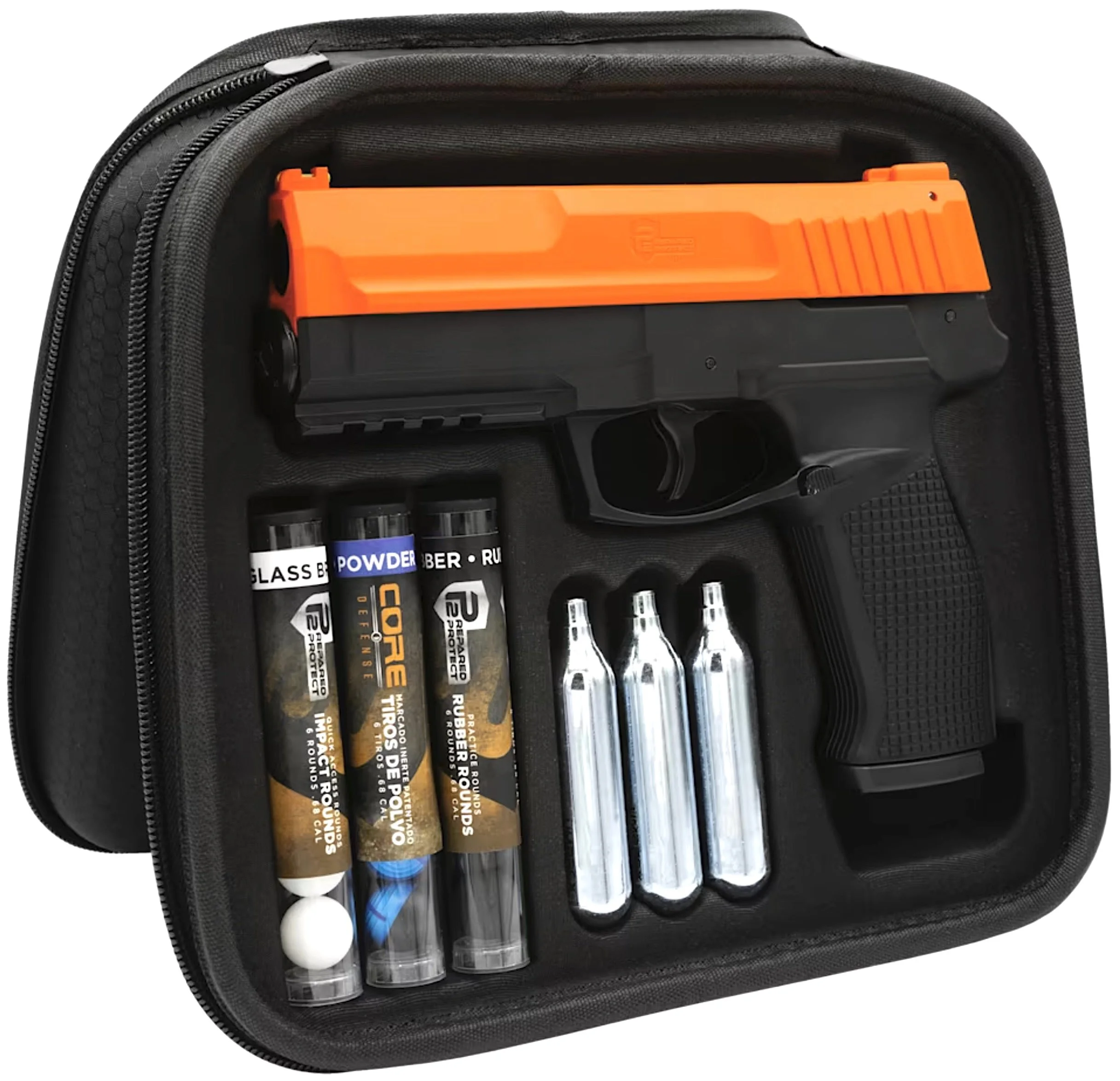
The Umarex T4E TP50 Gen 2 continues to impress as one of the more powerful and practical compact less-lethal pistols currently available. In this field test review, I tested the all-black version using .50 caliber rubber-steel core rounds to see how it performs in terms of velocity, energy, and real-world accuracy. The black version is essentially the same as the orange-marked variant, just marketed a bit differently, with a more tactical appearance that may appeal to those looking for a serious training or home defense-style option.

For ammunition, I used the steel-core rubber balls rather than standard solid rubber rounds. These projectiles are slightly heavier and seem to carry noticeably more energy downrange without sacrificing too much velocity. In my opinion, they are probably some of the best ammunition choices for these types of pistols if maximum impact energy is your goal.

Velocity testing through the chronograph produced some very impressive numbers. The TP50 Gen 2 delivered readings of 319 FPS, 304 FPS, 310 FPS, 300 FPS, and 308 FPS, averaging just over 308 feet per second. With the steel-core rubber rounds weighing approximately 2.7 grams, the pistol produced roughly 12-13 Joules of muzzle energy using the Steel Core Rubber Balls but would have been closer the projected 15 Joules with all Rubber Balls, which is extremely respectable for a compact CO2-powered .50 caliber launcher. You can really hear and feel the power when firing this pistol, and it even generates noticeable recoil-like kick during shooting.

Accuracy testing was performed from 30 feet downrange using the six-round internal magazine. Paintball-style projectiles are naturally less precise than pellets or BBs due to their softer construction, surface ridges, and aerodynamic inconsistencies, but the Umarex T4E TP50 Gen 2 still delivered surprisingly solid grouping performance. After adjusting my aim slightly low due to the pistol shooting a little high initially, the remaining shots grouped well into the center portion of the target and produced clean, sharp holes through the paper target with about a 3 inch grouping.

In practical terms, this pistol clearly delivers enough impact energy to strongly discourage an attacker or aggressive threat. The steel-core rubber rounds hit extremely hard, especially considering the combination of high velocity and projectile mass. While heavy clothing would certainly absorb some impact, anyone wearing lighter clothing would absolutely feel these rounds. The all-black appearance also adds to the realistic tactical styling, which alone could act as a deterrent before a shot is ever fired.

Overall, the Umarex T4E TP50 Gen 2 proved to be accurate enough for close-range defensive-style use, delivered excellent power, and offered reliable operation throughout testing. The trigger feels good, the pistol handles nicely, and the performance with steel-core rubber ammunition was impressive across the board. For anyone looking for a compact CO2-powered less-lethal launcher with strong energy output and solid build quality, the TP50 Gen 2 is definitely worth considering.

You can find the Umarex T4E TP50 Gen 2 and other Airguns, BB guns, Airsoft guns, Pellet guns, Blank guns, and accessories at:

Categories: .50 cal, CO2, Field Test, Paintball, Pistol, Review, Semi Auto, Vimeo Video, YouTube Video Tags: Umarex, T4E, TP50, T4E TP50

Steambow M10 vs CenterPoint AT400 Crossbow Comparison Review

No Comments

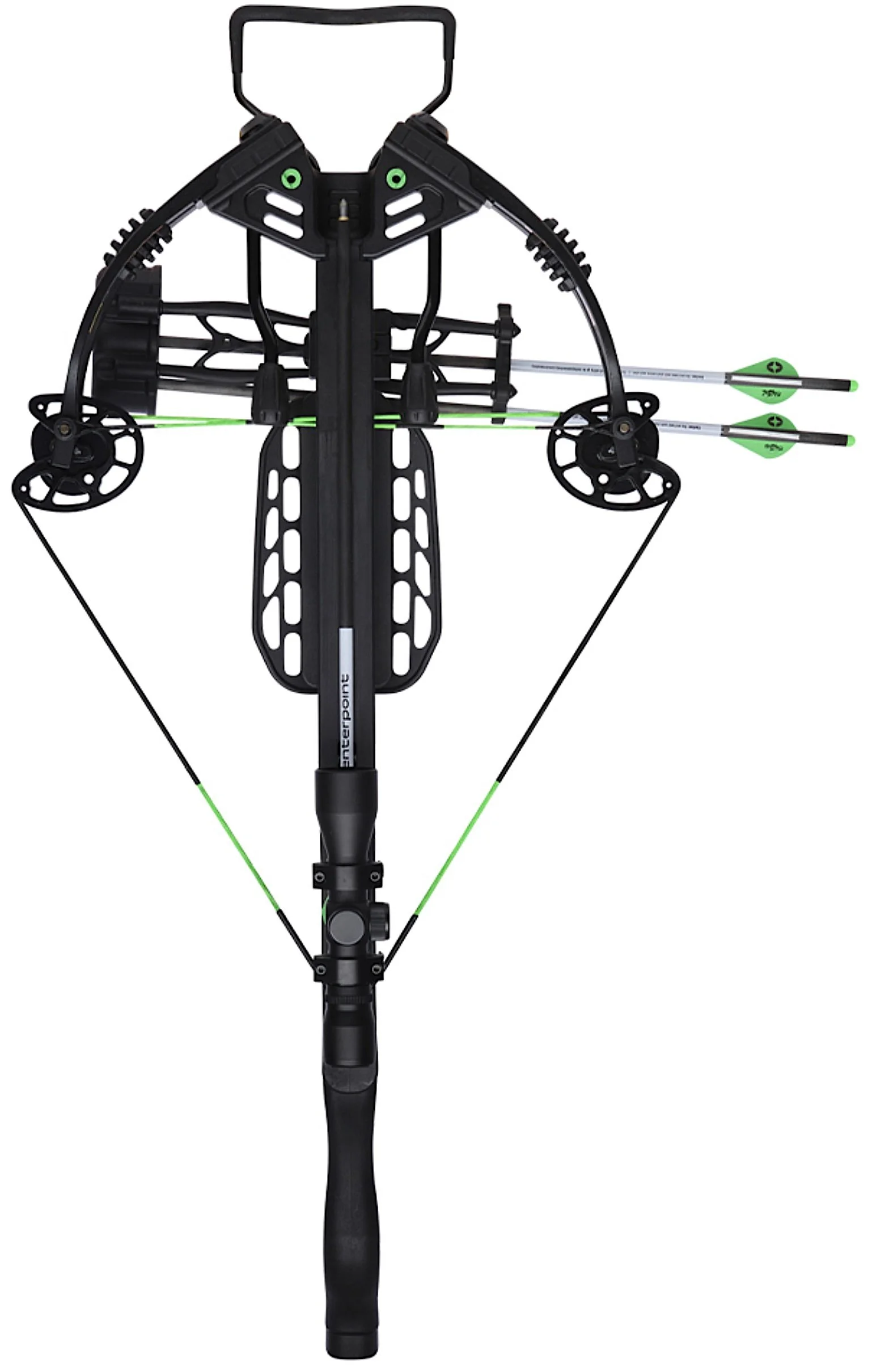
In this review, we are looking at two crossbows that honestly shouldn’t really be compared, but that’s exactly why this comparison is interesting. On one end, we have the Steambow M10, a compact, magazine-fed, fast-shooting crossbow built for fun, training, and high repetition shooting. On the other, the CenterPoint AT400, a full-size, high-powered compound crossbow designed for serious hunting applications.

Aside from both launching bolts/arrows, these two platforms sit at completely opposite ends of the spectrum. The goal here is not to declare a winner, but to help you decide which one actually fits your use case, or if you might want both.

Key Differences Overview:

Steambow M10

The Steambow M10 is a compact repeating crossbow designed more for fun, training, and high-volume shooting. It uses a magazine-fed system that can hold 10 bolts, allowing for very fast follow-up shots. Depending on the limb setup, it can reach speeds of up to around 200 FPS and produce approximately 10 to 15 foot-pounds of energy. Its lighter draw weight options and easy cocking system make it beginner-friendly and much less physically demanding to use. Overall, the M10 is best suited for target shooting, casual use, and potentially small game with the right setup.

CenterPoint AT400

The CenterPoint AT400 is a full-size compound hunting crossbow built for serious power and hunting use. Unlike the M10, it is a single-shot platform that focuses on accuracy, penetration, and range rather than fast repeat shooting. It sends arrows downrange at about 400 FPS and delivers close to 150 foot-pounds of energy, putting it in an entirely different class. With its roughly 200-pound draw weight, it requires much more effort to cock and reload, usually with a rope or crank system. This makes it better suited for medium to large game hunting, where power and shot placement matter far more than speed.

Side-by-Side Summary

If you want something lightweight, compact, fast, and easy to shoot often, the Steambow M10 is the better fit. If your main goal is hunting and you need maximum power, longer range, and serious downrange performance, then the CenterPoint AT400 is clearly the more appropriate choice. Even though both are crossbows, they are built for very different types of users and very different shooting experiences.

Power & Performance

The biggest separation between these two comes down to raw power.

  • The Steambow M10 delivers up to about 10–15 foot-pounds of energy, depending on limb configuration and bolt weight. It’s comparable to higher-end airguns or paintball-level power.

  • The CenterPoint AT400, by contrast, produces close to 150 foot-pounds of energy and launches arrows at around 400 FPS.

That’s not a small difference, it’s an entirely different category.

Real-world comparison:

  • M10 = backyard shooting, small game potential

  • AT400 = deer, and potentially even elk with proper shot placement

This is essentially the difference between a BB gun vs a hunting rifle in terms of role and impact.

Shooting Experience:

Steambow M10

  • Magazine-fed (10 bolts)

  • Extremely fast follow-up shots

  • Break-action style cocking (very quick)

  • Great for drills, repetition, and skill building

  • Minimal effort required

You can realistically fire 10 shots in about 10 seconds, making it a very engaging and fun platform.

CenterPoint AT400

  • Single-shot system

  • Requires rope cocking or crank system

  • Significant physical effort (200 lb draw)

  • Slow reload (often 30–60+ seconds)

This is a deliberate shooting experience, not something designed for volume or speed.

Use Case Breakdown:

Steambow M10 – Best For…

  • Backyard shooting (with proper backstop)

  • Target practice

  • Tactical-style drills

  • High repetition training

  • Casual and frequent use

  • Lower-cost shooting (especially with rubber ball version)

You can even use:

  • Rubber balls (low cost, reusable)

  • Lightweight bolts

  • Indoor-friendly setups (with proper safety)

CenterPoint AT400 – Best For…

  • Hunting (deer and potentially larger game)

  • Long-range accuracy

  • Maximum penetration and power

  • Purpose-driven shooting

This is not a casual-use product, you typically bring it out when it matters.

Ease of Use & Physical Demand:

Steambow M10

  • Very easy to cock (even at lower draw weights)

  • Beginner-friendly

  • Lightweight (~compact platform)

  • Minimal fatigue

CenterPoint AT400

  • High effort required

  • Needs cocking tools (rope or crank)

  • Physically demanding

  • Slower workflow between shots

Key takeaway:
Anyone can pick up and use the M10 easily. The AT400 requires more commitment, strength, and practice.

Size & Portability

Steambow M10

  • Compact and lightweight

  • Can be partially disassembled easily

  • Backpack-friendly

  • Ideal for mobile use

CenterPoint AT40

  • Large, fixed structure

  • Not easily transportable without a case

  • Designed for field carry, not casual portability

Ammo & Cost of Ownership:

Steambow M10

  • Bolts are smaller and cheaper

  • Rubber ball version = extremely low cost

  • Less wear and tear overall

  • High reusability

CenterPoint AT40

  • Arrows are larger and more expensive

  • More prone to damage/loss at high speeds

  • Requires maintenance and replacement over time

Value Consideration:

Interestingly, both fall into a similar price range (~$400–$500), but value depends on usage frequency:

  • M10 → Likely used often → Higher practical value

  • AT400 → Used less frequently unless hunting regularly

If something sits unused, its value drops regardless of price.

Who Should Buy Each?

Choose the Steambow M10 if you…

  • Want fun, fast shooting

  • Plan to shoot frequently

  • Prefer low effort and ease of use

  • Don’t need high power

  • Enjoy tactical or training-style shooting

Choose the CenterPoint AT400 if you…

  • Are hunting (especially deer or larger game)

  • Need high power and penetration

  • Value accuracy and range

  • Don’t mind slower reload times

  • Are comfortable with physical effort

Final Thoughts

These two crossbows are not competitors—they are tools for completely different jobs.

  • The Steambow M10 is about frequency, fun, and versatility

  • The CenterPoint AT400 is about power, precision, and purpose

If anything, this comparison highlights that you may not need to choose one over the other, you might actually benefit from having both ends of the spectrum covered.

If neither fits perfectly, then the real answer may be to look for something in the middle.

Where to Buy

Both of these crossbows (or similar models) are typically available through:

Categories: Crossbow, Comparison, Non Airguns, Review, Rifle, Vimeo Video, YouTube Video, Repeater, Single Shot Tags: Steambow, CenterPoint, AT400, M10 Tactical, Crossbow

CenterPoint AT400 Composite Tactical Crossbow Table Top Review

No Comments

Specifications:

  • Type: Compound Crossbow

  • Manufacturer: CenterPoint

  • Model: AT400 Composite Crossbow

  • Velocity: Up to 400 FPS

  • Energy: 142 ft-lbs

  • Draw Weight: 200 lbs

  • Weight: 7.5 lbs

  • Cocked Width: 14.5 inches

  • Construction: Composite Stock & Rail, Quad Limb (Compressed Fiberglass)

  • Scope: 4x32 Fixed Crossbow Scope

  • Cocking System: Detachable Silent Crank (with sled system)

  • Included Accessories:

    • 3x 20” Carbon Arrows (0.003 tolerance)

    • Quiver

    • Cocking Rope

    • Crank System

    • Foregrip

    • Hardware & Tools

Introduction

The CenterPoint AT400 Composite Tactical Crossbow is not something I review very often. Most of what I normally cover is backyard or basement-friendly, BB guns, pellet guns, airsoft, that kind of thing.

This is completely different.

The CenterPoint AT400 is a serious piece of equipment. This is not for casual plinking. This is designed for hunting and real-world applications, and based on the specs alone, it’s capable of taking small to medium game, potentially even deer.

With 400 FPS and 142 ft-lbs of energy, this is in an entirely different class compared to the compact crossbows I usually review.

Initial Thoughts (Before Shooting)

At the time of this review, I have not shot it yet.

Reason being, this requires a proper archery-rated backstop. This is not something you casually shoot in your backyard without the right setup.

I do have the space, but I would need:

  • A proper target

  • A safe shooting environment

This is something I plan to revisit once I can set it up properly.

What’s in the Box

  • 3x carbon arrows

  • Detachable quiver (mounts underneath)

  • Crank cocking system

  • Manual cocking rope

  • String wax

  • Allen keys and hardware

  • Spare mounting components

Assembly is required, but it’s fairly straightforward:

  • Expect about 30–60 minutes

  • Mostly attaching the limb and securing hardware

Cocking Methods

This crossbow has a 200 lb draw weight, so you are not pulling this back by hand.

Two Methods:

1. Manual Cocking Rope

  • Hooks attach under the string

  • Make sure to loop string on rear part of the crossbow

  • Foot goes into the stirrup

  • Pull using your lower body

  • Requires strength, especially in the lower back

2. Crank System

  • Mounts into rear slots

  • Much easier and controlled

  • Recommended if you have any physical limitations

Design & Build Quality

This is a compound-style crossbow, featuring:

  • Quad limb system (2 per side)

  • Pulley/cam setup for efficient energy transfer

  • Composite stock and rail

  • Compact profile (14.5” cocked width)

Key Features:

  • Roller Arrow Retention Spring
    Keeps the arrow securely in place

  • Picatinny Rail System
    For mounting optics (comes with 4x32 scope)

  • Oversized Stirrup
    Makes cocking more stable

  • Ergonomic Grip & Foregrip
    Comfortable handling

  • Integrated Quiver
    Holds 3 arrows + 1 loaded

  • Safety System
    Engages when cocked

Walk-around Highlights

  • Polymer/composite one-piece frame

  • Rubber butt plate

  • Large trigger guard (good for gloves)

  • Protective hand guard (keeps fingers safe from string)

  • Transparent scope lens covers

  • Compact and tactical design

This is clearly built for real-world use, not just recreational shooting.

Performance Expectations

Even without shooting it yet, the specs tell the story:

  • 400 FPS is extremely fast

  • 142 ft-lbs delivers serious impact

  • Designed for:

    • Hunting

    • Outdoor shooting

    • Controlled environments

The CenterPoint AT400 Composite Tactical Crossbow is not comparable to pistol-style or compact crossbows.

Pros

  • Very high power (400 FPS / 142 ft-lbs)

  • Compact 14.5” cocked width

  • Quad limb system for durability and efficiency

  • Silent crank system (ideal for hunting scenarios)

  • Solid composite construction

  • Includes everything needed to get started

  • Roller retention system improves arrow consistency

  • Good ergonomics and handling

Cons

  • 200 lb draw weight (requires effort or crank use)

  • Heavier than smaller crossbows (7.5 lbs)

  • Fixed stock (no adjustability)

  • Requires proper shooting setup (not backyard-friendly)

  • Arrows require maintenance and eventual replacement

  • Price (~$749 CAD)

Final Thoughts

This is a serious hunting-grade crossbow.

It’s not a casual product, and it’s not meant for beginners without proper setup and understanding.

What you get is:

  • High performance

  • Solid build quality

  • Practical hunting capability

If you’re looking for something compact but powerful enough for real-world use, the CenterPoint AT400 fits that role.

Where to buy

Categories: Arrow, Crossbow, Non Airguns, Review, Rifle, Vimeo Video, YouTube Video Tags: CenterPoint, AT400

Umarex T4E TP50 Gen 2 CO2 Paintball Pistol Table Top Review

No Comments

In this table top review, we’re taking a look at the Umarex T4E TP50 Gen 2 CO2 Paintball Pistol, part of Umarex’s T4E (Training for Engagement) lineup. This version is marketed more as a tactical training pistol, while its nearly identical counterpart, the HDP50, is positioned toward home defense.

At first glance, the TP50 and HDP50 look almost identical. The main visual difference is that the TP50 comes in an all-black finish, while the HDP50 features an orange slide. Beyond that, the functionality, performance, and specs are essentially the same.

Key Features and Specifications

  • Manufacturer: Umarex

  • Model: T4E TP50 Gen 2

  • Caliber: .50 caliber

  • Power Source: 12g CO2 (quick piercing system)

  • Action: Semi-auto, double action trigger

  • Magazine Capacity: 6 rounds (internal inline magazine)

  • Velocity: Rated up to 465 FPS

  • Energy: Claimed 11 joules (can be higher depending on ammo)

  • Barrel Length: ~4 inches

  • Overall Length: ~8 inches

  • Weight: ~1.5 lbs (0.7 kg)

  • Construction: Polymer frame and slide with metal internals and barrel

  • Safety: Integrated trigger safety

  • Rail: Under-barrel Picatinny rail

  • Sights: Fiber optic front and rear

Overview and First Impressions

The TP50 Gen 2 is a compact, .50 caliber paintball-style pistol designed for training, recreational shooting, and less-lethal applications. It has a solid feel in the hand, not too heavy, not too light, and resembles a full-size handgun profile, similar in size to a large-frame pistol.

Despite its polymer exterior, the internal components that matter, especially around the CO2 system—are metal, giving it durability where needed.

CO2 System (Quick Piercing Feature)

One of the standout features is the quick piercing CO2 system:

  • Insert the CO2 cartridge (butt-first)

  • Tighten the cap until snug

  • When ready to use, give the bottom a firm “whack”

  • A pin pops out on the back where you can see it to indicate the system is pressurized

This allows you to keep the pistol loaded but not activated, which is useful for storage or readiness situations.

Ammo Compatibility

The Umarex T4E TP50 Gen 2 CO2 Paintball Pistol supports a wide range of .50 caliber ammunition, including:

  • Rubber balls

  • Powder balls

  • Paintballs

  • Steel/rubber hybrid balls

  • Pepper balls (limited availability in Canada)

Performance varies significantly depending on the weight of the projectile:

  • Lighter rubber balls: ~450 FPS / ~13–15 joules

  • Heavier projectiles: lower energy (down to ~7–11 joules)

What’s Included

  • TP50 Gen 2 pistol

  • Two tubes of 10 rounds each (powder + rubber balls)

  • Barrel cleaning squeegee

  • Instruction manual

  • Cardboard packaging (blue “tactical pistol” branding)

Walkaround Highlights

  • Fiber optic sights make target acquisition easy in various lighting conditions

  • Textured grip and slide for solid handling

  • Metal trigger with integrated safety

  • Wide open barrel design

  • Picatinny rail for adding lights or lasers

  • Clear “Strike” marking for CO2 activation point

Overall, it’s a clean, functional design with a tactical look, especially in the all-black version.

Pros

  • Compact size compared to other .50 cal pistols

  • Wide variety of compatible ammo types

  • Quick piercing CO2 system (very practical)

  • Good power for its size (~11–15 joules range)

  • Fiber optic sights improve usability

  • Picatinny rail for accessories

  • Realistic all-black tactical appearance

Cons

  • Only 6-round capacity before reload

  • Limited shots per CO2 (~3–4 reloads)

  • Internal magazine (no quick mag swaps)

  • Pepper ball ammo difficult to source in Canada

  • Efficiency trades off for higher power

TP50 vs HDP50 (Quick Comparison)

  • TP50: All black, marketed as tactical training

  • HDP50: Orange slide, marketed for home defense

  • Performance: Essentially identical

This difference is largely cosmetic and marketing-driven, so choosing between them comes down to preference and intended use.

Final Thoughts

The Umarex T4E TP50 Gen 2 CO2 Paintball Pistol is a solid, compact .50 caliber CO2 pistol that delivers respectable power in a manageable platform. It’s not designed for high-capacity shooting or efficiency, but rather for impact, simplicity, and versatility in ammo choice.

If you’re looking for a less-lethal option or a training pistol with realistic handling and solid performance, the TP50 fits that role well, especially if you prefer the more discreet all-black tactical look.

Where to Buy

Categories: .50 cal, CO2, Comparison, Paintball, Pistol, Review, Semi Auto, Vimeo Video, YouTube Video Tags: Umarex, T4E, T4E TP50, TP50

Steambow B08 .68 Caliber Tactical Crossbow Table Top Review

No Comments

In this table top review, we take a close look at the Steambow B08 .68 Caliber Tactical Crossbow, a compact and versatile system designed for shooting rubber balls, paintballs, or foam projectiles. This model is particularly suited for controlled environments like indoor ranges (such as a sea can setup or even basement or backyard), thanks to its relatively moderate power and flexible ammunition options.

A full shooting test will follow separately, but for now, let’s break down the specifications, features, and what comes in the box.

Specifications

  • Model: Steambow B08

  • Caliber: .68 (rubber balls, paintballs, foam balls, etc.)

  • System Type: Recurve crossbow

  • Draw Weight: 35 lbs (standard included limb)

  • Velocity: Up to 260 FPS (manufacturer claim)

  • Energy: Approx. 7 ft-lbs (up to ~15 ft-lbs with stronger limbs)

  • Magazine Capacity: 8 rounds (removable)

  • Weight: Just under 4 lbs

  • Length: 24.2 inches

  • Width: 3.15 inches (body, excluding limb span)

  • Height: 8.3 inches

  • Materials: Fiberglass, metal, and polymer construction

  • Stock: AR-style adjustable (6-position) with cheek rest and rubber butt pad

The B08 is distributed by Steambow GmbH (Austria) and is built on a modular platform compatible with other Steambow systems like the M10.

Key Features

Modular Platform

One of the standout aspects of the B08 is its modular design. The lower receiver is identical to the Steambow M10, meaning you can swap uppers to shoot either:

  • .68 caliber balls (B08 upper)

  • Crossbow bolts (M10 upper)

This gives users flexibility to adapt the platform for different uses.

Quick Change Limb System

The included 35 lb limb is easy to swap out:

  • Secured by a single bolt

  • Can be upgraded up to heavier options (up to ~120 lbs available)

  • Allows tuning for power vs. ease of cocking

Magazine-Fed Repeater System

  • 8-round removable magazine

  • Spring-fed system with follower

  • Auto-loading mechanism (not semi-auto, but fast cycling)

The system works by “breaking” or pulling back the stock, which:

  • Cocks the string

  • Loads the next round

  • Prepares the trigger

Cocking Mechanism

  • Shoulder-supported operation

  • Pull stock inward to cock

  • Very easy with 35 lb limb

  • Allows relatively fast follow-up shots once familiar

Sighting System

  • Fiber optic front sight

  • Rear alignment via top trough channel

While simple, it works well for close-range shooting. However, the included Picatinny rails (top and bottom) allow for:

  • Red dots

  • Scopes

  • Tactical accessories

Build & Ergonomics

  • Polymer lower with reinforced components

  • AR-style adjustable stock

  • Adjustable cheek rest

  • Rubber butt pad

  • Included foregrip (user-installed)

Overall, the Steambow B08 .68 Caliber Tactical Crossbow has a solid, lightweight feel while still maintaining good handling characteristics.

What’s Included in the Box

The B08 comes well-packaged with multiple internal boxes and includes:

  • Steambow B08 main unit

  • 35 lb limb

  • Foregrip

  • 8-round magazine

  • 25 “foam” balls (closer to hard nylon in feel)

  • Protective shooting glasses

  • Allen keys (for assembly and adjustments)

  • String wax

  • Extra string

  • Mounting hardware

  • Instruction manual

Note:
A small locking component for the upper assembly may come separate and is not clearly explained in the manual, but is required for proper function.

Operation Overview

  • Load magazine with up to 8 rounds

  • Insert magazine into front housing

  • Cock by pulling stock inward

  • Fire using single-action trigger

The ball is held in place by a simple groove and string system, guiding it forward during firing.

Performance Notes (Initial Impressions)

  • Smooth and reliable operation

  • Easy to cock with 35 lb limb

  • Suitable for indoor shooting environments

  • Compatible with various projectile types

Heavier limbs will:

  • Increase velocity and energy

  • Require more effort to cock

Pros

  • Lightweight and compact (under 4 lbs)

  • Modular system (compatible with M10 platform)

  • Magazine-fed repeater design

  • Easy cocking with included limb

  • Quick-change limb system

  • Picatinny rails for accessories

  • Comes with useful extras

  • Quiet operation

  • Reusable ammunition options

Cons

  • Higher price point

  • No traditional rear sight included

  • Learning curve for efficient operation

  • Included limb may feel underpowered for some users

Final Thoughts

The Steambow B08 offers a unique blend of crossbow mechanics and tactical styling, combined with modular flexibility and relatively safe indoor usability. It’s especially appealing for users who want:

  • A reusable ammo platform

  • Quick follow-up shots

  • Expandability with other Steambow systems

While the included 35 lb limb keeps it easy to use and accessible, upgrading the limb will unlock more performance potential for those looking for higher energy output.

Availability

Available through Replica Airguns:

A full shooting test and performance breakdown will follow in a separate review.

Categories: .68 cal, Break Barrel, Crossbow, Non Airguns, Paintball, Review, Vimeo Video, YouTube Video, Repeater Tags: Steambow, B08

April 2026 Replica Airguns Mystery Box Unboxing

No Comments

In this April 2026 unboxing, there’s a solid mix of power, realism, and variety straight out of the box. Even before opening it up, the size and weight of the package hinted that this wasn’t going to be a light or basic shipment. As usual, this is more of a first look and overview rather than a deep dive, with full tabletop and field test reviews coming later.

CenterPoint AT400 Compound Crossbow Kit (400 FPS)

The first item out of the box is easily the most substantial: an AT400 compound crossbow kit. This is not one of the smaller, backyard-friendly crossbows—it’s a full-sized, high-powered unit designed for serious use.

  • Velocity: Rated around 400 feet per second

  • Energy: Approximately 142 ft-lbs

  • Features:

    • Detachable silent crank system for easier cocking

    • Picatinny rail for mounting optics or accessories

    • Full kit setup with multiple components included

This level of power puts it well into small-to-medium game hunting territory, making it more than just a recreational piece. Because of its size and power, testing it indoors isn’t really practical, so this one will likely get a detailed tabletop breakdown rather than a traditional shooting demo.

Umarex T4E TP50 Gen 2 (.50 Cal Tactical Pistol)

Next up is the Umarex T4E TP50 Gen 2, this time in the all-black tactical version rather than the more recognizable orange training model.

  • Caliber: .50 caliber

  • Velocity: Up to 465 FPS

  • Ammo: Rubber balls (included in the box)

  • System: CO2 powered with quick-pierce activation

This version stands out for a couple of reasons. First, the higher velocity suggests noticeably more energy compared to earlier or training-focused versions. Second, the all-black design gives it a much more realistic look, closer to a traditional firearm aesthetic.

Functionally, it uses a spring-fed internal magazine and a preloaded CO2 system, allowing you to keep it ready without gas leakage. When needed, a quick strike activates the CO2, making it immediately usable.

Based on typical .50 cal projectile weights and that velocity, this likely lands somewhere in the mid-to-high teens or possibly around 20 ft-lbs of energy, though exact numbers will be confirmed during testing.

E&L AKS-74N AEG Airsoft Rifle (Legends Series)

The final item in the box is a standout for realism: the E&L AKS-74N AEG airsoft rifle, branded under the “Legends / Legendary Perfection” line.

This is clearly built to replicate the real AK platform as closely as possible.

  • Construction:

    • Real wood stock

    • Stamped steel receiver and metal components

    • Folding stock (magnetic lock)

  • Operation:

    • AEG (Automatic Electric Gun)

    • Semi and full-auto firing modes

    • Adjustable rear sight (elevation)

  • Extras:

    • Deans connector compatibility

    • Included specs sheet with velocity in m/s

The weight is immediately noticeable, estimated around 7–8 pounds, which adds to the realism. The combination of real wood furniture and steel construction gives it a very authentic feel compared to lighter, polymer-heavy Airsoft rifles.

The included magazine is polymer, but it should be compatible with standard AK-style AEG mags, meaning upgrades or swaps are likely straightforward.

Final Thoughts

This unboxing delivers a strong mix across three very different categories:

  • High-power archery platform (AT400 crossbow)

  • Compact CO2-powered .50 cal pistol (TP50 Gen 2)

  • Full-metal, real wood AEG rifle (E&L AKS-74N)

Each item targets a different type of user, from tactical training and backyard use to collectors and realism-focused Airsoft enthusiasts.

As always, this is just the first look. Full tabletop reviews, comparisons, and field tests will break down real-world performance, usability, and value.

For availability and full write-ups, check:

Categories: .50 cal, 6mm, AEG, Airgun News, Airsoft, Arrow, CO2, Crossbow, Full Auto, Paintball, Pistol, Review, Rifle, Semi Auto, Single Shot, Vimeo Video, YouTube Video Tags: Umarex, T4E, TP50, CenterPoint, AT400, A&L, AKS-74N

Replica Airguns March 2026 Mystery Box Unboxing

No Comments

Today’s unboxing, we’ll call it the March 2026 Unboxing Preview!

I had no idea what was in this box, and honestly, I like it that way. It makes every delivery feel a bit like Christmas. A box shows up from the warehouse, I crack it open, and my job is to let you know what’s inside and what might be coming soon to the store. A lot of the time these are products we’ve never carried before. Not always, but usually there’s at least something new or unexpected in the mix.

As usual, getting into the box was its own little challenge. Good thing I had my “box cutter “ handy. Once I finally got through the packaging, it was clear right away this one had some interesting stuff inside.

What was in the box?

1) Annie Oakley Lil’ Sure Shot BB Rifle

First out of the box was something a little different: the Annie Oakley Lil’ Sure Shot.

This one is brought to you by Air Venturi / Western Justice, and it’s essentially a Red Ryder-style lever action BB rifle with some nice Western-themed touches. Right away, it stood out with the stained solid wood stock, wood forearm with engraving, and engraved Annie Oakley artwork.

Here are some of the listed specs and features:

  • Ammo: .177 caliber / 4.5mm steel BBs

  • Action: Lever cocking, spring piston

  • Barrel: Smoothbore

  • Overall Length: 36.25 inches

  • Capacity: 550 BBs

  • Claimed Velocity: Up to 350 FPS

  • Weight: 3.3 pounds

  • Max Shooting Distance: 212 yards

Once I opened it up, it definitely gave me that familiar Red Ryder / Marlin Cowboy vibe, but it feels like it may be just a bit bigger overall. Maybe a slightly longer stock, maybe just a bit more substantial in the hands. I’ll have to compare it side-by-side with a Red Ryder later to know for sure.

A few things I noticed right away:

  • It has a metal lever

  • Metal frame

  • Metal barrel

  • A plastic muzzle tip

  • A rear sight that appears adjustable

  • And surprisingly, a Weaver-style rail on top for mounting an optic

That top rail is actually a nice touch. You could absolutely throw a small scope on this if you wanted to, and why not? It makes for a fun little plinker, and the engraving gives it some real visual appeal too.

I’ve always had a soft spot for these little lever-action BB rifles. They’re just fun. They’re simple, classic, and a great way to introduce younger shooters to safe rifle handling. Rifles like this tend to be a bit easier for beginners since they’re not as quick to wave around as a pistol.

So yes, this one looks like it should be a lot of fun, and I’ll be doing both a Tabletop Review and a Field Test Shooting Review on it soon.

2) .68 Caliber Nylon Balls (100 Count)

Also in the box was a pack of 100-count .68 caliber nylon balls.

These feel noticeably heavier than the rounds I was using in my earlier T4E TC68 review. The previous ones were around the 2.8 to almost 3 gram range, and these new ones feel more like they’re getting up into the high 3 gram to 4 gram area.

That added weight could make them especially interesting to test in the TC68, since more projectile mass can sometimes translate into more energy on target, even if velocity comes down a bit.

So these should be fun to test out, and as it turns out, they may have arrived for a very good reason…

3) Steambow B08 / .68 Caliber Rubber Ball Crossbow Platform

This was the big surprise in the box, and definitely the highlight item.

If you watched my SHOT Show coverage, then you may remember this one from the Steambow booth. It’s a really cool product: basically a magazine-fed rubber ball shooting crossbow-style launcher in .68 caliber.

I had already gotten a chance to try it at SHOT Show, and Steambow was great about letting us check it out there. So it was pretty exciting to see one show up here for review.

Some of the box highlights:

  • Detachable magazine

  • 8-shot capacity

  • .68 caliber projectiles

  • Includes 25 foam balls

  • Comes with a 35-pound limb

  • AR-style adjustable buttstock

  • Protective shooting glasses included

This product has a lot going on in the box. Once I opened it up, there were multiple components and accessories packed inside, including:

  • Main body / receiver section

  • Foregrip

  • AR-style buttstock

  • Upper receiver section with included magazine

  • 35-pound limb

  • Bow string and related accessories

  • Lubricant / wax for the string

  • Mounting hardware and tools

  • Protective glasses

  • 25 included foam balls

There’s definitely going to be some assembly involved before I can do a full review, so that will be part of the tabletop video.

The main unit itself feels solid and substantial. It has some good weight to it, and overall it looks like a very cool design. The included 35-pound limb should offer a decent balance between usability and performance. At SHOT Show we were only using a lighter 25-pound setup, which was very easy to draw, great for casual target practice, but obviously not the high-performance option.

One of the things I like about this platform is that it gives you that crossbow-style shooting experience while using reusable .68 caliber balls. That can make it easier and cheaper to shoot compared to bolt-style systems, where each arrow or bolt can get expensive fast, especially if you miss the target and damage one.

And since I now also have those heavier nylon .68 caliber rounds from the same box, I should be able to test both the included foam balls and the heavier options to see how they compare.

This one should make for a very interesting review.

Final Thoughts

So that was the March 2026 mystery box. We’ve got two very different products here:

Both of these are getting the full treatment, so expect Tabletop Review and Field Test Shooting Review videos for both products.

The Annie Oakley should be a blast to shoot, especially if it performs anything like the other Red Ryder-style guns I’ve reviewed over the years. And the Steambow system looks like it could be a really practical and fun way to enjoy crossbow-style shooting without the cost and fragility of traditional bolts.

I’ve still got a few earlier products to finish up as well, but I’ll be getting to these as quickly as I can.

Thanks for watching another Replica Airguns video. Don’t forget to subscribe, and check the links in the description for products available in our Canada and US stores.

For Canada, visit ReplicaAirguns.ca
For the US, visit ReplicaAirguns.us

And if you’re looking for other products including Airguns, BB guns, pellet guns, airsoft guns, blank guns, and accessories, be sure to check out both stores as well.

Categories: .68 cal, 4.5mm / .177 cal, Arrow, BB, Crossbow, Non Airguns, Paintball, Replica Airguns News, Review, Rifle, Spring Piston, Vimeo Video, YouTube Video Tags: Steambow, AirVenturi, Air Venturi, Annie Oakley Lil Sure Shot

Umarex T4E TC 68 Less Lethal Paintball Rifle Field Test Review

No Comments

In this Field Test Shooting Review I’m taking a look at the Umarex T4E TC68 .68 caliber paintball / less-lethal marker to see how it performs in terms of velocity, accuracy, and overall shooting experience.

I have already done a Table Top Review covering the specifications, features, and overall purpose of the TC68, so make sure to check that video out if you want the full breakdown of the gun itself. This field test review is focused strictly on real-world performance.

For this test the TC68 has been de-restricted, meaning the adjustment screw has been modified slightly so it can reach its full potential. Even with this adjustment it should still remain legally compliant here in Canada, since the velocity will remain under the 500 fps threshold.

For ammunition I used .68 caliber nylon rounds:

  • Black rounds: approximately 2.8 grams

  • Yellow rounds: approximately 2.6 grams

The TC68 in this test is powered using dual 12-gram CO2 cartridges, rather than the larger 88-gram CO2 cylinder, which will affect both shot consistency and total shot count.

Velocity Testing

For the velocity portion of the test I fired several shots through my chronograph.

Chronograph readings were somewhat tricky to capture at first, but once everything started working correctly I was able to record several shots.

Example readings included:

  • 476 fps

  • 463 fps

  • 453 fps

  • 445 fps

The velocity dropped slightly during the test, which is expected when using dual 12-gram CO2 cartridges, as they cool down fairly quickly during rapid shooting.

The slightly heavier 2.8-gram black rounds were also used for some of the shots, which can contribute to minor changes in velocity compared to the lighter 2.6-gram rounds.

Even with that drop, performance was still strong and suggests the TC68 could likely reach high-400 fps velocities with a fresh CO2 setup or an 88-gram CO2 cylinder, which provides much greater gas capacity and improved consistency.

Accuracy Testing

For the accuracy portion of the test I set up a paper target down range and loaded roughly 20 rounds into the magazine.

The first test consisted of 10 shots in semi-automatic mode using the heavier black nylon rounds. A red-dot optic was installed on the TC68 for aiming, though it had not been sighted in or adjusted beforehand.

Results were quite respectable for a marker shooting heavy .68 caliber rounds.

  • Overall grouping was approximately 4 inches

  • Most shots landed within a 2.5–3 inch cluster

  • One shot landed slightly low outside the main group

Considering the optic was not adjusted and this was essentially a right-out-of-the-box test, the accuracy was quite good.

Full-Auto Shooting Test

After the semi-auto accuracy test I attempted a full-auto burst test, but quickly discovered the CO2 had been depleted.

After installing fresh CO2 cartridges, the full-auto test was repeated with approximately 20 rounds loaded.

The TC68 does not have an extremely fast rate of fire, but it still delivers a solid stream of rounds when the trigger is held down.

During full-auto fire:

  • The gun remained fairly controllable

  • Rate of fire was moderate but effective

  • CO2 cooling became noticeable during sustained bursts

A fresh target confirmed that the TC68 was still accurate enough for defensive-style shooting, keeping the majority of rounds within the main target area even during burst fire.

Power and Energy

Using approximately 2.8-gram nylon rounds traveling around 475 fps, the TC68 is producing significantly more energy than its factory-rated 16-joule output. Closer to 30 joules!

The modification performed simply allows the power adjustment screw to reach its full depth, allowing the marker to operate closer to its maximum potential.

While exact energy figures will depend on projectile weight and velocity, the TC68 in this configuration appears capable of producing considerably higher energy levels than stock, while still remaining under the 500 fps legal limit in Canada.

Shooting Impressions

Overall the Umarex T4E TC68 proved to be a solid and reliable platform during testing.

Some observations from the field test:

What I liked

  • Strong velocity potential

  • Good accuracy for a .68 caliber marker

  • Full-auto capability for rapid follow-up shots

  • Compatible with multiple CO2 power options

Things to consider

  • Dual 12-gram CO2 cartridges cool down quickly

  • Larger 88-gram CO2 cylinders will provide better consistency

  • The gun includes multiple safety mechanisms that require familiarity

The TC68 includes three levels of safety, which helps prevent accidental discharge but does require some practice to become comfortable with the controls.

Final Thoughts

The Umarex T4E TC68 performed well in this field test.

Velocity was strong, accuracy was respectable for a .68 caliber marker, and the full-auto capability adds an interesting dimension to the platform.

With proper setup and a fresh CO2 source, the TC68 has the potential to deliver high-energy shots while still remaining within Canadian legal limits.

Overall it’s a very capable paintball / less-lethal marker and definitely an interesting option for those looking for a high-power .68 caliber platform.

Categories: .68 cal, CO2, Bulk Air, Field Test, Full Auto, Paintball, PCP, Review, Rifle, Semi Auto, Vimeo Video, YouTube Video Tags: Umarex, T4E, T4E TC 68

Umarex T4E TC 68 Less Lethal Paintball Rifle Table Top Review

No Comments

Type: .68 Cal Paintball / Training Marker Rifle /Less Lethal
Manufacturer: Umarex (T4E / Training for Engagement)
Model: T4E TC68
Made In: Taiwan
Materials: Polymer exterior with internal metal components (metal flash hider + various metal controls)
Weight: 2.5 kg (5.52 lb)
Overall Length: 84 cm (33")
Barrel: Approx. 31 cm (12") smoothbore (.68 cal)
Power Source: 2x12g CO2 (in-stock dual system), 88g CO2, or HPA (via included adapter)
Action: Semi-auto and full-auto
Ammo Type: .68 Cal paintballs, rubber balls (including heavier core types), powder/dust/chalk balls, glass balls, pepper balls (where legal), and First Strike–style shaped rounds (magazine-fed)
Ammo Capacity: 20-round spring-assisted magazine (plus hopper-fed option with included adapter)
Claimed Velocity Range: 240–480 fps (adjustable; depends heavily on ammo weight and air source)
Energy (Context): Marketed around 16J “out of the box,” with higher output possible via the built-in adjustment system (jurisdiction-dependent and often tamper-restricted)

Trigger Pull
The TC68 uses a semi-auto style trigger that feels closer to a single-action pull (it needs to work this way to support full-auto). The break is straightforward and predictable, and it suits the “training marker / utility” role well.

Accuracy

This table top review is focused on features, build, and usability. Accuracy testing and chronograph results are better handled in a field test once ammo weight is confirmed (rubber vs. paintball vs. hard plastic rounds will all change results). Initial “gut feel” shooting suggests the factory setting is already pushing hard for a training marker, with performance feeling consistent with the advertised 16J class.

Build Quality

The TC68 is largely polymer on the outside, but it doesn’t feel like a toy. The weight is substantial, controls feel solid, and the overall package is clearly built for training and repeated handling. You’re getting a robust platform designed to run multiple air sources and a wide range of .68 caliber projectiles without needing a bunch of aftermarket parts just to get started.

Realism / Ergonomics / Controls

Visually and ergonomically the TC68 leans into an AR-style layout:

  • AR-style grip geometry (and AR-compatible grip fitment style)

  • Full-length Picatinny top rail

  • M-LOK on the handguard (sides and bottom) for lights, foregrips, etc.

  • Ambidextrous selector (Safe / Semi / Full)

  • Ambidextrous magazine release

It does not have real-steel operating controls like a charging handle or functional bolt/dust cover, this is a marker, not a firearm replica mechanism, but from a distance it reads like a modern sporting rifle pattern, which matters for training applications and general “presence.”

Safety systems are layered:

  1. A “quick pierce / activation” setup (pressurizes the marker only when you choose)

  2. A cross-bolt style safety that controls readiness to fire and can also depressurize when switched back (you’ll hear it vent)

  3. Standard safe selector switch position

Air Source Flexibility (CO2 + HPA) and Included Hardware

This is one of the biggest selling points: it ships with a lot of the “bits and pieces” that usually cost extra.

You can run:

  • Dual 12g CO2 (the configuration shown in the review)

  • 88g CO2 (full-length stock configuration)

  • HPA via included adapter (plus an alternate stock option that works well with compact tanks)

The included quick-pierce style setup is practical: you can stage the marker with CO2 installed without continuously bleeding gas, then activate it only when needed.

Feeding Options: Magazine-Fed or Hopper-Fed

Out of the box you get:

  • A 20-round spring-assisted magazine designed to load easily (the spring can be held back during loading, then feeds when inserted)

  • A hopper adapter system (hopper not included, but the adapter is), letting you run higher-capacity paintball-style feeding for volume use, especially relevant if you pair HPA + full auto

The magazine also supports First Strike–style shaped rounds (magazine-fed only), expanding the use-case options for training and scenario work.

Sights / Optics

No sights are included, no irons, no basics, nothing. That’s the odd omission on an otherwise “complete” kit. Plan on adding:

  • a red dot (often easiest), and/or

  • irons that sit higher, or a riser setup, depending on your preferred cheek weld and optic height.

Pros

  • Multiple air source support (2x12g CO2, 88g CO2, or HPA via included adapters/stocks)

  • Quick-pierce / staged-gas concept is practical for readiness without constant leaking

  • Semi-auto and full-auto capability

  • Adjustable power/velocity range to suit different training and ammo types

  • Magazine-fed or hopper-fed flexibility (adapter included)

  • Accepts First Strike–style shaped rounds (magazine)

  • AR-style ergonomics and lots of accessory mounting (Picatinny + M-LOK)

  • Strong “presence” and serious performance feel for a .68 platform

  • In Canada especially, it fills a niche many users are actively looking for (training/marker/home safety versatility)

Cons

  • Pricey in Canada (around the ~$600 CAD range at the time of the review)

  • No sights included (you must budget for at least basic aiming equipment)

  • Maximum performance potential may be restricted by factory tamper measures and local rules (and you should not assume higher settings are legal where you live)

Comments

If you want a .68 caliber platform that can legitimately be configured for multiple roles, paintball, training, scenario use, home safety use, the Umarex T4E TC68 stands out because it’s versatile right out of the box. The “complete kit” nature (CO2/HPA readiness + mag and hopper options) is rare at this price point.

The Umarex T4E TC68 is in probably one of the most powerful “Rubber Ball”Airguns you can get here in Canada right now with the ability to even turn it up a notch (at your own discretion). With Canadian legal gun owners losing their rights to own regulated Firearms more and more each day, being able to acquire something that is not regulated may be the best option for non-Firearms Licensed holders and Firearms Licensed holders.

Field test follow-up (chronograph + practical shooting) will matter a lot with this one, because performance varies dramatically with projectile type and weight. That’s where it will be most interesting to quantify real fps and estimated energy across a couple common round types.

Categories: .68 cal, CO2, Bulk Air, Full Auto, Paintball, PCP, Review, Rifle, Semi Auto, Vimeo Video, YouTube Video Tags: Umarex, T4E, T4E TC 68

Replica Airguns Feb 2026 Mystery Box Unboxing

No Comments

It’s been a little while since I’ve done an unboxing, so we’ll call this the February 2026 Mystery Box Unboxing Video.

First up: SHOT Show is officially wrapped on my end, interviews, teaser, the whole run. There should be a playlist available so you can binge everything in one place. Now that the heavy editing grind is done, I’m getting back into regular reviews, unboxings, tabletop breakdowns, and full field tests.

Also: we’re back on YouTube and I’m uploading like crazy. I’m moving the library over from Vimeo one-by-one (lots of clicks, lots of time). We’ve got roughly 1,300 videos total, and I’m already around 500 videos in, so if you’re hunting for something specific, use playlists and search because new uploads can get buried fast. If you can, subscribe and share the channel with other Airgun enthusiasts so we can build momentum again.

What was in the box?

1) SIG P229 (.177 Pellet, blowback)

I initially called it a P226, but it’s the P229 (compact). This is a pellet version (not BB), with:

  • 16-round rotary stick magazine (8 per side)

  • Blowback, semi-auto

  • Claimed 380 FPS

  • 3.9" barrel, 7.7" overall length

  • 2.2 lb, hefty all-metal feel (mag is plastic)

No slide lock-back due to the rotary setup, but it looks great in-hand. Tabletop and field test videos are coming, and I’ll run it on typical lead pellets to see real-world performance.

2) T4E TC68 (.68 cal, CO2/HPA capable)

This is the TC68 trainer that shoots .68 caliber rounds (rubber, powder, paint, pepper ball options depending on what you choose). Specs and highlights:

  • Claimed 330 FPS and 16 joules

  • 20-round magazine-fed setup

  • Supports dual 12g CO2, 88g CO2, and HPA options

  • Includes multiple configurations (stocks/adapters) plus a hopper-fed option

I’ll confirm operating modes, setup options, and performance in the upcoming tabletop and field tests.

Categories: .68 cal, 4.5mm / .177 cal, Airgun News, BB, Blowback, CO2, Bulk Air, Full Auto, Paintball, PCP, Pellet, Pistol, Review, Rifle, Semi Auto, Vimeo Video, YouTube Video Tags: Sig Sauer ASP, Sig Sauer, Sig Sauer P226, Umarex, T4E TC 68

Replica Airguns SHOT Show 2026 Blue Line Booth

No Comments

I stopped by the Blue Line booth and Connor showed me a line of peppered gel deterrent products they’re hoping to bring into Canada as dog-spray style options (with stronger versions available in the U.S., depending on regulations).

The key difference vs typical pepper spray: these use a jet/propulsion system that fires a more directed stream, designed to reduce blowback and improve placement.

JPX2 Gen 2 (2-shot)

  • Takes a 2-shot cartridge; each trigger pull fires one shot.

  • The cartridge is replaceable after use (Connor emphasized it’s essentially disposable once fired).

  • Connor said range is about 20 ft; manufacturer specs cite roughly 5–23 ft depending on conditions.

4-shot option (JPX4-style)

Connor also showed a 4-shot version aimed at law enforcement markets, but they’re hoping it can be available more broadly as well.

Guardian Angel 4 (compact 2-shot)

A small two-shot, pocketable option with a simple safety and clip—intended as a quick, lightweight grab-and-go device.

Connor also mentioned optional laser sight accessories for better aiming, and that all versions are around the same practical range envelope.

If these can be brought in cleanly for Canada, they look like a good fit for a store + review pipeline: JPX2 Gen 2 for the main feature set, JPX4 for the multi-shot crowd, and Guardian Angel 4 for people who want something ultra-compact and simple.

Categories: CO2, Break Barrel, Non Airguns, Replica Airguns News, Vimeo Video, YouTube Video, Pistol Tags: SHOT Show 2026, SHOT Show, Blue Line

Replica Airguns SHOT Show 2026 Sabre Booth Audio

No Comments

We stopped by the SABRE booth and spoke with Ashley about their Home Defense Pepper Launcher, specifically a second-generation version that (per Ashley) isn’t released yet. With less-lethal options getting more attention in Canada, I wanted to see what’s new, what specs we’re looking at, and whether it’s something we might be able to bring in for reviews and potential store availability.

What’s new with the Gen 2 (as described in the interview)

  • “Quick Pierce” magazine system: Ashley demonstrated a faster “pierce and go” style setup, hit the control and you’re ready to aim.

  • Pressure indicator: After piercing, an indicator pops out; as CO2 is depleted it retracts, giving you a visual cue that pressure is running out.

  • CO2 release button: A control to vent the CO2, then remove the magazine.

Core platform details (current production specs for the .68 launcher family)

These are the commonly listed specs for the current .68 caliber SABRE launcher:

  • .68 caliber projectiles

  • 7-projectile magazine capacity

  • Fiber optic sights (front/rear adjustable)

  • Stated velocity up to ~350 FPS

  • Range: direct impact effectiveness noted around 60 ft (18 m), with projectiles described as breaking/dispersion capability out to 175 ft (53 m)

Ashley also noted SABRE’s projectiles have a heavier payload than some competitors (in her words) to help with “strength” and accuracy.

Magazines, CO2, and shot count (from the interview)

  • CO2 goes into the magazine

  • 7 projectiles per magazine

  • Two magazines per CO2 (so 14 shots)

Canada angle (what matters for importing)

  • Ashley noted the current model is around ~20 joules, and said a Canadian version would likely need to be lower(depending on classification/import requirements).

  • SABRE’s own online store states they do not ship internationally, including Canada (so any Canada availability would likely be via distribution/import channels rather than direct-to-consumer shipment).

If we can make the Canada piece work, this looks like a strong candidate for a hands-on review, especially because it’s .68 caliber, 7-round, and built around visibility (fiber optics) and ease of use.

Categories: .68 cal, Airgun News, CO2, Paintball, Pistol, Replica Airguns News, Semi Auto, Vimeo Video, YouTube Video Tags: SHOT Show 2026, SHOT Show, Sabre

Replica Airguns SHOT Show 2026 Steambow Booth

No Comments

We didn’t catch this one at the Steambow booth, we were out at the SHOT Show indoor range checking out Steambow again, Tyler walked us through their brand-new-for-2026 B08: a magazine-fed .68 caliber ball launcher/crossbow that’s just starting to hit availability.

  • New B08 .68 cal “ball launcher” platform (2026): This is a .68 caliber system designed to run .68 spherical projectiles (paint, foam/nylon, and pepper/irritant-type balls were all discussed as compatible options, depending on local rules).

  • 8-shot, removable, pre-loadable magazine: The B08 uses a spring-fed 8-round magazine that inserts at the front. Tyler’s demo made it clear you can pre-load multiple mags and keep shooting quickly.

  • Simple, repeatable action (easy to learn fast): The manual of arms is very “repeat-and-go”: load the mag, cock it, shoot, then cycle and repeat. Steambow describes the system as their familiar AR-Series quick-tilt/quick-clamp style for fast reloading.

  • Ships mild, but can be upgraded for more power: The one I tested was using a 35 lb limb, but it’s built to accept other AR-Series limbs (stronger options sold separately). Tyler specifically said swapping to a much heavier limb can turn it into a high-velocity setup (he referenced up to a 150 lb limb and around 300 fps in his talk).

  • Projectile flexibility is the whole point: If you already have .68 cal paintballs or similar at home, that’s the target “ecosystem” this is built around (so long as they’re spherical).

  • Important safety + legal reality check: Steambow is very explicit that once you move beyond the “low power + soft balls” envelope, the B08 can become very dangerous, they warn that harder/heavier projectiles (including steel balls) raise risks like severe injury/lethality and ricochets, and that irritant/pepper-type rounds may be legally restricted depending on country.

Tyler’s range demo made the main selling points obvious: magazine speed, easy operation, and a huge range of .68 ball options. If we can get it lined up for Canada, it looks like a very versatile multi use platform, especially for anyone who wants .68 cal fun adn then some, without relying on CO2 or HPA.

Categories: .68 cal, Arrow, Crossbow, Field Test, Paintball, Replica Airguns News, Rifle, Vimeo Video, YouTube Video Tags: Steambow

Replica Airguns SHOT Show 2026 Umarex Booth

No Comments

I caught up with Mark at the Umarex booth to check out a stack of new releases for 2026, ranging from backyard BB “fun guns,” to a major upgrade for the Thompson, plus a dual-fuel hunting/pest-control PCP concept and some serious less-lethal / training options.

  • Storm Line BB Rifle (dual CO2, full auto): A traditional, “tamer-looking” BB rifle that’s anything but tame.

    • Capacity: 400-round main reservoir + 25-round ready magazine

    • Action: Full auto

    • Vibe: Affordable, high-volume backyard fun, while keeping the styling less “tactical,” which could help for markets like Canada.

  • Ridge Tech Lever Action (CO2): Lever actions are hot, and this one leans modern while staying simple and budget-friendly.

    • Feed system: 8-round magazine + 120-round reservoir built into the mag

    • Use case: Tin-can plinking and family backyard sessions, “CO2 Red Ryder for adults” energy.

  • Thompson M1A1 Drum Magazine Upgrade: The #1 request finally landed: a drum mag for the Thompson.

    • Capacity: 400 BBs

    • How it runs: Wind as needed to keep feeding similar to Airsoft High cap magazines

    • Best part: The drum magazine is planned to be sold separately and should work with the older stick-mag Thompson versions too, so existing owners can upgrade without buying the whole gun again.

  • Outpost (25 cal) “Dual Fuel” PCP Concept: One of the most interesting items in the booth, a platform aimed at practical use over pure plinking.

    • Power source: Runs on a nitrogen cartridge or as a traditional PCP-style setup out of the box

    • Caliber: .25 only

    • Design notes: Side lever, folding stock for compact carry, onboard spare-mag storage (prototype shown)

    • Positioning: Built for small game / pest work and “preparedness” minded buyers

    • Canada angle: CO2 use (if supported) could drop velocity, but in this form it sounded like it may currently be on the “too fast for Canada” side, so detuned / CO2-focused variants were discussed as a possibility.

  • S68 (68 cal, CO2, ~16J): Compact launcher format with real punch for its size.

    • Power: 12g CO2

    • Magazine: 6-shot standard, extended option mentioned

    • Ballistics talk: Roughly ~360–380 fps with a ~46-grain projectile (as recalled in the interview)

    • Ammo pairing: Steel-core “core defense” style rounds were emphasized for hard impact; pepper options depend heavily on local rules.

  • HDX 68 “Shotgun Style” (68 cal): A higher-capacity, higher-energy format.

    • Capacity: 16 rounds

    • Energy: ~36 joules mentioned

    • Use case: Home / business defense in jurisdictions where these products and ammo types are legal.

  • HDC 68 (M4/Rifle Style, CO2, adjustable): A configurable platform that can run mag-fed or hopper-fed.

    • Tuning: Adjustable velocity

    • Feeding: Magazine or hopper (round ammo works well; shaped rounds can be used depending on orientation)

    • CO2 options: 88g CO2 or adapters for 12g

    • Why not nitrogen (yet): Too much pressure without regulation, risk of damaging projectiles in the barrel.

  • New Ruger-Branded 1911 (CO2 blowback): A dressed-up 1911 variant with extra detail.

    • Notable features: Flared magwell, two-tone finish, extended beavertail, competition-style touches

    • Appeal: A strong trainer option for 1911 fans, great feel, realistic handling, and that classic 1911 cycling character.

  • Competition-Style CO2 Pistol (single-shot): A purpose-built target/competition format with modern mounting options.

    • Loading: Single-shot

    • Ergonomics: Competition grip + competition styling

    • Mounting: Built-in rail (no “upgrade it just to mount stuff” hassle)

    • Caliber shown: .177, with the obvious question of a future .22 variant.

Watch the Full Interview Video:

Categories: Airsoft, AEG, Airsoft News, Airgun News, BB, CO2, Blowback, Break Barrel, Bulk Air, Full Auto, Gas, GBB, Multi-pump, Paintball, PCP, Pellet, Pistol, Pump, Repeater, Replica Airguns News, Revolver, Rifle, Semi Auto, Single Shot, Spring Piston, Vimeo Video, YouTube Video Tags: SHOT Show 2026, SHOT Show, Umarex

SHOT Show 2026 Las Vegas Replica Airguns Teaser

No Comments

I just got back from SHOT Show 2026 in Las Vegas, and let me tell you, it was an action-packed trip! Over on our channels, we’ve just dropped a fast-paced highlight reel that captures the best moments of our week long stay.

The SHOT Show took place at the Venetian Convention Center, and you’ll see plenty of footage capturing the scale and energy of the event itself: busy show floors, massive booths, indoor and outdoor areas, and the overall atmosphere of one of the largest firearms and shooting-sports events in the world, with Airguns and related gear naturally woven throughout.

But it’s not just airguns, we’ve got slices of Vegas! You’ll catch us strolling Fremont Street, lounging poolside, and soaking up those iconic Vegas vibes between interviews. Whether you’re here for the Airguns or the atmosphere, this video’s got it all, music, cuts, the show floor, and a taste of Las Vegas. Check it out now and immerse yourself in the SHOT Show experience!

Categories: Accessory, Airgun News, Airsoft, Airsoft News, BB, Crossbow, Non Airguns, Paintball, Pellet, Real Gun, Replica Airguns News, Vimeo Video, YouTube Video Tags: SHOT Show 2026

Replica Airguns SHOT Show 2026 Videos Coming Up

No Comments

I was in Las Vegas last week for SHOT Show, filming content for Replica Airguns, but I wanted to post a quick update so you know what I was up to.

I went to SHOT Show to connect with people in the industry and record a bunch of interviews with vendors and companies, Airgun and aintball brands included (and more). I ended up filming about seven interviews, and now that I’m home I’ve got a lot of great footage to go through.

I was in Vegas with my buddy Steve (the guy behind the camera). Once the filming was wrapped, we spent some time enjoying the city after a busy week. We also did a few things outside of SHOT Show, because if you’re in Vegas, you might as well experience it.

In this video, we’re at the Montecristo Cigar Bar inside Caesars Palace, winding down with a nice port and a cigar.

Stay tuned,now that I’m back, I’ll start editing and posting those interviews. If you want to watch the SHOT Show interview series, head over to Replica Airguns or watch on our Vimeo and YouTube channels as I post them…

Categories: Airsoft, Airgun News, Airsoft News, Paintball, Pellet, BB, Real Gun, Replica Airguns News, Vimeo Video, YouTube Video Tags: SHOT Show 2026, SHOT Show

DJI Neo 2 - My New Behind-the-Scenes Camera Drone for Replica Airguns

No Comments

This isn’t an airgun, but it will show up in a least some of my airgun videos, you just won’t usually see it. The DJI Neo 2 is my new AI camera drone that I’ll be using for outdoor shooting segments, walk-around tests, and any time I need moving shots without a camera operator.

Up until now I’ve been using the original DJI Neo and the HoverAir X1 Pro Max. The HoverAir still has slightly better pure video quality, and the original Neo had decent AI features, but together they meant more gear to carry and more batteries to manage. The Neo 2 is the first drone that can realistically replace both for what I do on this channel.

I picked up the Fly More Combo, which includes the Neo 2, the RC-N3 controller, three batteries, a charging hub, and the antenna/transmitter module pre-installed. With three packs I can get roughly 35–40 minutes of real-world flying, which is more than enough to cover a shooting session.

The biggest upgrade over the original Neo is the two-axis gimbal. Instead of cropping the image to keep the horizon level when the drone tilts in the wind, the camera physically moves side-to-side and up/down. Combine that with updated processing and you get up to 4K 60 fps (and even 100 fps in 4K), which is perfect for smoother tracking shots when I’m walking, moving between targets, or doing action-style footage.

The Neo 2 is also loaded with sensors and obstacle avoidance: fisheye cameras on multiple sides plus a front LiDARunit. It does a great job of seeing trees, branches and other obstacles and routing around them, which is exactly what I need when I’m focused on shooting and talking, not flying.

For control, I can either use the phone app for quick AI “follow me” and smart shots, or the RC-N3 for longer-range, more traditional drone flying and higher altitude shots. There’s also a very cool gesture control system (I call it “Jedi mode”) where I can move the drone up, down, left, right, closer or further just by using hand signals, no need to stop recording or dig through menus.

Bottom line: you probably won’t see the DJI Neo 2 in many of my videos, but you’ll definitely see what it captures. It lets me add smoother tracking shots, aerial views and more dynamic angles to my Replica Airguns content, all without needing a dedicated camera person. For a solo creator who films a lot outdoors, it’s a very handy tool to have in the bag.

Categories: Field Test, Replica Airguns News, Review, Vimeo Video, Non Airguns Tags: DJI Neo 2

Steambow AR Series M10 Tactical Crossbow Field Test Review

No Comments

I tested another Steambow model in this Field Test Shooting Video, the Steambow AR Series M10 Tactical Crossbow. Like my other Crossbow Field Test videos, I recorded the Chronograph velocity while I was shooting the target so there was no need for separate segments, everything was done in one go with four cameras rolling. I didn’t put a dedicated camera on the Chronograph because I wanted a camera on the target; my camera glasses generally pick up the chrono readings anyway. I only have so many cameras, but everything recorded as planned. If you want the full specs and a closer look at the M10, watch my dedicated Table Top video.

Steambow quotes about 190–200 fps for the AR Series M10. My six chrono readings were 189, 191, 189, 189, 190 and 191, which worked out to a 190 fps average. Using the included 142-grain, 6.5-inch aluminum bolts produced roughly 11.4 foot-pounds of energy, so both velocity and FPE were basically on target with Steambow’s numbers. That’s adequate for small pests, but humane shots always come down to accuracy, you’ll want head or shoulder placement, and I’m not ready to declare any compact crossbow a guaranteed solution for that. Test accuracy for yourself.

For accuracy I shot six rounds at a paper target 30 feet downrange from my usual seated in the back, hands rested up front shooting position. The first shot from the Steambow AR Series M10 Tactical Crossbow was a few inches low, so I adjusted my point of aim up and ended up with an impressive 1-inch, 4-shot group just left of center. One bolt missed the target entirely, could have been me or a bad bolt (I’ll blame the bolt on that one). Still, for a compact crossbow this was an excellent result, comparable to some pellet rifles.

Overall the Steambow AR Series M10 Tactical Crossbow performed really well. I like the cocking and bolt-feeding system, cocking is simple: shoulder the stock, press the release, then pull the front down using the foregrip for leverage. Even with the higher power of this model you don’t need a lot of strength, and with practice follow-up shots can be quick. I’d add a red dot to the rail to help dial in accuracy and buy a few extra bolts for target practice and hunting. The M10 is one of Steambow’s pricier offerings, but it also has the highest ammo capacity and the most customization options. If you want the ultimate compact crossbow setup, the ability to preload multiple bolts and have extra 10-shot magazines on hand makes the M10 the one to consider.

Categories: Arrow, Field Test, Crossbow, Non Airguns, Repeater, Review, Vimeo Video Tags: Steambow, M10 Tactical

Steambow AR-6 Stinger II Tactical Crossbow Field Test Review

No Comments

I’ve tested a few compact crossbows before, but nothing with a multi-bolt loading system like the Steambow setup I’m testing in this video. As with my other Crossbow Field Test videos, I recorded Chronograph velocity at the same time I was shooting the target so I didn’t need two separate segments, I did it all in one pass with lots of cameras rolling. I didn’t dedicate a camera to the Chronograph for this test because I wanted a camera focused on the target; my camera glasses usually capture the Chronograph readings for me. I only have so many cameras, but everything was captured fine. If you want to learn more about the specifications and details of the Steambow AR-6 Stinger II, then watch my dedicated Table Top Video located here.

Steambow lists 180 fps as the claimed velocity for the Steambow AR-6 Stinger II Tactical. I consistently measured right around 160 fps, pretty close to the claim. Using the included 142-grain, 6.5-inch aluminum bolts my chrono readings ranged from 159 to 164 fps, averaging 163 fps, which is very consistent. That produced about 8.4 foot-pounds of energy, so both velocity and FPE were a little under Steambow’s stated numbers. That’s enough for small pests, but humane shots depend on accuracy, you’ll want head or shoulder placement, and I’m not fully convinced this bow is always up to that task. You’ll need to judge its accuracy for your own use.

On elevation (up and down) the Steambow AR-6 Stinger II was fairly accurate. Where it struggled more was windage: I had to aim noticeably to the right to move bolts toward the bullseye. The sight is very basic (a single fiber-optic post just behind of the Picatinny rail), which likely contributed to the windage issue. Despite that, I managed a roughly 4-inch group at 30 feet, with one bolt behaving like a flyer.

Overall the Steambow AR-6 Stinger II performed well. I really like the cocking and bolt-feeding system — cocking is easy by shouldering the stock, pressing the release, then pulling the front of the bow down using the foregrip for leverage. You don’t need to be super strong to do it, and with practice you could get very quick at follow-up shots. I’d definitely add a red dot to the rail to help dial in accuracy, and I’d buy a few extra bolts for target and hunting. The AR-6 Stinger II is pricier than some basic models, but the ability to preload multiple bolts in the built-in clip and unleash six shots in seconds makes the extra cost worth it to me.

Categories: Arrow, Crossbow, Field Test, Non Airguns, Repeater, Review, Vimeo Video Tags: Steambow, AR-6 Stinger II, Crossbow

DJI Osmo Nano – A Perfect Tool for Replica Airgun Reviews

No Comments

I recently started testing out the new DJI Osmo Nano, and while this camera may be marketed as an action/vlogging camera, I immediately saw how it could become a real asset for creating Replica Airguns review videos. On my channel, I’m always filming from multiple angles—close-ups of the guns, tabletop shots, and shooting demonstrations. The Nano’s small size and magnetic mounting system open up a lot of creative possibilities that larger cameras just can’t manage.

Why the Osmo Nano Fits Airgun Reviews

The DJI Osmo Nano is compact, lightweight, and extremely versatile. Thanks to its built-in magnets and the wide range of mounts that DJI includes in the box, I can attach it just about anywhere—on a target stand, a tripod, even a piece of metal in my indoor range. For my type of reviews, where I often want a stable angle on the gun while still moving around myself, this is a huge advantage.

Another big plus is that the Osmo Nano is not just flexible but also delivers great image quality. It records in 4K with 10-bit color and even offers a D-Log mode for those who want to fine-tune their footage in post-production. That’s a level of control you usually don’t get from such a small device.

Key Specs

Here are a few highlights worth noting:

  • Resolution & Color: Up to 4K recording, 10-bit color, and D-Log for advanced color correction.

  • Stabilization: Rock-solid electronic stabilization, so even handheld or mounted-to-moving-objects shots stay smooth.

  • Magnetic Design: Attach it quickly to mounts, gear, or almost any surface.

  • Lightweight Form Factor: Easy to carry, position, and experiment with new camera angles.

DJI Osmo Nano vs. Insta360 Go Ultra

A lot of people will naturally compare the Osmo Nano to the Insta360 Go Ultra since they’re both in the same category. But from my testing, DJI’s camera has some strong advantages:

  • Lower Price: The Osmo Nano is much more affordable.

  • Included Accessories: DJI packs in more mounts and options straight out of the box.

  • Color Flexibility: With 10-bit recording and D-Log, it offers a lot more room for dialing in your footage.

For someone like me who’s already juggling multiple cameras during a review, having a cost-effective and flexible option like this makes a lot of sense.

Final Thoughts

The DJI Osmo Nano may be tiny, but it’s built with creators in mind. For airgun reviews, it allows me to set up angles I wouldn’t normally capture, without having to invest in another full-sized camera or rig. Smooth footage, great color, and the freedom to mount it just about anywhere—it’s a perfect addition to my setup.

If you want to see it in action, check out my video where I share some first impressions and show real-world examples of what the Nano can do.

This is one camera I’ll definitely be adding into the mix for future Replica Airguns reviews.

Categories: Review, Non Airguns Tags: