
This isn’t an airgun, but it will show up in a least some of my airgun videos, you just won’t usually see it. The DJI Neo 2 is my new AI camera drone that I’ll be using for outdoor shooting segments, walk-around tests, and any time I need moving shots without a camera operator.
Up until now I’ve been using the original DJI Neo and the HoverAir X1 Pro Max. The HoverAir still has slightly better pure video quality, and the original Neo had decent AI features, but together they meant more gear to carry and more batteries to manage. The Neo 2 is the first drone that can realistically replace both for what I do on this channel.
I picked up the Fly More Combo, which includes the Neo 2, the RC-N3 controller, three batteries, a charging hub, and the antenna/transmitter module pre-installed. With three packs I can get roughly 35–40 minutes of real-world flying, which is more than enough to cover a shooting session.
The biggest upgrade over the original Neo is the two-axis gimbal. Instead of cropping the image to keep the horizon level when the drone tilts in the wind, the camera physically moves side-to-side and up/down. Combine that with updated processing and you get up to 4K 60 fps (and even 100 fps in 4K), which is perfect for smoother tracking shots when I’m walking, moving between targets, or doing action-style footage.
The Neo 2 is also loaded with sensors and obstacle avoidance: fisheye cameras on multiple sides plus a front LiDARunit. It does a great job of seeing trees, branches and other obstacles and routing around them, which is exactly what I need when I’m focused on shooting and talking, not flying.
For control, I can either use the phone app for quick AI “follow me” and smart shots, or the RC-N3 for longer-range, more traditional drone flying and higher altitude shots. There’s also a very cool gesture control system (I call it “Jedi mode”) where I can move the drone up, down, left, right, closer or further just by using hand signals, no need to stop recording or dig through menus.
Bottom line: you probably won’t see the DJI Neo 2 in many of my videos, but you’ll definitely see what it captures. It lets me add smoother tracking shots, aerial views and more dynamic angles to my Replica Airguns content, all without needing a dedicated camera person. For a solo creator who films a lot outdoors, it’s a very handy tool to have in the bag.
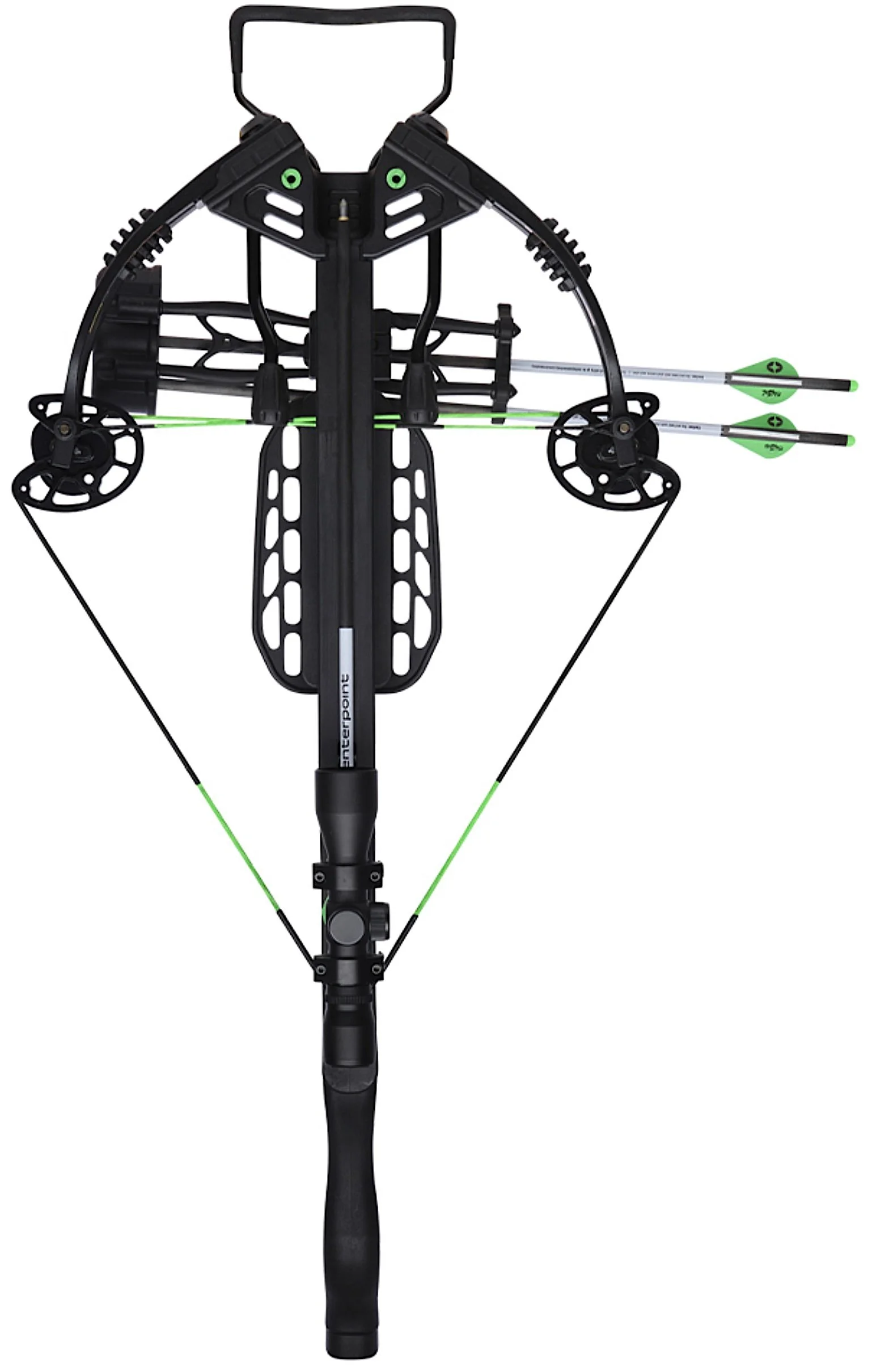
I tested another Steambow model in this Field Test Shooting Video, the Steambow AR Series M10 Tactical Crossbow. Like my other Crossbow Field Test videos, I recorded the Chronograph velocity while I was shooting the target so there was no need for separate segments, everything was done in one go with four cameras rolling. I didn’t put a dedicated camera on the Chronograph because I wanted a camera on the target; my camera glasses generally pick up the chrono readings anyway. I only have so many cameras, but everything recorded as planned. If you want the full specs and a closer look at the M10, watch my dedicated Table Top video.
Steambow quotes about 190–200 fps for the AR Series M10. My six chrono readings were 189, 191, 189, 189, 190 and 191, which worked out to a 190 fps average. Using the included 142-grain, 6.5-inch aluminum bolts produced roughly 11.4 foot-pounds of energy, so both velocity and FPE were basically on target with Steambow’s numbers. That’s adequate for small pests, but humane shots always come down to accuracy, you’ll want head or shoulder placement, and I’m not ready to declare any compact crossbow a guaranteed solution for that. Test accuracy for yourself.
For accuracy I shot six rounds at a paper target 30 feet downrange from my usual seated in the back, hands rested up front shooting position. The first shot from the Steambow AR Series M10 Tactical Crossbow was a few inches low, so I adjusted my point of aim up and ended up with an impressive 1-inch, 4-shot group just left of center. One bolt missed the target entirely, could have been me or a bad bolt (I’ll blame the bolt on that one). Still, for a compact crossbow this was an excellent result, comparable to some pellet rifles.
Overall the Steambow AR Series M10 Tactical Crossbow performed really well. I like the cocking and bolt-feeding system, cocking is simple: shoulder the stock, press the release, then pull the front down using the foregrip for leverage. Even with the higher power of this model you don’t need a lot of strength, and with practice follow-up shots can be quick. I’d add a red dot to the rail to help dial in accuracy and buy a few extra bolts for target practice and hunting. The M10 is one of Steambow’s pricier offerings, but it also has the highest ammo capacity and the most customization options. If you want the ultimate compact crossbow setup, the ability to preload multiple bolts and have extra 10-shot magazines on hand makes the M10 the one to consider.
I’ve tested a few compact crossbows before, but nothing with a multi-bolt loading system like the Steambow setup I’m testing in this video. As with my other Crossbow Field Test videos, I recorded Chronograph velocity at the same time I was shooting the target so I didn’t need two separate segments, I did it all in one pass with lots of cameras rolling. I didn’t dedicate a camera to the Chronograph for this test because I wanted a camera focused on the target; my camera glasses usually capture the Chronograph readings for me. I only have so many cameras, but everything was captured fine. If you want to learn more about the specifications and details of the Steambow AR-6 Stinger II, then watch my dedicated Table Top Video located here.
Steambow lists 180 fps as the claimed velocity for the Steambow AR-6 Stinger II Tactical. I consistently measured right around 160 fps, pretty close to the claim. Using the included 142-grain, 6.5-inch aluminum bolts my chrono readings ranged from 159 to 164 fps, averaging 163 fps, which is very consistent. That produced about 8.4 foot-pounds of energy, so both velocity and FPE were a little under Steambow’s stated numbers. That’s enough for small pests, but humane shots depend on accuracy, you’ll want head or shoulder placement, and I’m not fully convinced this bow is always up to that task. You’ll need to judge its accuracy for your own use.
On elevation (up and down) the Steambow AR-6 Stinger II was fairly accurate. Where it struggled more was windage: I had to aim noticeably to the right to move bolts toward the bullseye. The sight is very basic (a single fiber-optic post just behind of the Picatinny rail), which likely contributed to the windage issue. Despite that, I managed a roughly 4-inch group at 30 feet, with one bolt behaving like a flyer.
Overall the Steambow AR-6 Stinger II performed well. I really like the cocking and bolt-feeding system — cocking is easy by shouldering the stock, pressing the release, then pulling the front of the bow down using the foregrip for leverage. You don’t need to be super strong to do it, and with practice you could get very quick at follow-up shots. I’d definitely add a red dot to the rail to help dial in accuracy, and I’d buy a few extra bolts for target and hunting. The AR-6 Stinger II is pricier than some basic models, but the ability to preload multiple bolts in the built-in clip and unleash six shots in seconds makes the extra cost worth it to me.
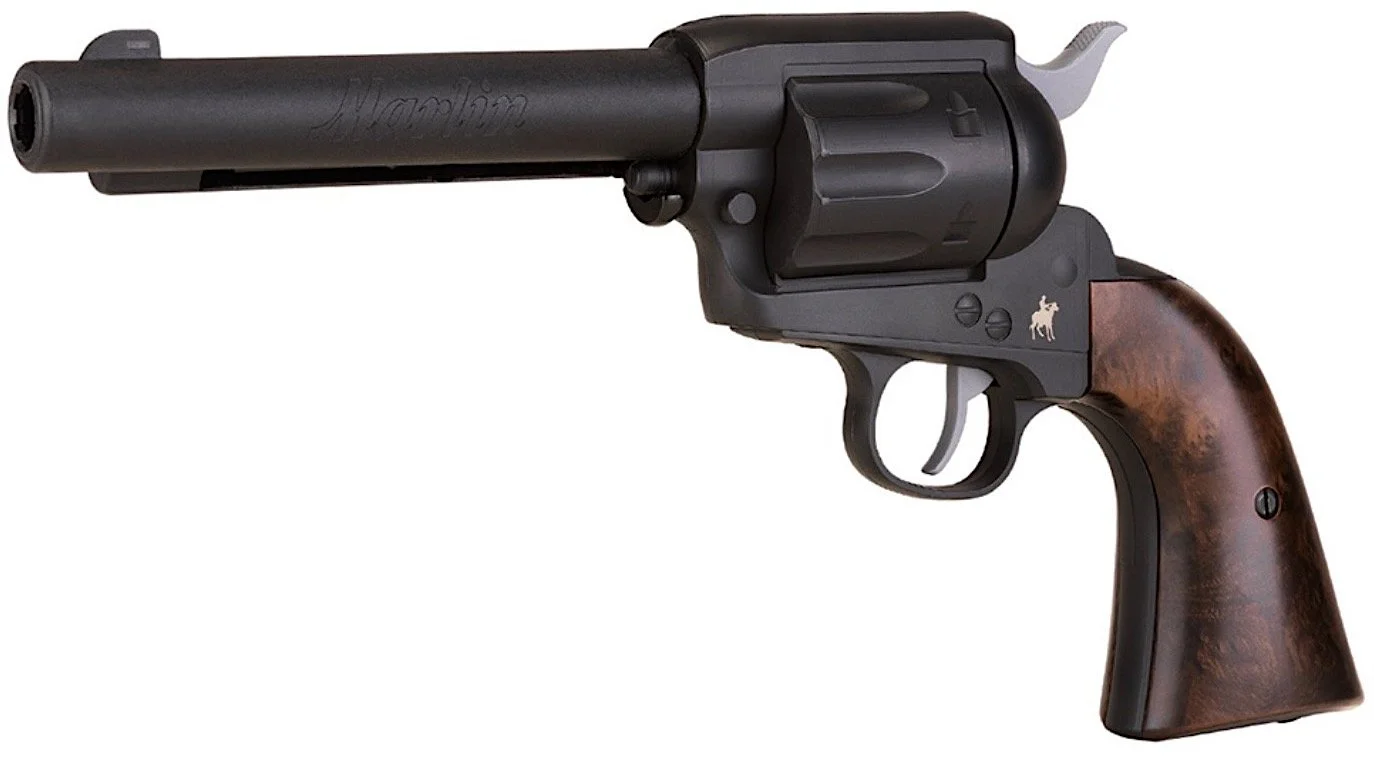
In this Field Test Shooting video for the Umarex Marlin Old West CO2 BB Revolver I check real-world performance: first I measure fps using a fresh standard 12-gram CO2 cartridge and 4.5 mm steel BBs through my chronograph. After that I hang a paper target at 30 feet and fire 10 rounds using the Single-Action-Only trigger to see what kind of grouping the revolver delivers straight out of the box. If you haven’t already seen my Tabletop Video Review for the John Wayne Marshal CO2 BB Revolver, watch that for full specs and close-up footage.
For the velocity test I put five shots through the chronograph. The slowest registered 345 fps and the fastest hit 416 fps, with an average of 403 fps, right in line with Umarex’s claimed 400 fps. Perfect for popping cans and casual plinking out to roughly 30–40 feet. The test was done inside a sea can at about 18°C (≈64°F), which gives a middle-of-the-road CO2 performance; warmer weather will typically push velocities higher.
Next I set the paper target on my pellet trap at 30 feet. Using my usual semi-rested position (hands braced on a front sandbag and seated on a stool), I fired 10 rounds with the Marlin Old West. The group measured roughly 4 inches, a bit left and just slightly high from the bullseye — not far off and similar to the grouping I got with the John Wayne Marshal CO2 BB Revolver, although the Marlin’s velocity numbers were notably higher.
The Umarex Marlin Old West CO2 BB Revolver is an inexpensive, mostly-plastic Single Action Army style revolver. There’s a fair amount of polymer in the construction, but it still feels solid despite being on the lighter side. That lighter weight can make the gun feel a bit twitchy in the hand compared with heavier replicas, which can affect accuracy. At the time of this video the Canadian price was about $99, which makes it good value — especially since it loads 18 rounds quickly compared with traditional shell-loading revolvers, meaning more trigger time with less fuss. There are a number of similar replica revolvers available from our Replica Airguns stores in Canada and the US, so check our stock if you’re shopping around.
Type: BB Pistol. Manufacturer: Distributed by Umarex Model: Marlin Old West Revolver Materials: Mostly plastic, some internal metal parts. Weight: 1.2 pound (544 grams). Total Length: 10.5 inches (26.6cm). Barrel: 5.5 inches 14cm) metal non-rifled. Propulsion: CO2. Action: Revolver SAO. Ammunition Type: 4.5mm Steel BB’s. Ammunition Capacity: 18 round internal magazine. FPS: Claimed 400.
Trigger Pull: The trigger on the Umarex Marlin Old West CO2 BB Revolver is single-action-only, so you must cock the hammer before each shot. That removes most of the trigger travel and effort, giving the Marshal a short, light, and easy-to-manage pull. It’s ideal for deliberate, accurate shooting, but less suited to action-style rapid fire unless you’ve got a very fast thumb.
Accuracy: I haven’t tested the Marlin Old West model specifically, but it should perform very similarly to the John Wayne Marshal CO2 BB revolver, they’re nearly identical aside from licensing, safety, and magazine placement. In my field test of the John Wayne Marshal it averaged closer to 360 fps rather than the claimed 420 fps and produced roughly a 4-inch, 10-shot group at 30 feet. You can watch that video here; I’ll hope to be posting a dedicated field test for the Umarex Marlin Old West soon.
Build Quality: There’s not a lot to get excited about in terms of materials, the Umarex Marlin Old West CO2 BB Revolver is mostly plastic with some internal metal parts like the barrel, trigger, hammer, and CO2 components. It follows the common two-half, screwed-together budget construction, which looks cleaner on the side where the screws are hidden. At just over a pound it’s fairly light. With relatively few moving parts, it should be reasonably reliable; the mechanical components do what they need to do and feel suitably solid for the price.
Realism: At first glance the John Wayne Marshal CO2 BB revolver resembles a Colt Single Action Army Revolver in shape and size, but it’s much lighter, about half the weight. The lack of real bullet openings in the cylinder (when viewed from the front) reduces realism. I’m used to the newer generation of revolvers with working cylinders and loadable, removable shells; those are pricier and hold fewer rounds, but they offer a much more authentic experience.
Pros:
A decent looking replica of a Colt Single Action Army Revolver.
Single action only trigger is short and light and well suited to careful shot placement shooting.
400 claimed fps is about perfect for plinking at ranges up 30-40 feet.
18 round magazine has a nice high capacity and easy to load when empty.
Should get lots of shots per CO2.
Safety is well hidden underneath just in front of the trigger guard.
I like the look with the all black receiver and simulated wood grips.
CO2 Allen key is built into grip so always have it on hand and will not lose it.
Marlin licensed and seems to be $50 less than the almost exact same John Wayne version.
Cons:
Mostly plastic builds makes it a bit light in the hand.
No fake shell holes in the front of the cylinder, could have added this for a more genuine look.
Not a big fan of the clamshell plastic packaging.
Comments: The Umarex Marlin Old West CO2 BB Revolver is a solid choice if you want an old-west single-action cowboy BB shooter for less than the nearly identical John Wayne Marshal (it’s about $50 cheaper). If you want more authenticity, consider one of the shell-loading Single Action Army style revolvers, they cost more, shoot a bit slower, and carry fewer rounds, but they deliver a much higher level of realism.
I recently started testing out the new DJI Osmo Nano, and while this camera may be marketed as an action/vlogging camera, I immediately saw how it could become a real asset for creating Replica Airguns review videos. On my channel, I’m always filming from multiple angles—close-ups of the guns, tabletop shots, and shooting demonstrations. The Nano’s small size and magnetic mounting system open up a lot of creative possibilities that larger cameras just can’t manage.
Why the Osmo Nano Fits Airgun Reviews
The DJI Osmo Nano is compact, lightweight, and extremely versatile. Thanks to its built-in magnets and the wide range of mounts that DJI includes in the box, I can attach it just about anywhere—on a target stand, a tripod, even a piece of metal in my indoor range. For my type of reviews, where I often want a stable angle on the gun while still moving around myself, this is a huge advantage.
Another big plus is that the Osmo Nano is not just flexible but also delivers great image quality. It records in 4K with 10-bit color and even offers a D-Log mode for those who want to fine-tune their footage in post-production. That’s a level of control you usually don’t get from such a small device.
Key Specs
Here are a few highlights worth noting:
Resolution & Color: Up to 4K recording, 10-bit color, and D-Log for advanced color correction.
Stabilization: Rock-solid electronic stabilization, so even handheld or mounted-to-moving-objects shots stay smooth.
Magnetic Design: Attach it quickly to mounts, gear, or almost any surface.
Lightweight Form Factor: Easy to carry, position, and experiment with new camera angles.
DJI Osmo Nano vs. Insta360 Go Ultra
A lot of people will naturally compare the Osmo Nano to the Insta360 Go Ultra since they’re both in the same category. But from my testing, DJI’s camera has some strong advantages:
Lower Price: The Osmo Nano is much more affordable.
Included Accessories: DJI packs in more mounts and options straight out of the box.
Color Flexibility: With 10-bit recording and D-Log, it offers a lot more room for dialing in your footage.
For someone like me who’s already juggling multiple cameras during a review, having a cost-effective and flexible option like this makes a lot of sense.
Final Thoughts
The DJI Osmo Nano may be tiny, but it’s built with creators in mind. For airgun reviews, it allows me to set up angles I wouldn’t normally capture, without having to invest in another full-sized camera or rig. Smooth footage, great color, and the freedom to mount it just about anywhere—it’s a perfect addition to my setup.
If you want to see it in action, check out my video where I share some first impressions and show real-world examples of what the Nano can do.
This is one camera I’ll definitely be adding into the mix for future Replica Airguns reviews.
Yet another Mystery box with good stuff inside for me to discover and checkout and share with everyone! In this Replica Airguns August 2025 Mystery Box Video I reviewed three products from Umarex, and all of them are some sort of BB gun related product, one pistol, one revolver and one rifle and interestingly not all are CO2, as one is AEG powered which is more or less a new thing with steel BB guns. Barra introduced their 400e AEG AR Steel BB Rifle a while back and now Umarex has their own version of a similar AEG BB rifle in a sightly more true AR platform called the Umarex AER16.
The Umarex Marlin CO2 BB Revolver is really just a Marline licensed version of their Marshal CO2 BB Revolver but it us $50 less so unless you really want the Marshal licensing then go for the newer Marline version. Another Umarex product out of this months Mystery Box was the Umarex DS11 1911 NBB CO2 BB Pistol which is a pretty basic almost all plastic NBB CO2 BB Tactical 1911 that uses the standard metal BB Stick magazines. It does however look a lot better than most of these simple NBB Plastic BB Pistols on the market so in terms of looks it has that going for it for sure.
I also got a few accessor items from a company called GEAR STOCK, Some CO2 in 12 and 88 gram along with some 6mm aluminum Airsoft BB’s. A very cool rechargeable red and green laser that comes in a nice hard shell case and it has a picatinny rail on the bottom she you can stack a second accessory under it.
Here are some links and specs for the Airguns I show off in this mystery box video:
Before I get into this Field Test Shooting Video for the Bug-A-Salt 3.0, make sure to watch my Table Top Video Review for it where I go into more details and specifications along with some nice close up video of it. In this Field Test Outdoor Shooting Video I test out the Bug-A-Salt 3.0 on some wrapping paper (Wrapping Tissue Paper) from various distances to see what damage the Bug-A-Salt 3.0 does to it. You do really need to get in pretty close to see significant damage, but if you where a small bug you would at bare minimum be stunned and immobilized waiting for that fatal kill shot.
I was hoping to go on a kind of Bug Safari Hunt out in the yard, so I did a dry run without my cameras running and I quickly found out that bugs in the wild are extremely elusive. They much prefer the comfort of your home which is of course the ideal location for using the Bug-A-Salt 3.0, but not great for shooting a video…
I was not able to record velocity or accuracy for that matter using the Bug-A-Salt 3.0 as it is more like a salt shotgun but as fate would have it, one very unlucky fly did land near by while I was recording, and it met its fate for the sake of this video. I also vaporized some butter cups (These are small yellow flowers that grow wild in the grass). All in all I was able to showcase the effectiveness of the Bug-A-Salt 3.0. My advice is to get in nice and close if you want a one shot kill, or you will have to take some follow up mercy shots.
In this Field Test Shooting Review, I test the Umarex Smith & Wesson 629 Competitor CO2 Airsoft Revolver in the Replica Airguns Indoor Sea Can Shooting Range to find out what the real world velocity is in fps. I also shoot some .20 gram and .40 gram Airsoft BB’s at a paper target setup 30 feet down range to see what kind of accuracy I can achieve with a 6 round grouping. If you are also interested in more information like specifications and details along with some more close up video of the Umarex Smith & Wesson 629 Competitor CO2 Airsoft Revolver, then make sure to watch my Table Top Video for this rather chunky Shell Loading Airsoft Revolver.
Starting with my Chronograph Velocity Test, I loaded up a brand new 12 gram CO2 Cartridge and loaded 6 .20 gram Airsoft BB’s into the cylinder. My average 6 shot velocity of 514 fps was even a bit higher than what Umarex claims which is 500 fps. The fastest Airsoft BB was clocked at 531 fps with the slowest BB hitting a respectable 490 fps. That’s moving pretty fast for sure, probably a bit quick for close quarters indoor Airsoft games? Temperature was right around room temperature.
I was going to only test out the .20 gram Airsoft BB’s for my accuracy part of the Field Test, but the high velocity was not working all that well with the lighter .20 gram Airsoft BB’s. I only got around an 8 inch grouping as the lighter .20 gram Airsoft BB’s really wanted to curl though the air. I felt the Umarex Smith & Wesson 629 Competitor CO2 Airsoft Revolver could do a lot better using a heaver Airsoft BB’s so I redid my Accuracy Test, but this time using .40 gram Airsoft BB’s, and this for sure gave me much better results. 3 of the 6 Airsoft rounds made a single hole just above the bulls-eye fairly well centered with 2 shots increasing the grouping slightly to around 2 inches and 1 shot that came out a bit which I will classify as a flyer but if you include it, the grouping was more or less around 5 inches, still a lot better than the .20 gram Airsoft BB’s.
All in all the Umarex Smith & Wesson 629 Competitor CO2 Airsoft Revolver is one of the nicest shell loading Airsoft Revolvers I have reviewed, and I do hope that one day it is available in a Steel BB version. I do recommend for sure using heavier Airsoft BB for better accuracy, and again if you are a smaller person or young adult, this Revolver may be a bit chunky at around 3 pounds. The single action trigger is very usable for precise shot placement, but I would say it is not overly light. Of course you can shoot double action if you want to unload the 6 rounds quickly when action shooting. I do like that Umarex has gone with larger shells and a beefier cylinder which is a lot closer to what your would expect from a 44 magnum in terms of shell casing size. If you want the ultimate Shell Loading Airsoft Revolver than this one is for sure on the top of the list!
I am making this video for both my channels (GetFitOver40 & Replica Airguns) since I will be using the HoverAir X1 ProMax in my Video making process to capture video in a way that only an AI Drone can. I do like to share with my audiences some of the tech I use behind the scenes to make the videos a bit more interesting.
There is a ton to talk about and show when it comes to the HoverAir X1 ProMax which is why this video is a bit on the longer side. I really wanted to talk about what I like about this amazing flying video system, and of course show the super high quality video it takes.
The purpose of this video is not so much to go over all the specifications and details, or to compare it to other similar products, but rather to go over what I like about it, and why I decided to get one for myself. About a year ago I ordered the HoverAir X1 Pro when it was being crowdfunded, but I backed out of my order when the DJI Neo came out, mainly because the DJI Neo was first to market, and it can also fly in true FPV mode which really appealed to me. I am glad I got the Neo as it has been so much fun, and will be keeping it mainly for its FPV flying and versatility.
Why did I decide to get myself the HoverAir X1 ProMax? There is really nothing out there right now that can take as high quality video (8k) in such a small and portable package. I love the AI flying modes but it is also nice you can use the Beacon with the Joysticks to control it just like a regular Drone.
For me it was the ultra high video quality, the faster tracking speeds, and the ability to use it like a standard drone since all my other drones are more or less FPV drones. Oh yah, I also got a crazy deal on it over on Marketplace (About half price).
Type: Revolver CO2 Airsoft Pistol. Manufacturer: Distributed by Umarex. Model:Smith & Wesson 629 Competitor. Materials: Mostly all Metal. Weight: 3.3 pounds (1.55 kg). Total Length: 12 inches (30.5cm) Barrel: 6 inches (15cm) metal non-rifled. Propulsion: CO2 x 1. Action: Revolver, SA & DA trigger. Ammunition Type: .6mm plastic Airsoft BB’s. Ammunition Capacity: 6 round cylinder. Velocity: Claimed 500fps.
Trigger Pull: The Umarex Smith & Wesson 629 Competitor CO2 Airsoft Revolver shoots in either single action or double action. If you pull the hammer back, you can shoot in single action which will give you a super short trigger pull with virtually no takeup and a very light and predictable release, perfect for when you are wanting the best possible accuracy out of this Airsoft Revolver. You can also simply just pull the trigger in double action which means your trigger finger is doing all the work of pulling back the hammer and releasing it which is a much longer trigger pull that is between medium and heavy pull, but still fine for quicker action shooting.
Accuracy: So far I have not shot the Umarex Smith & Wesson 629 Competitor CO2 Airsoft Revolver but I have shot a lot of similar shell loading 6 shooter revolvers. Yes the cylinder and the actual shells are a bit larger but this should not really affect accuracy or power. Umarex does claim a max velocity of 500 fps which does seem high, so it will be interesting to see if the Umarex Smith & Wesson 629 Competitor CO2 Airsoft Revolver will actually hit these numbers. In my past Field Test Shooting Video Reviews I am generally able to get at least a 2 inch 6 shot groupings from 30 feet away from my paper target so hopefully that is the case with the S&W 629 Competitor.
Build Quality: If you’re looking for a very solid and hefty Airsoft revolver, than I don’t think there is anything more beefy than the Umarex Smith & Wesson 629 Competitor CO2 Airsoft Revolver. It is a whopping 3.3 pounds and is almost all metal so smaller handed shooters may find this one a bit too much to hold comfortably. Fit and finish is very good and I do really like the satin stainless steel look to it even though Umarex calls it a chrome finish.
Realism: I like the shell loading revolvers for the added realism you get manually loading the cylinder with 6 preloaded shells. In almost all of the shell loading 6 shooter revolvers, the cylinder and shells are actually smaller than what you would find in a real steel 6 shooter revolver, especially the Single Action Army Revolvers as they would normally shoot a .45 caliber shell rather than a .38 caliber shells. So it is nice that Umarex didn’t just go with already to go parts and they gave the Umarex Smith & Wesson 629 Competitor CO2 Airsoft Revolver newly designed larger shells and a larger cylinder, maybe the shells are not actually .44 caliber in size but the larger cylinder and larger shells does give it more realism. Of course almost all the parts function just like they would in a real steel revolver.
Pros:
Almost all Metal build with a very heavy weight of 3.3 pounds.
Full adjustable rear sight for windage and elevation.
Comes with 12 reloadable shells, most only come with 6 shells.
Grooved Pistol Grips for added comfort and grip.
Picatinny rail on top of barrel for adding a red dot or optional sight.
Nice Smith & Wesson markings on gun stamped into the frame.
Option of shooting in single or double action, nice light single action trigger.
I like the satin stainless finish.
Super realistic loading and shooting with the removable shells.
Cons:
Does come with an orange tip.
No adjustable hop-up I can see.
Rather large and heavy so not great for younger or smaller handed shooters.
Velocity may be a bit hot for some Airsoft games.
Comments:
I think my main takeaway for the Umarex Smith & Wesson 629 Competitor CO2 Airsoft Revolver is that Umarex has a new larger shell and cylinder design, which is closer to the actual shell and cylinder size of a .44 magnum, so maybe we will see this design coming out in future shell loading revolvers. Other noticeable features are for sure the size and weight of this beast. If you add a red dot or optical sight to it, then this Airsoft revolver could weigh in at nearly 4 pounds! If you want the ultimate shell loading revolver than this is probably going to be the choice to go with, unless you want it in 4.5mm steel BB or Pellet versions as at least for right now, it is only available in an Airsoft version, maybe that will change down the road…
In this Mystery Box Unboxing Video I take a look at three Airsoft products, two pistols from Umarex and two AEG Airsoft Rifles from Specna Arms. As this is essentially an Unboxing Preview Video, I don’t go into a lot of detail for each item as this is my first real exposure to these items for the most part. I will be making full Table Top and Field Test Video for each item once I get to know them a bit better and share all the specifications and features along with shooting performance.
Starting with the Umarex products, I did get the chance to checkout the Umarex Smith & Wesson 629 CO2 Airsoft Revolver at this years SHOT Show, and it is a very solid shell loading 44 Magnum styled Revolver with full Smith and Wesson licensing. From what I remember this item may only come in the Airsoft version at the time of this review and it does have a claimed velocity of 500 which may be a bit hot for Airsoft games but it would be a lot of fun shooting at pop cans and the likes.
The second Umarex products is a pretty basic mostly clear plastic Spring Powered Beretta 92 FS Airsoft Pistol. It is fairly light weight with it’s mostly all plastic construction and the velocity is also on the lower side at only around 250 fps. Since it is distributed by Umarex it carries the Beretta licensing which is nice and all, but on a clear plastic gun I am not sure if is really a major feature.
The first Airsoft Rifle out of the Mystery Box was the Specna Arms SA-FX11 FLEX AEG Airsoft Rifle which is your standard AR configuration, mine was the shorter barrel version but it does come in a longer barrel version as well. The top and bottom receiver and most of the outer components are going to be Nylon Fiber Reinforced Plastic. It does include features like Rotational Hop Up Chamber, SA ETU™ Optical Electronic System Optimizes for improved trigger response and Quick Spring Change System to name a few.
Something I don’t see too often are Pink Assault Rifles! So it was nice to get the pink version of the Specna Arms SA-FX02 FLEX AEG Airsoft Rifle. It does come in a Black and Tan version along with an all Black configuration. It’s really a great looking AEG Airsoft Rifle in any color you decide to go with, and I like the compact feel it has with lots of options for mounting accessories on the top bottom and side rails. You can get going right away using the included pop-up front and rear sights or throw a red dot or optical sight on it.
Trigger Pull: The trigger pull on the BUG-A-SALT 3.0 Salt Gun is a Single Action Only trigger that requires you to work the pump action to load salt and prepare the hammer to fire in Single Action. There is a little bit of takeup and then a medium trigger pull weight that is about right for a pest control tool like this, as you do not want a super light trigger that could go off unintentionally. When you work the action using the pump, the real sight also pops up not only so you can use it but also to indicate that the BUG-A-SALT 3.0 Salt Gun is loaded and ready to fire.
Accuracy: So far I have not fired or tested out the BUG-A-SALT 3.0 Salt Gun as it is not the time of year for bugs just yet, so that portion of my review is going to have to wait until at least spring time when the bugs and flies come out in full force. I will not be making my traditional Field Test Shooting Video where I shoot at a Paper target setup 30 feet away, or even testing out the velocity in fps as the BUG-A-SALT 3.0 Salt Gun is only rated to shoot up to 3 feet away and I’m not sure how a blast of salt would even be read by a Chronograph or if that information is even important for a fly exterminator like this. I will be making some sort of shooting video for the BUG-A-SALT 3.0 Salt Gun when I am able to find bugs to blast…
Build Quality: The BUG-A-SALT 3.0 Salt Gun is made out of mostly plastic with I assume some metal working parts internally. Even the internal barrel is plastic since you are only shooting salt. The BUG-A-SALT 3.0 Salt Gun does feel solid and the working parts like the pump action, trigger and safety feel durable enough. The salt hopper lid may be a bit flimsy and if that breaks I’m not sure how one would keep the salt in the hopper?
Realism: The BUG-A-SALT 3.0 Salt Gun is not a replica gun to speak of, it kind of looks like a pistol grip pump action shotgun but there is really no way I feel anyone would mistake the BUG-A-SALT 3.0 Salt Gun for a real gun, this is probably good since you may want to keep it out lying around in your house for when you may need to do some bug blasting.
Pros:
Very unique product, not a lot of competition in the market.
Makes eliminating flies and bugs a lot more fun, would be fun at get togethers or parties.
Fairly well built, feels solid and durable.
Low cost to operate, only requires table salt.
Can get up to 80 shots per loaded salt hopper.
Can shoot flies up to 3 feet away.
Easy to access cross bolt safety.
Auto pop-up rear sight lets you know it is loaded and ready to fire.
SAO Trigger is relatively decent.
No bug guts mess to cleanup.
Cons:
Not suitable for larger bugs with hard exoskeletons like wasps or larger. Really only meant for flies.
Not a toy as it could be assumed it is. So be careful around kids as an eye shot could be very painful and cause injury.
Price is a lot more than a fly swatter that also gets the job done.
Comments:
If you hate flies as much as I do and would like a more sportsman like way to eliminate them rather than your standard fly swatter that basically mushes the fly into a bloody mess on what ever surface you mash it into. Then perhaps something like the BUG-A-SALT 3.0 Salt Gun may be just perfect for you. I am hoping it works as good as the advertising says it does. Based on some of the reviews I have watched it seems ideal for flies but may not so good for larger insects with hard exoskeletons. You are going to pay a lot more for the BUG-A-SALT 3.0 Salt Gun than a dollar store fly swatter will cost you, but I can guarantee you will have a lot more fun using it and no need for the messy bug juice clean up after a kill shot.
I spoke with Jacob from Barra and he went over a lot of new products adn updated products Barra is introducing this year. We discussed some new PCP Air Rifles with Canada import options, Jacob went over some new updates to their 1866 Muti-pump BB and Pellet Lever Action Rifle, and he went over Barra’s Gen 2 400e AEG BB rifle which include a higher capacity magazine, an increased velocity and unproved internal tolerances for smoother BB flow. Lastly Barra is introducing high grade 4.5mm BB’s that a re procession ground to be more uniform for improved accuracy and better BB feeding. Great for full auto guns.
It was nice to run into ASG (Action Sports Games) right away and talk with Bob for ASG. Bob always has a great understanding of the ASG product line and each year I Interview him and find out all the news and updated product in the ASG lineup. This year Bob’s goes over the new ASG CZ P-10 C CO2 Blowback BB Pistol, the Action Army C1 Pro Bolt Action CO2 Airsoft Rifle, ASG’s new Frag Impact Sound Grenades, along with some new additions to the Shadow 2 Series of Airsoft Pistols. Was a great start to this years SHOT Show 2025!
I’m back from SHOT Show 2025 Las Vegas and finished transferring and uploading all the video from all the cameras we shot it all on. We had a great time, we met a lot of great folks at the booths and it’s now time to put it all together and make some videos for everyone so I can share the experience!
I always like to put out a “Teaser Video” with some quick clips of the entire experience including some of the travels, a bit of the resort we stayed at, shots of Vegas and of course lots of the SHOT Show 2025 experience along with the booths we visited. Enjoy this quick preview and stay posted for my upcoming Interview Videos shortly…
You may have noticed a lack of Airgun Video Reviews last week? That is because I went on vacation with my buddy Steve to Oceanside California where we stayed at the WorldMark Oceanside Resort. We spent a full week in Oceanside visiting the surrounding beaches, Mission Beach in San Diego along with Laguna Beach and Newport Beach.
We had a really great time, I was able to capture a variety of video of some of our experiences using my Samsung Galaxy S24 Ultra, My DJI Neo AI and FPV Drone, and my Meta Glasses. I have put together a video to share Oceanside California and surrounding area in a mostly chronological order for your viewing enjoyment.
I am back to making Airgun Review Videos so stay posted for those videos coming shortly…
Since I use all kinds of cameras for the making of my Replica Airguns Videos including the HoverAir X1 Flying Camera Drone, I though it would be a good idea to share my thoughts on the new DJI NEO Mini Drone which Is replacing my HoverAir X1 at least for now. This is not an unboxing first impression video with basic out of the box test videos. This video is going to go over how the DJI NEO actually performs comparing to the HoverAir X1 and other DJI dedicated Drones and FPV Drones.
I have used different drones to do everything the DJI Neo claims to do, but can the DJI NEO really do it all and if so can it do it all as good or good enough?
The short answer is yes it can do it all but will it meet your specific expectations?
I don’t claim to be a pro at any of the things the DJI Neo can do, but I have at least some experience using the HoverAir X1 for the past year which is a similar experience as what you get with the base model DJI NEO out of the box.
I also have owned and flown standard DJI Drones with remote control setups for taking those cinematic flying around smooth shots. The DJI NEO out of the box can do limited distance and height using your DJI NEO with your phone in Manual Mode. You can also purchase the DJI NEO Fly More Kit that comes with the RC-N3 Controller and unlock almost limitless distance and even more features out of your DJI NEO.
I owned the first generation DJI Avata and flew it with the motion controller similar to what you can do with the DJI NEO when combined with the DJI Goggles 3 and RC Motion 3 Controller. That experience really got me more interested in experimenting with FPV drones.
I now own a bunch of FPV drones in various styles and sizes and use them with my DJI Goggles and Manual Controller to fly in full Manual Acro Mode for a true fps experience.
DJI NEO Compared to the HoverAir X1.
For the most part they both perform a lot of the same Selfie Camera shots like Follow, Droney, Circle, Rocket, Spotlight, Direction Track and some more specific to each unit.
You can fly them without a controller or even your phone by simply turning them on, selecting your flying mode and pressing a button.
They both can use your phone as a simple virtual controller to fly them around in manual mode and get some cool more cinematic shots.
They both can use your phones built in Microphone to record audio while taking out the drones propeller noise.
They are both well under 250 grams closer to 120 to 130 grams.
They both have a one axis gimbal setup.
The cameras in both are comparable. 2.7k 30fps for the HoverAir X1 and 4k 30fps for the DJI NEO.
Both have full prop guards and are very crash resistant.
Where does each one shin in my opinion?
HoverAir X1:
Starting with the HoverAir X1 it came out first and so more of the bugs and settings have been worked out, and you have to give them credit for being first here as DJI did a lot of copying if we are being honest.
The HoverAirX1 has more ability to change settings using the buttons on the drone without going into the phones software to do it.
The HoverAir X1 is better at staying in place when inside and in lower light situations.
The HoverAir X1 can record in portrait mode for social media content.
The HoverAir X1 can use just about any external USB or BT Microphone for recording to get better audio than just by using you phones internal Microphone. The DJI NEO only gives you the option to use their DJI 2 Microphone which starts at $300 Canadian.
The HoverAir X1 can be folded, making it much more portable.
The HoverAir X1 at this time can track a little bit faster than the DJI NEO, but that can change with a softer update in the future.
The HoverAir X1 does not restrict where you can fly as there is no Geo Fencing. The DJI NEO will not give you much of a problem here when in solo mode or when connected to the DJI Fly App without any controllers or Goggles, but when connected to addition DJI accessories, you will have to factor in Geo Fencing limitations and work arounds which can be really annoying.
DJI NEO:
Moving on to the DJI NEO, the NEO has voice command as long as the DJI Fly App is open and your phone screen is on, very useful when wanting to change the drones distance and height in modes like Follow and Direction Tracking.
The DJI software is a bit more intuitive and the Manual Mode allows for much smoother control of the DJI NEO and further distances and height. (60m)
The DJI NEO records in 4k which is a bit better than the HoverAir X1 2.7k, but not by much. There is room for improvement with the NEO in terms of software updates but we will see what DJI does in terms of improving video quality and hopefully the ability to tweak the video settings.
The DJI NEO has built in GPS which allows it to stay in position outside better and even go over water and steep drop-offs.
The DJI NEO has an 18 minute battery run time versus the HoverAir X1 10 minute battery run time. (In real life it is more like 15 versus 8 minutes), so almost double per battery.
The DJI NEO is much more than a one trick pony with its ability to be much more than a Flying Selfie Camera Drone. It can be a full fledged remote controlled drone or even a true FPV drone when adding the additional accessories to it.
And that brings us to the point in this video where I talk about if the DJI NEO can really perform good enough to possibly replace your stand alone drone or even your FPV Drone? And again it depends on what your expectations are and what your end use in these modes is.
In terms of a stand alone drone, when the DJI is connected to the RC-N3 Controller, it can do much of the same tasks you would expect and get many of the same shots. Because of its size it will not be as good in stronger winds and it also does not have the power or speed of a larger dedicated Drone. Most of the DJI Drones also have higher quality cameras with larger sensors and 2 or even 3 axis gimbals with better stabilization. They also have much longer battery run times so you can go farther and longer with them. That said the DJI NEO may be good enough for a non-pro user to get the shots they are looking for.
The DJI NEO has been compared to the DJI Avata series and it does look a lot like a smaller version for sure. In terms of flying ink a DJI Avata, again it is smaller and less powerful so it will be slower and more prone to weather conditions. The camera systems on even the DJI Avata 1 is much better than the DJI NEO with full 4k 60fps ability and the DJI Avata 2 camera is even better than the Avata 1 camera.
As an FPV Drone you can strap on a set of DJI Goggles 3 and and instead of using the Motion Controller 3, you can connect to the RC Motion 3 Controller and get full manual mode FPV flying and hit speeds as high as 60km/h. You do have to be careful as the DJI NEO is not really a freestyle drone, if you push it too hard it will washout and go out of control potentially crashing, especially if you are close to the ground and it does not have time to recover. That said it is a lot of fun to fly if you fly within its limitations.
Some tips when using the DJI NEO based on my experiences:
Record in 4k for best quality except when in FPV Manual mode as the faster motion of FPV flying requires more frame rate speed to capture all of the motion without getting video jitter. Your feed in the DJI Goggles will look a lot better in 1080p 60fps as 1080p is the native resolution and 60fps is much smoother and allows for easier viewing while flying.
Do not use the DJI NEO inside in low light, it simply does not work very well in low light inside and will most of the time just land.
When using a remote like the RC-N3 or the Goggles 3, lower your video sharpness to (-2) for better looking video.
To fly in restricted GEO Zones you will need to go online and make a license request on the DJI Fly-Safe website and then you will need to treansfer that request license to your drone using the DJI Fly App while connected to the DJI NEO with with an internet connect. A bit of a process but after a few times you get the hang of it. I was not able to unlock a Geo Zone on location while in the app even with an internet connection. Hopefully this gets fixed down the road.
First off, Comica was kind enough to send the Comica BoomX-D PRO Wireless Microphone System for free to review. That said the opinions in this review are my own and I do a fairly thorough review testing out the audio of the Comica BoomX-D PRO’s to my Comica Vimo C similar Microphone system. I use a variety of setups including recording into my camera and smart phone via line in and USB in. I also test out the internal recording capability of the Comica BoomX-D PRO’s to see if three is any difference in sound and levels.
One of the main reasons why I was interested in tech Comica BoomX-D PRO Wireless Microphone System is its ability to record directly to internal memory so you do not necessarily need a receiver as you can record direct to internal memory to one or both of the transmitters Microphones and then transfer the audio to you computer or smart phone later to sync with any video you may have recorded to go along with it.
The Comica BoomX-D PRO Wireless Microphone System also comes with lapel Microphones that you can use instead of the built in Microphones on the actual transmitters which can make for a more discreet microphone setup and may improve audio just a little bit. The Comica Vimo C Wireless Microphone System I have been suing for the last two years and which has never let me down and fulfilled pretty much all my audio needs is a bit more compact setup than the Comica BoomX-D PRO Wireless Microphone System but Comica Vimo C’s do not have internal memory to record to our allow for using lapel microphones.
In terms of audio quality, both systems sounds fairly similar, the Comica Vimo C Wireless Microphone System to me sounds like it may be a bit fuller in the bottom end just a little bit but not by much. Both systems have a solid connection between the transmitters and the receiver giving good range with a reliable connection with no cutouts as long as you do not get really far away with objects in-between the transmitter and receiver. I suggest you watch my Full Review Video and decide for yourself how you feel about the audio quality of the Comica BoomX-D PRO Wireless Microphone System and if perhaps it may be the right setup for your audio recording needs. In my opinion they are a well priced system for what you get and are comparable to much higher pried units without compromising quality of build or sound.
Here are some of the key features of the Comica BoomX-D PRO Wireless Microphone System:
2.4G Digital Dual-channel Wireless microphone, Global Free Frequency.