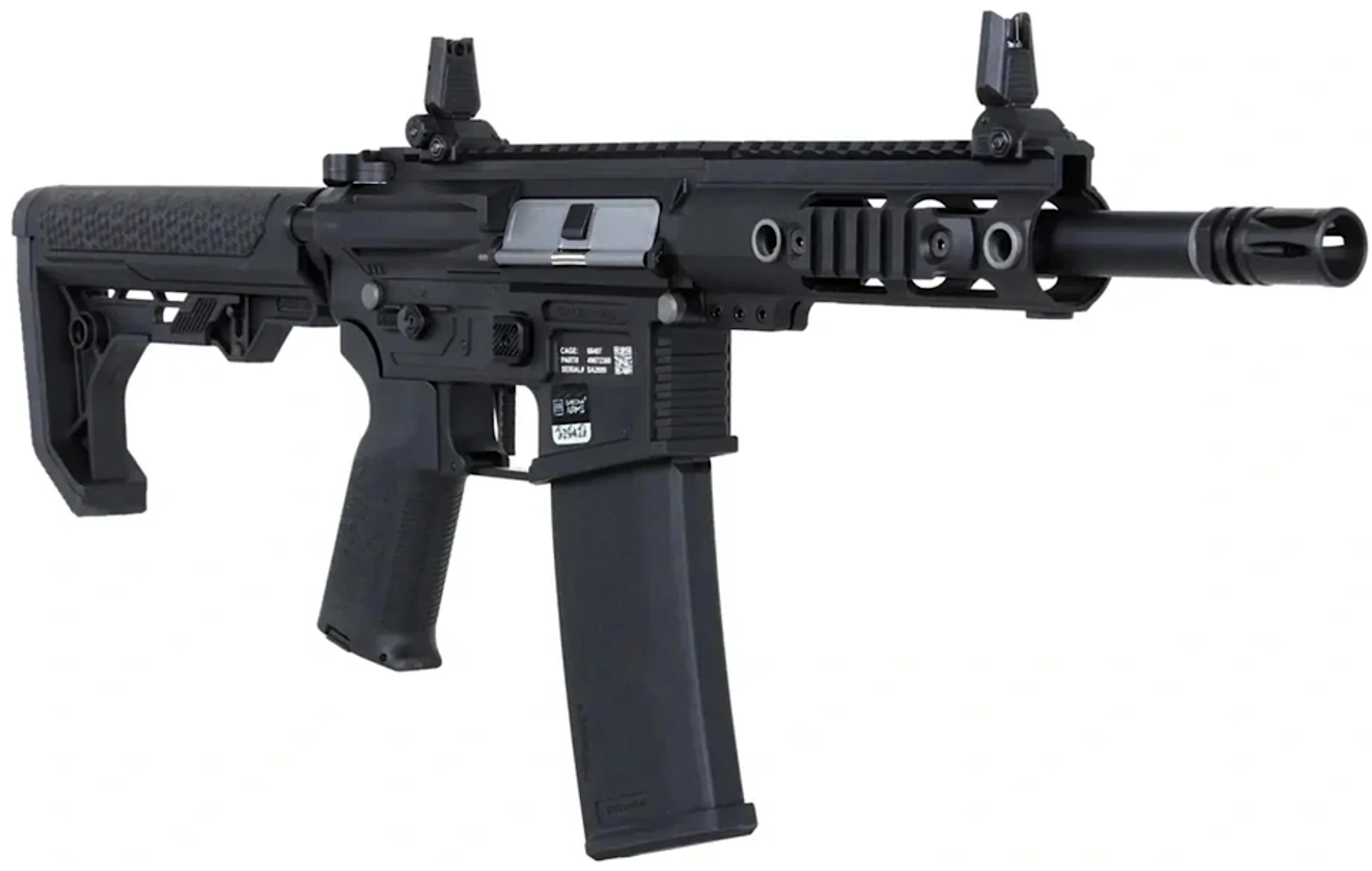

Entries in Field Test,4.5mm / .177 cal

Worlds Smallest Full Auto BB Gun - How it All Begun

No Comments

Replica Airguns takes a step back in time to share how everything began, long before the channel, website, and stores grew into what they are today. The journey started around 2006, just a year after YouTube first launched. At the time, online video was still in its infancy, with low-resolution clips, shaky footage, and minimal production quality being the norm.

Mike created the very first video simply for fun. It featured a modified Umarex Walther PPK BB gun that Mike had altered for full-auto shooting. Edited in iMovie on a Mac and uploaded in low resolution (under 640×480), the video wasn’t intended to be anything more than a casual experiment. However, after sitting online for a few months, it unexpectedly reached around 100,000 views, an impressive number for that era, when far fewer creators were uploading content and viral videos were rare.

That early success revealed something important: there was real interest in Airguns and BB gun content. From there, Mike purchased more Airguns (to his wife’s disapproval), more videos were created, and the foundation for a focused channel began to take shape. A few years later, the project became more serious, evolving into a dedicated platform and eventually transitioning into the Replica Airguns brand you see today!

Over time, the brand expanded into multiple websites, ReplicaAirguns.com, ReplicaAirguns.ca, and ReplicaAirguns.us, along with a large video library. Although the channel faced setbacks, including being removed from YouTube at one point, the content continued to live on through platforms like Vimeo and Rumble. Now, with nearly all videos being restored back to YouTube, the library is close to fully rebuilt.

The original video that started it all was thought to be lost for years, buried on old storage drives. Recently rediscovered, it has been enhanced using modern AI tools to improve clarity while still preserving its original look and feel. Despite its dated quality, it represents the true starting point of the Replica Airguns journey.

For viewers interested in Airguns, including BB guns, Airsoft, Pellet guns, and more, the channel and websites continue to offer extensive content and product availability across both Canadian and U.S. online stores.

Categories: 4.5mm / .177 cal, BB, Blowback, CO2, Field Test, Full Auto, Full Auto Fun, Modification, Pistol, Replica Airguns News, Semi Auto, Vimeo Video, YouTube Video Tags: PPK/S, PPK, Umarex, CP99

Replica Airguns March 2026 Mystery Box Unboxing

No Comments

Today’s unboxing, we’ll call it the March 2026 Unboxing Preview!

I had no idea what was in this box, and honestly, I like it that way. It makes every delivery feel a bit like Christmas. A box shows up from the warehouse, I crack it open, and my job is to let you know what’s inside and what might be coming soon to the store. A lot of the time these are products we’ve never carried before. Not always, but usually there’s at least something new or unexpected in the mix.

As usual, getting into the box was its own little challenge. Good thing I had my “box cutter “ handy. Once I finally got through the packaging, it was clear right away this one had some interesting stuff inside.

What was in the box?

1) Annie Oakley Lil’ Sure Shot BB Rifle

First out of the box was something a little different: the Annie Oakley Lil’ Sure Shot.

This one is brought to you by Air Venturi / Western Justice, and it’s essentially a Red Ryder-style lever action BB rifle with some nice Western-themed touches. Right away, it stood out with the stained solid wood stock, wood forearm with engraving, and engraved Annie Oakley artwork.

Here are some of the listed specs and features:

  • Ammo: .177 caliber / 4.5mm steel BBs

  • Action: Lever cocking, spring piston

  • Barrel: Smoothbore

  • Overall Length: 36.25 inches

  • Capacity: 550 BBs

  • Claimed Velocity: Up to 350 FPS

  • Weight: 3.3 pounds

  • Max Shooting Distance: 212 yards

Once I opened it up, it definitely gave me that familiar Red Ryder / Marlin Cowboy vibe, but it feels like it may be just a bit bigger overall. Maybe a slightly longer stock, maybe just a bit more substantial in the hands. I’ll have to compare it side-by-side with a Red Ryder later to know for sure.

A few things I noticed right away:

  • It has a metal lever

  • Metal frame

  • Metal barrel

  • A plastic muzzle tip

  • A rear sight that appears adjustable

  • And surprisingly, a Weaver-style rail on top for mounting an optic

That top rail is actually a nice touch. You could absolutely throw a small scope on this if you wanted to, and why not? It makes for a fun little plinker, and the engraving gives it some real visual appeal too.

I’ve always had a soft spot for these little lever-action BB rifles. They’re just fun. They’re simple, classic, and a great way to introduce younger shooters to safe rifle handling. Rifles like this tend to be a bit easier for beginners since they’re not as quick to wave around as a pistol.

So yes, this one looks like it should be a lot of fun, and I’ll be doing both a Tabletop Review and a Field Test Shooting Review on it soon.

2) .68 Caliber Nylon Balls (100 Count)

Also in the box was a pack of 100-count .68 caliber nylon balls.

These feel noticeably heavier than the rounds I was using in my earlier T4E TC68 review. The previous ones were around the 2.8 to almost 3 gram range, and these new ones feel more like they’re getting up into the high 3 gram to 4 gram area.

That added weight could make them especially interesting to test in the TC68, since more projectile mass can sometimes translate into more energy on target, even if velocity comes down a bit.

So these should be fun to test out, and as it turns out, they may have arrived for a very good reason…

3) Steambow B08 / .68 Caliber Rubber Ball Crossbow Platform

This was the big surprise in the box, and definitely the highlight item.

If you watched my SHOT Show coverage, then you may remember this one from the Steambow booth. It’s a really cool product: basically a magazine-fed rubber ball shooting crossbow-style launcher in .68 caliber.

I had already gotten a chance to try it at SHOT Show, and Steambow was great about letting us check it out there. So it was pretty exciting to see one show up here for review.

Some of the box highlights:

  • Detachable magazine

  • 8-shot capacity

  • .68 caliber projectiles

  • Includes 25 foam balls

  • Comes with a 35-pound limb

  • AR-style adjustable buttstock

  • Protective shooting glasses included

This product has a lot going on in the box. Once I opened it up, there were multiple components and accessories packed inside, including:

  • Main body / receiver section

  • Foregrip

  • AR-style buttstock

  • Upper receiver section with included magazine

  • 35-pound limb

  • Bow string and related accessories

  • Lubricant / wax for the string

  • Mounting hardware and tools

  • Protective glasses

  • 25 included foam balls

There’s definitely going to be some assembly involved before I can do a full review, so that will be part of the tabletop video.

The main unit itself feels solid and substantial. It has some good weight to it, and overall it looks like a very cool design. The included 35-pound limb should offer a decent balance between usability and performance. At SHOT Show we were only using a lighter 25-pound setup, which was very easy to draw, great for casual target practice, but obviously not the high-performance option.

One of the things I like about this platform is that it gives you that crossbow-style shooting experience while using reusable .68 caliber balls. That can make it easier and cheaper to shoot compared to bolt-style systems, where each arrow or bolt can get expensive fast, especially if you miss the target and damage one.

And since I now also have those heavier nylon .68 caliber rounds from the same box, I should be able to test both the included foam balls and the heavier options to see how they compare.

This one should make for a very interesting review.

Final Thoughts

So that was the March 2026 mystery box. We’ve got two very different products here:

Both of these are getting the full treatment, so expect Tabletop Review and Field Test Shooting Review videos for both products.

The Annie Oakley should be a blast to shoot, especially if it performs anything like the other Red Ryder-style guns I’ve reviewed over the years. And the Steambow system looks like it could be a really practical and fun way to enjoy crossbow-style shooting without the cost and fragility of traditional bolts.

I’ve still got a few earlier products to finish up as well, but I’ll be getting to these as quickly as I can.

Thanks for watching another Replica Airguns video. Don’t forget to subscribe, and check the links in the description for products available in our Canada and US stores.

For Canada, visit ReplicaAirguns.ca
For the US, visit ReplicaAirguns.us

And if you’re looking for other products including Airguns, BB guns, pellet guns, airsoft guns, blank guns, and accessories, be sure to check out both stores as well.

Categories: .68 cal, 4.5mm / .177 cal, Arrow, BB, Crossbow, Non Airguns, Paintball, Replica Airguns News, Review, Rifle, Spring Piston, Vimeo Video, YouTube Video Tags: Steambow, AirVenturi, Air Venturi, Annie Oakley Lil Sure Shot

Sig Sauer P229 CO2 Blowback .177 Pellet Pistol Field Test Review

No Comments

In this Video I perform the field test shooting review for the SIG Sauer P229 pellet pistol. If you’re interested in the full specifications, features, and a closer look at the pistol itself, make sure to check out my tabletop review where I go over all the details on this gun.

For today’s test I’m going to be shooting SIG Sauer lead pellets, roughly 7–8 grains. Because these are standard lead pellets and not lightweight alloy pellets, they’re not going to produce the highest velocity numbers this pistol can achieve. With lighter alloy pellets you will definitely see faster readings.

You could also shoot steel BBs through this gun, but BBs sometimes don’t seal quite as tightly in the barrel as pellets do. When that happens, some of the CO₂ can slip around the BB as it travels down the barrel which can actually reduce velocity slightly. BBs also generally don’t carry energy to the target as well as pellets, so pellets are usually the better option for accuracy and performance.

With these pellets, I’m expecting roughly around the 300 FPS range, so let’s see how it actually performs.

Velocity Test

For the velocity portion I’m going to put five shots through the chronograph to see what kind of numbers we get.

Chronograph Results:

Shot Velocities: 320 FPS - 296 FPS - 303 FPS - 286 FPS - 277 FPS (Average of 296 FPS)

As you can see, the readings are right about where expected, generally around the 300 FPS mark, with a slight drop toward the last shot. That’s fairly typical for CO₂ powered blowback pistols, since some of the gas is being used to cycle the slide.

Accuracy Test:

For the accuracy portion I’ve set up my paper targets at 30 feet downrange.

The SIG Sauer P229 pellet pistol uses a dual rotary 8-round magazine, so instead of the usual 10 shots I normally use in these tests, I’m going to fire eight shots to keep things simple and consistent.

One thing I like about this pistol is the trigger operation. When you start the trigger pull, the first stage rotates the rotary magazine. This part of the pull is very light and smooth, so there’s very little double-action feel. Once that’s done, you reach the single-action hammer release, which is nice and predictable.

To keep the trigger as light as possible I’m going to pre-cock the hammer, which eliminates most of that initial rotation effort and gives you a much lighter break.

Accuracy Results:

After eight shots at 30 feet, the group measured approximately 1.5 inches.

That’s actually pretty good accuracy for a blowback pellet pistol.

The pistol was shooting slightly low out of the box, roughly about two inches low and just a little to the left at this distance. My aim point was just underneath the bullseye so I could see the target above the sights.

The sights on this pistol are fixed, so you can’t adjust them directly. The easiest solution is simply to aim slightly higher and a bit to the right if you want to hit the bullseye consistently at this range.

Sight Upgrade Options:

If you want more precise adjustment, you do have a couple of options:

  • Install a slide-mounted red dot using the removable optics plate

  • Add a laser to the accessory rail under the barrel

Either of those options would allow you to dial in your point of aim exactly where you want it, which is a nice upgrade path for this pistol.

Shooting Impression

The trigger feels really good, and the blowback action is solid and snappy, though not overly fast.

The slide actually has a bit of that heavier, slightly slower 1911-style blowback feel, which I personally like. Some blowback pistols cycle extremely quickly and can feel a bit artificial, but this one feels more substantial because of the heavier slide weight.

The pistol itself also has good weight and balance, coming in a bit over two pounds, giving it a very realistic feel in the hand.

Overall, it’s a solid, well-built pellet pistol, and like many of the SIG Sauer Airgun products, it feels like a lot of attention went into the design.

SIG doesn’t actually manufacture these Airguns themselves, they design them and partner with manufacturers to produce them, but the quality across their pellet pistols and rifles has generally been very good.

Final Thoughts

The SIG Sauer P229 CO₂ blowback pellet pistol delivers:

  • Around 300 FPS velocity with lead pellets

  • Realistic blowback action

  • Good weight and handling

  • Approximately 1.5 inch accuracy at 30 feet

  • Multiple options for optic or laser upgrades

Overall, it’s a very enjoyable pistol to shoot and a solid option if you’re looking for a realistic blowback pellet pistol.

Don’t forget to subscribe, and check us out on Facebook, Twitter, and Instagram.

If you’re interested in buying Airguns, BB guns, Airsoft guns, Pellet guns, Blank guns, and Accessories, be sure to visit our online Canada and US Stores.

Available in our Canada Replica Airguns Store. Also check out:

Categories: 4.5mm / .177 cal, BB, CO2, Field Test, Blowback, Pellet, Pistol, Review, Semi Auto, Vimeo Video, YouTube Video Tags: Sig Sauer, Sig Sauer P229

Umarex T4E TC 68 Less Lethal Paintball Rifle Field Test Review

No Comments

In this Field Test Shooting Review I’m taking a look at the Umarex T4E TC68 .68 caliber paintball / less-lethal marker to see how it performs in terms of velocity, accuracy, and overall shooting experience.

I have already done a Table Top Review covering the specifications, features, and overall purpose of the TC68, so make sure to check that video out if you want the full breakdown of the gun itself. This field test review is focused strictly on real-world performance.

For this test the TC68 has been de-restricted, meaning the adjustment screw has been modified slightly so it can reach its full potential. Even with this adjustment it should still remain legally compliant here in Canada, since the velocity will remain under the 500 fps threshold.

For ammunition I used .68 caliber nylon rounds:

  • Black rounds: approximately 2.8 grams

  • Yellow rounds: approximately 2.6 grams

The TC68 in this test is powered using dual 12-gram CO2 cartridges, rather than the larger 88-gram CO2 cylinder, which will affect both shot consistency and total shot count.

Velocity Testing

For the velocity portion of the test I fired several shots through my chronograph.

Chronograph readings were somewhat tricky to capture at first, but once everything started working correctly I was able to record several shots.

Example readings included:

  • 476 fps

  • 463 fps

  • 453 fps

  • 445 fps

The velocity dropped slightly during the test, which is expected when using dual 12-gram CO2 cartridges, as they cool down fairly quickly during rapid shooting.

The slightly heavier 2.8-gram black rounds were also used for some of the shots, which can contribute to minor changes in velocity compared to the lighter 2.6-gram rounds.

Even with that drop, performance was still strong and suggests the TC68 could likely reach high-400 fps velocities with a fresh CO2 setup or an 88-gram CO2 cylinder, which provides much greater gas capacity and improved consistency.

Accuracy Testing

For the accuracy portion of the test I set up a paper target down range and loaded roughly 20 rounds into the magazine.

The first test consisted of 10 shots in semi-automatic mode using the heavier black nylon rounds. A red-dot optic was installed on the TC68 for aiming, though it had not been sighted in or adjusted beforehand.

Results were quite respectable for a marker shooting heavy .68 caliber rounds.

  • Overall grouping was approximately 4 inches

  • Most shots landed within a 2.5–3 inch cluster

  • One shot landed slightly low outside the main group

Considering the optic was not adjusted and this was essentially a right-out-of-the-box test, the accuracy was quite good.

Full-Auto Shooting Test

After the semi-auto accuracy test I attempted a full-auto burst test, but quickly discovered the CO2 had been depleted.

After installing fresh CO2 cartridges, the full-auto test was repeated with approximately 20 rounds loaded.

The TC68 does not have an extremely fast rate of fire, but it still delivers a solid stream of rounds when the trigger is held down.

During full-auto fire:

  • The gun remained fairly controllable

  • Rate of fire was moderate but effective

  • CO2 cooling became noticeable during sustained bursts

A fresh target confirmed that the TC68 was still accurate enough for defensive-style shooting, keeping the majority of rounds within the main target area even during burst fire.

Power and Energy

Using approximately 2.8-gram nylon rounds traveling around 475 fps, the TC68 is producing significantly more energy than its factory-rated 16-joule output. Closer to 30 joules!

The modification performed simply allows the power adjustment screw to reach its full depth, allowing the marker to operate closer to its maximum potential.

While exact energy figures will depend on projectile weight and velocity, the TC68 in this configuration appears capable of producing considerably higher energy levels than stock, while still remaining under the 500 fps legal limit in Canada.

Shooting Impressions

Overall the Umarex T4E TC68 proved to be a solid and reliable platform during testing.

Some observations from the field test:

What I liked

  • Strong velocity potential

  • Good accuracy for a .68 caliber marker

  • Full-auto capability for rapid follow-up shots

  • Compatible with multiple CO2 power options

Things to consider

  • Dual 12-gram CO2 cartridges cool down quickly

  • Larger 88-gram CO2 cylinders will provide better consistency

  • The gun includes multiple safety mechanisms that require familiarity

The TC68 includes three levels of safety, which helps prevent accidental discharge but does require some practice to become comfortable with the controls.

Final Thoughts

The Umarex T4E TC68 performed well in this field test.

Velocity was strong, accuracy was respectable for a .68 caliber marker, and the full-auto capability adds an interesting dimension to the platform.

With proper setup and a fresh CO2 source, the TC68 has the potential to deliver high-energy shots while still remaining within Canadian legal limits.

Overall it’s a very capable paintball / less-lethal marker and definitely an interesting option for those looking for a high-power .68 caliber platform.

Categories: .68 cal, CO2, Bulk Air, Field Test, Full Auto, Paintball, PCP, Review, Rifle, Semi Auto, Vimeo Video, YouTube Video Tags: Umarex, T4E, T4E TC 68

Sig Sauer P229 CO2 Blowback .177 Caliber Pellet Pistol Table Top Review

1 Comment

In this Table Top Review we’re taking a close look at the Sig Sauer P229 CO2 Blowback Pellet Pistol. This is the tabletop portion only, no shooting in this review as my Field Test Shooting Video will follow later on.

If you’re familiar with the Sig Sauer ASP P226 platform, the P229 version is the same general system in a more compact package, with one major upgrade: it’s optics-ready!

Specifications

  • Manufacturer: SIG SAUER

  • Power Source: 12g CO2

  • Ammunition: .177 pellets (also supports steel BBs)

  • Action: Semi-auto, blowback

  • Trigger: DA/SA (double action / single action)

  • Magazine: 16 rounds (twin 8-shot rotary clips, loaded on both ends)

  • Barrel: Rifled inner barrel

  • Sights: White dot sights

  • Safety: Manual safety lever with de-cocker function

  • Claimed Velocity: up to ~380 fps (real-world varies with temperature and cadence)

  • Shots per CO2: roughly 50–60 (varies with temperature/cadence)

  • Weight: 35.2 oz / 1.0 kg (2.2 lb)

  • Overall Length: 7.7 in (P229)

  • Optics: optics-ready slide / SIG AIR reflex-sight mounting provision

  • Muzzle threads: M14x1 CCW

In the Box

  • P229 CO2 blowback pellet pistol

  • Manual

  • Sight/plate parts for the SIG AIR reflex mounting setup (for red dot use)

P226 vs P229 - What’s Different?

These two share the same general operating system (CO2 blowback, DA/SA, rotary-mag that works with pellets/BBs), but the P229 version changes a few important things:

Key Differences

  • Size: P229 is shorter (7.7 in) vs P226 (8.25 in).

  • Weight: P229 is lighter (35.2 oz / 2.2 lb) vs P226 (~39.1 oz).

  • Optics: P229 is optics-ready (SIG AIR reflex mounting provision); P226 platform is typically not.

  • Muzzle threads: P229 uses M14x1 CCW (P226 commonly uses a different thread direction/size).

Bottom line: if you liked how the P226 handled and performed, the P229 should feel very familiar, just more compact, with the bonus of being set up for a dot.

Walk-Around & Handling

The P229 has that classic SIG profile and a very “real pistol” feel in the hand, helped by the mostly-metal build and full weight.

Notable features and controls:

  • DA/SA trigger system: long/heavier first pull in double-action, then lighter single-action after the slide cycles.

  • Safety + de-cocker lever: functions like the real-steel concept — you can decock the hammer and run it DA/SA.

  • Accessory rail: for a light/laser (training-style setup).

  • Optics-ready slide: set up to accept the SIG AIR reflex-style mounting system (sight sold separately).

CO2 System and Magazine Notes

One of the standout features on this platform is SIG’s cam-lever, tool-less CO2 loading system, designed to make cartridge swaps quick and easy.

The magazine is a 16-shot design using twin 8-shot rotary clips. Practical tip: make sure pellets are seated properly in the rotary clip so they don’t hang up during cycling.

Pros

  • Mostly metal build with realistic weight and solid feel

  • Compact P229 size (shorter than the P226)

  • DA/SA trigger + functional safety/de-cocker system

  • Blowback action for realism/training value

  • Rifled inner barrel (pellet accuracy potential)

  • Tool-less cam-lever CO2 loading system

  • Optics-ready slide (big upgrade over older-style setups)

  • Accessory rail for light/laser

Cons

  • Fixed/non-adjustable sights

  • CO2 performance is temperature + cadence sensitive (rapid fire cools the system and drops power)

  • No last-round hold-open on this style of rotary-mag system

  • Rotary clips require good pellet seating to avoid occasional feeding issues

Final Thoughts

The Sig Sauer P229 blowback pellet pistol is a very “SIG-like” training/plinking platform: realistic controls, DA/SA operation, snappy blowback, and a compact duty-pistol footprint. The biggest tabletop takeaway is the optics-ready slide, which makes this version feel more modern than older CO2 pellet pistol designs.

Field test shooting (chronograph + accuracy) will follow in the next video.

Available in our Canada Replica Airguns Store. Also check out:

Categories: 4.5mm / .177 cal, BB, Blowback, CO2, Comparison, Pellet, Pistol, Review, Semi Auto, Vimeo Video, YouTube Video Tags: Sig Sauer ASP, Sig Sauer, Sig Sauer P229

Replica Airguns Feb 2026 Mystery Box Unboxing

No Comments

It’s been a little while since I’ve done an unboxing, so we’ll call this the February 2026 Mystery Box Unboxing Video.

First up: SHOT Show is officially wrapped on my end, interviews, teaser, the whole run. There should be a playlist available so you can binge everything in one place. Now that the heavy editing grind is done, I’m getting back into regular reviews, unboxings, tabletop breakdowns, and full field tests.

Also: we’re back on YouTube and I’m uploading like crazy. I’m moving the library over from Vimeo one-by-one (lots of clicks, lots of time). We’ve got roughly 1,300 videos total, and I’m already around 500 videos in, so if you’re hunting for something specific, use playlists and search because new uploads can get buried fast. If you can, subscribe and share the channel with other Airgun enthusiasts so we can build momentum again.

What was in the box?

1) SIG P229 (.177 Pellet, blowback)

I initially called it a P226, but it’s the P229 (compact). This is a pellet version (not BB), with:

  • 16-round rotary stick magazine (8 per side)

  • Blowback, semi-auto

  • Claimed 380 FPS

  • 3.9" barrel, 7.7" overall length

  • 2.2 lb, hefty all-metal feel (mag is plastic)

No slide lock-back due to the rotary setup, but it looks great in-hand. Tabletop and field test videos are coming, and I’ll run it on typical lead pellets to see real-world performance.

2) T4E TC68 (.68 cal, CO2/HPA capable)

This is the TC68 trainer that shoots .68 caliber rounds (rubber, powder, paint, pepper ball options depending on what you choose). Specs and highlights:

  • Claimed 330 FPS and 16 joules

  • 20-round magazine-fed setup

  • Supports dual 12g CO2, 88g CO2, and HPA options

  • Includes multiple configurations (stocks/adapters) plus a hopper-fed option

I’ll confirm operating modes, setup options, and performance in the upcoming tabletop and field tests.

Categories: .68 cal, 4.5mm / .177 cal, Airgun News, BB, Blowback, CO2, Bulk Air, Full Auto, Paintball, PCP, Pellet, Pistol, Review, Rifle, Semi Auto, Vimeo Video, YouTube Video Tags: Sig Sauer ASP, Sig Sauer, Sig Sauer P226, Umarex, T4E TC 68

Replica Airguns SHOT Show 2026 Steambow Booth

No Comments

We didn’t catch this one at the Steambow booth, we were out at the SHOT Show indoor range checking out Steambow again, Tyler walked us through their brand-new-for-2026 B08: a magazine-fed .68 caliber ball launcher/crossbow that’s just starting to hit availability.

  • New B08 .68 cal “ball launcher” platform (2026): This is a .68 caliber system designed to run .68 spherical projectiles (paint, foam/nylon, and pepper/irritant-type balls were all discussed as compatible options, depending on local rules).

  • 8-shot, removable, pre-loadable magazine: The B08 uses a spring-fed 8-round magazine that inserts at the front. Tyler’s demo made it clear you can pre-load multiple mags and keep shooting quickly.

  • Simple, repeatable action (easy to learn fast): The manual of arms is very “repeat-and-go”: load the mag, cock it, shoot, then cycle and repeat. Steambow describes the system as their familiar AR-Series quick-tilt/quick-clamp style for fast reloading.

  • Ships mild, but can be upgraded for more power: The one I tested was using a 35 lb limb, but it’s built to accept other AR-Series limbs (stronger options sold separately). Tyler specifically said swapping to a much heavier limb can turn it into a high-velocity setup (he referenced up to a 150 lb limb and around 300 fps in his talk).

  • Projectile flexibility is the whole point: If you already have .68 cal paintballs or similar at home, that’s the target “ecosystem” this is built around (so long as they’re spherical).

  • Important safety + legal reality check: Steambow is very explicit that once you move beyond the “low power + soft balls” envelope, the B08 can become very dangerous, they warn that harder/heavier projectiles (including steel balls) raise risks like severe injury/lethality and ricochets, and that irritant/pepper-type rounds may be legally restricted depending on country.

Tyler’s range demo made the main selling points obvious: magazine speed, easy operation, and a huge range of .68 ball options. If we can get it lined up for Canada, it looks like a very versatile multi use platform, especially for anyone who wants .68 cal fun adn then some, without relying on CO2 or HPA.

Categories: .68 cal, Arrow, Crossbow, Field Test, Paintball, Replica Airguns News, Rifle, Vimeo Video, YouTube Video Tags: Steambow

Replica Airguns SHOT Show 2026 KWA Booth

No Comments

We stopped by KWA at SHOT Show 2026 and I caught up with Jonathan to check out one of their hottest new releases for 2026: a licensed Kel-Tec Sub 2000 Replica coming in both Airsoft and BB Airgun variants, with blowback-style fun and that signature folding design.

  • EMG x KWA Licensed Kel-Tec Sub 2000 (folding rifle)

    • Variants: Airsoft + Airgun/BB version (already confirmed)

    • Magazine: Uses ATT/ATP GT mags

    • Gas options: Green Gas model shown, with CO2 magazines also planned/available

    • Fire modes: Semi + full auto

    • Controls/rails: Ambidextrous charging handle, M-LOK side rail, Picatinny top + bottom

    • Capacity: ~35 rounds (with potential for slightly higher capacity on the BB version)

    • Timing: Announced at the show; expected late Q2 to early Q3 shipping window

This one looks like a perfect fit for anyone into compact, foldable PCC-style Replicas, especially if you want that “Kel-Tec vibe” with modern rails and full-auto capability.

Watch the Full Interview Video:

Categories: 4.5mm / .177 cal, 6mm, Airgun News, Airsoft, Airsoft News, BB, Blowback, CO2, Full Auto, Gas, GBB, Pistol, Replica Airguns News, Rifle, Semi Auto, Vimeo Video, YouTube Video Tags: KWA, SHOT Show 2026, SHOT Show

Replica Airguns SHOT Show 2026 Barra Booth

No Comments

We made it to the Barra Booth here at SHOT Show 2026 and once again I caught up with Jacob to check out what’s new for 2026, lots of “modern western” energy this year, plus some serious PCP development and even a very functional slingshot.

  • New “cowboy” premium single-action revolver (PCP cartridge-powered): Unlike most revolvers in this category that run on CO2, this one uses refillable air cartridges (small pressure chambers) filled to ~2000 PSI. You load a pellet into the nose cone, charge multiple cartridges at once using a charging manifold (up to six at a time), then drop the loaded cartridges into the cylinder just like shells.

    • Caliber shown: .22

    • Hand pump fill estimate: roughly ~10 pumps (quick top-offs), with a tip to pump → degas → pump againfor more consistent cartridge pressure.

    • Frame/version: brass frame first, with other versions planned.

    • Positioning: premium / highest-quality cowboy-style item in their lineup; made in Italy.

    • Early price talk: roughly $400–$500 range (with cartridges), but still TBD.

  • 1866 CO2 Lever Action – Tactical version (launching this year): Built off their popular CO2-powered 1866 lever action (two CO2 cartridges in the buttstock, shells load into the gun, lever cycles and ejects).

    • Updates: black stock, M-LOK fore-end, larger Picatinny section, and paracord wrap on the lever for comfort.

    • Calibers: .22 is the focus (with .177 also planned/available).

  • New slingshot (with internal grip magazine): A compact, foldable slingshot that stores ammo in the grip and feeds by gravity—engineered so it releases one steel shot at a time.

    • Uses flat bands (easy to swap/upgrade for strength/velocity).

    • Sighting: built-in sight plus fiber optic references for left/right-handed use and different ranges.

  • Replica-style break barrels (AK + M16 formats): Two new break-barrel rifles styled after an AK and an M16 with non-functional replica controls, but standard break-barrel operation.

    • Sights/optics: adjustable iron sights plus Picatinny rail for optics.

    • Calibers mentioned/planned: .177 / .22 / .25.

  • New PCP platform: “300Z” (pre-production prototype in hand): A more serious, modern tactical PCP design with:

    • Folding stock, 1913/Picatinny rear, dual gauges, 2-stage trigger

    • Externally adjustable regulator

    • Ambidextrous side lever (convertible)

    • Rotary magazine (prototype shown in .30 cal, 8 rounds)

    • Power testing target: up to ~80 ft-lb in .30 cal

    • Notes: barrel shroud look—not a suppressor; Canada discussion included licensing/detune possibilities.

  • Updated PCP: “270Z” (built off the 250Z, redesigned internals): A redesigned system meant to feel more like a traditional bolt action, with increased plenum volume (machined from a solid block of aluminum) targeting ~20% more power than the 250Z.

    • Features: adjustable cheek rest, M-LOK fore-end

    • Timing: Q2 target for the 270Z; Q3 target for the 300Z.

Jacob also emphasized an ongoing push toward higher workmanship, better materials, and improved performance, and it shows, especially in the new premium western revolver and the next-gen PCP lineup.

Watch the Full Interview Video:

Categories: .22 cal, 4.5mm / .177 cal, 6mm, Airgun News, Airsoft, Airsoft News, BB, Blowback, Break Barrel, CO2, Bulk Air, Full Auto, PCP, Pellet, Pistol, Replica Airguns News, Revolver, Rifle, Semi Auto, Silent Auction, Single Shot, Slingshot, Vimeo Video, YouTube Video Tags: Barra, SHOT Show 2026, SHOT Show

Replica Airguns SHOT Show 2026 ASG Booth

No Comments

We visited the ASG booth with Bob (his 13th SHOT Show) to check out what’s new for 2026, with several updates aimed at Canadian buyers.

  • New budget AR AEG line (April/May target): three versions planned (all-polymer, polymer receiver w/ metal rail, and all-metal). Target pricing is about $150 USD (polymer) and $210–$220 USD (all-metal). Includes battery + charger, plus two springs (one outdoor/Canada-legal and one ~330 FPS), with easy spring swaps. Some models include an ETU.

  • GL06 40mm launcher: an older favorite that keeps selling, highlighted for its durable build, long barrel, and long firing pin designed for better reliability with a wider range of shells.

  • Canada-focused HPA solution (in development): ASG is working on an HPA setup to help gas blowback models meet Canada’s import threshold (they referenced 367 fps) so more options can be brought into the country.

  • Canada version P-10 CO2 (March/April target): updated with a higher-velocity valve aiming around ~380 fps, making it Canada import legal. Comes in black and FDE, full blowback, and includes an optics plate for red dots.

  • Blaster BBs refreshed: BB lineup is consolidated into Blaster / Alpha Blaster (premium) / Beta Blaster (budget/field), with options like bio and tracer. US availability is expected early February.

Watch the Full Interview Video:

Categories: 4.5mm / .177 cal, 6mm, AEG, Airgun News, Airsoft, Airsoft News, BB, Blowback, CO2, Full Auto, Gas, GBB, PCP, Pellet, Pistol, Replica Airguns News, Rifle, Semi Auto, Vimeo Video, YouTube Video Tags: SHOT Show 2026, SHOT Show, ASG

KJWorks KP-19S CO2 Blowback Airsoft Pistol Field Test Review

1 Comment

In this Field Test Shooting Video I take a look at the KJ Works KP-19S. I’ve reviewed the KP-19 in the past, so this one should perform similarly, but it’s been a while and I wanted to get this one out for a proper range session.

I’ve already done a tabletop / close-up video for the KP-19S covering the specs, features, and up-close details, so if you want the full walk-around and all the technical info, make sure you check that out first.

For today’s session, I focused strictly on performance in the same basic field-test format: velocity testing, then a 10-shot accuracy group at 30 feet, and finally some overall shooting impressions.

Velocity Testing (Chronograph)

For the chronograph test, I ran 0.25g Airsoft BBs (not 0.20g), so expect the readings to come in a bit lower than what many people quote online.

My chronograph also decided to be difficult today, throwing “Error 2” messages and not registering shots consistently, so I had to keep working at it until it finally started giving me some readings.

Once it cooperated, I got five velocity readings:

  • 312 fps, 304 fps, 293 fps, 288 fps, 284 fps:

  • Average of 296 fps

A couple notes to keep things fair:

  • If I had started the test with zero shots fired beforehand (the way I normally try to do it to maximize “fresh CO2” performance), the first shots could be a bit higher.

  • Because this was with 0.25g BBs, if you ran 0.20g BBs, you’d likely see higher numbers, potentially into the low-to-mid 300s depending on conditions.

  • This model also includes an extended barrel option that can push velocity higher, but I didn’t test it that way because most people run the pistol in its standard configuration (without a long exposed barrel sticking out).

Accuracy Testing (30 Feet)

For the accuracy test, I put a paper target at 30 feet and fired 10 rounds. The nice thing here is that the pistol should lock back on the last shot, so it makes it easy to confirm you’re done without having to count.

Results were excellent for a quick out-of-the-box test:

  • With the exception of one flyer, everything was within about an inch

  • The group was well-centered left-to-right

  • Elevation was also very good without any sight adjustments

There isn’t much you can do for sight adjustment on this one unless you add a laser or optic, but you can tweak elevation slightly via hop-up, depending on your setup.

Final Thoughts

This pistol performed really well for me today.

The KJ Works KP-19S has that 1911-style trigger feel, light, short, and responsive, paired with a snappy blowback that makes it fun to shoot. Velocity was consistent once the chronograph started behaving, and the 30-foot grouping was far better than I expected without any tuning.

Aesthetically, it’s also a great-looking gun: a tactical, modern two-tone style with a double-stack magazine look that gives it that “2011 / hi-cap tactical 1911” vibe. If that’s the style you’re after, the KP-19S is a strong choice.

It should also work with most KJ Works tactical 1911 / double-stack style magazines, so if you already own similar KJ Works pistols, you may be able to mix and match mags. You can also run green gas magazines, but velocity will generally be lower. If you do choose to run the extended / threaded barrel setup, you can hide it with a mock compensator, but it will turn the pistol into a longer, bulkier package. Personally, I prefer it in the standard configuration.

Where to Buy

You can check this pistol out in our Canada Store (and possibly the US Store, depending on availability). I’ll include links where applicable, along with general store links where you can browse airguns, BB guns, airsoft guns, pellet guns, blank guns, and accessories.

Thanks for watching and reading, don’t forget to subscribe, and follow us on Facebook, Twitter, and Instagram. And yes, we’re back on YouTube after being gone for years. We’re re-uploading older content from Vimeo manually, so it’ll take a bit to get everything restored, but all new videos should be going up on YouTube as well going forward.

Categories: 6mm, Airsoft, Blowback, CO2, Field Test, Gas, GBB, Pistol, Review, Semi Auto, Vimeo Video, YouTube Video Tags: KJWorks, KP-19S, 1911 TAC, 1911

KWC 18 CO2 Blowback Steel BB Pistol Field Test Review

No Comments

I had the chance to take the KWC 18 CO2 Blowback BB Pistol out for some shooting today to see how it performs. It’s a Glock-styled 4.5mm steel CO2 BB pistol with full blowback and selectable semi and full auto. It’s not an officially licensed Glock, but if you own (or have shot) Glocks, the controls and overall feel will be instantly familiar.

I’ve already done a close-up tabletop video for the KWC 18 covering specs and details, so if you want the up-close visuals and feature breakdown, make sure to check that out first.

For this session I concentrated solely on performance: a quick 5-shot chronograph run in semi-auto to record velocity, a 10-round semi-auto group at 30 feet, and then a full-auto mag dump to get a practical feel for controllability and “real world” accuracy—right out of the box (no tuning).

Velocity Testing (Chronograph)

For the chronograph testing, I ran five shots in semi-auto with a brand new CO2 in the magazine. The numbers came in at 293, 294, 282, 290, and 282 fps, for an average of about 288 fps. The spread was tight and the pistol felt extremely “snappy” while shooting, there’s a lot of pop in the blowback and you can feel it cycling hard.

One important note: this is a single-action-only style system, so you do need to rack the slide to cock it before it’ll fire (ask me how I know…).

Accuracy Testing (30 Feet)

For accuracy, I put a paper target out at 30 feet and fired 10 rounds in semi-auto. After a quick adjustment (the pistol was hitting very low at first), I aimed higher and got a roughly 3-inch grouping. The group was well centered left-to-right, but the pistol was still shooting noticeably low overall.

This is the kind of thing you’d simply keep in mind while shooting, and depending on the setup, you may be able to tweak elevation a little (but with steel BBs at short range, don’t expect miracles).

Full Auto (Mag Dump)

Then I loaded up and did a full-auto mag dump. As expected, it was basically spray-and-pray at 30 feet. The rate of fire is insane, and between that and the strong blowback, it was extremely difficult to keep rounds on target. I may have only landed a couple hits on paper.

Final Thoughts

All told, the KWC 18 is a really fun Glock-style blowback BB pistol if you want something that feels familiar in the hand and delivers a crisp trigger with serious recoil-like blowback. In semi-auto it’s manageable (even if it shoots low out of the box), but in full auto, at least at 30 feet, it’s more about the fun factor than practical accuracy.

Categories: 4.5mm / .177 cal, BB, Blowback, CO2, Field Test, Full Auto, Pistol, Review, Semi Auto, Vimeo Video, YouTube Video Tags: KWC, KWC 18, Glock 18

KWC 18 CO2 Blowback Steel BB Pistol Table Top Review

No Comments

In this Table Top Review, we’re taking a detailed look at the KWC 18 CO2 Blowback Steel BB Pistol. This model is part of KWC’s long-running lineup of Glock-style pistols—some licensed through Umarex and others, like this one, produced without official Glock markings but clearly inspired by the platform.

As always, this is a Table Top Review only. A full Shooting / Field Test Video will follow shortly.

I've reviewed many Glock-style CO2 blowback pistols over the years—Gen 3, Gen 4, Gen 5, Airsoft, Steel BB, full blowback, semi-blowback—you name it. KWC manufactures a large percentage of these frames and blowback systems, often for Umarex’s officially licensed Glock models. So while this KWC 18 isn’t a licensed Glock, it’s built by the same people behind many of the Umarex-branded models.

Let’s get into the details, compare it briefly to a couple of Umarex Glock versions, and then talk pros and cons.

Specifications

  • Manufactured By: KWC – Made in Taiwan

  • Power Source: 12g CO2

  • Ammunition: 4.5mm Steel BBs

  • Action: Full Blowback (Semi & Full Auto Selectable)

  • Magazine: Full-size dropout metal magazine, 18 rounds (Model AAKC MM19)

  • Trigger: Single-action-only style, short and light (Glock-like)

  • Length: 203mm (8 inches)

  • Barrel: 102mm (4 inches), smoothbore

  • Weight: 1.7 lbs (771 g)

  • Velocity: Up to 314 FPS under optimal conditions

  • Sights: Front white dot; rear white half-rectangle

  • Safety Systems:

    • Trigger safety (Glock-style)

    • Secondary safety located in the “serial number” plate under the barrel

  • Hop-Up: Adjustable hop-up (rare for steel BB pistols)

  • Rail: Under-barrel Picatinny rail for lights/lasers

  • Field Strippable: Yes – Glock-style takedown system

In the Box

  • KWC 18 CO2 Blowback Pistol

  • 18-round full-size dropout metal magazine

  • Allen key for CO2 tightening

  • Small sample pack of steel BBs

  • Instruction manual (loading, CO2 installation, hop-up access, takedown, jam clearing)

  • Product guide / brochure

The packaging is similar to many Umarex Glock boxes—clean printed box with an internal molded insert.

Comparison to Umarex Glock Models

To give this pistol some context, here’s how it stacks up against a couple of current Umarex licensed Glock variants:

Umarex Glock 17 Gen 5 (Semi-Blowback)

  • Has the MOS-style removable optic plate

  • Features a semi-blowback system with shorter slide travel

  • More efficient gas usage, higher FPS

  • Double-action-style trigger (not Glock-accurate)

Umarex Glock 17 Gen 4 (Full Blowback)

  • Full blowback with full travel slide

  • Uses the same style of full-size dropout metal magazine

  • Much closer in function to the KWC 18

  • Fully licensed Glock markings

KWC 18

  • Same full-blowback feel as the Gen 4

  • No Glock markings (unlicensed)

  • Adds full auto mode, which the Glock 17 models do not have

  • Very similar weight, ergonomics, and trigger feel

  • Slightly different slide shape, trigger guard, and frame cuts to avoid trademark conflict

If you’ve handled Umarex Glock models, this KWC 18 will feel instantly familiar.

Walk Around

The KWC 18 is extremely Glock-like in shape and ergonomics, with only small cosmetic changes:

  • Slightly longer and differently shaped slide cuts

  • Altered trigger guard shape

  • Modified rail and frame geometry

  • No Glock-branded markings anywhere

Controls are where you expect them to be:

  • Slide catch/release on the left

  • Trigger safety

  • Takedown levers in the Glock position

  • Selector switch for Semi / Full Auto just above the trigger area on the left side

  • Under-barrel safety disguised as a serial number plate

Sights are classic Glock style:

  • White dot front

  • White “goalpost” style rear

The full-size dropout metal magazine fits tightly and locks back after the last shot. The slide feel is excellent—strong spring tension, clean metal-on-metal sound, no cheap clanking.

Field Strip

Field stripping is Glock-simple:

  1. Lock slide slightly back

  2. Pull both takedown tabs down

  3. Slide comes forward and off

(Note: KWC pistols are often tight from factory, so the first removal may require a solid tap.)

Inside you’ll find:

  • Full metal slide

  • Return spring/guide

  • Removable inner barrel

  • Accessible hop-up wheel

  • Fire control components including the semi/full auto mechanism

Reassembly is straightforward once parts are aligned correctly.

Pros

  • Excellent weight and feel – solid, realistic, and well-balanced

  • Full blowback provides snappy recoil and realistic slide movement

  • Single-action Glock-like trigger is short, light, and crisp

  • Full-size metal magazine for realistic reloads

  • Semi & Full Auto modes (rare for BB pistols)

  • Adjustable hop-up — unusual but useful for slight elevation tuning

  • Field strippable, great for maintenance and realism

  • Picatinny rail for lights/lasers

  • Good trainer option for Glock owners thanks to similar ergonomics

  • Minimal branding gives it a clean tactical look

Cons

  • Full blowback reduces FPS and CO2 efficiency

  • Full auto burns CO2 extremely fast

    • Expect maybe one strong magazine and a partial second depending on temperature

  • CO2 cooling effects occur quickly during rapid fire

  • Tight factory tolerances make the first field strip a bit stiff

  • No official Glock markings (a con only if you want licensed branding)

Final Thoughts

The KWC 18 CO2 Blowback Steel BB Pistol is a very solid performer for anyone who wants a Glock-style CO2 pistol with full blowback realism—and especially for those who want the fun of full auto.

The build quality is strong, trigger feel is excellent, the slide operation is smooth, and the ergonomics match real Glock pistols closely enough to make this a legitimate training or plinking option.

If you already own Umarex Glocks, this model will fit naturally into your collection and may even share some compatible magazines (listed as AAKC MM19).

A full Shooting / Field Test Review is coming soon—these KWC/Umarex Glock-pattern pistols are always a blast to shoot.

Buy the KWC 18 BB Pistol

You can purchase this item from our Replica Airguns online stores:

We carry a large selection of Umarex Glocks, KWC Glock-style pistols, airguns, BB guns, airsoft guns, pellet guns, blank guns, and accessories.

Thanks for watching and reading!
Don’t forget to subscribe, and follow us on Facebook, Twitter, and Instagram.
More videos coming soon!

Categories: 4.5mm / .177 cal, Airgun News, BB, Blowback, CO2, Full Auto, Pistol, Review, Semi Auto, Vimeo Video Tags: KWC, KWC 18, Glock, Glock 18

Replica Airguns – December Massive Mystery Unboxing Preview

No Comments

I was away for a bit on a well needed vacation in Kona Hawaii but I’m back now and ready to dive back into things so get ready for more reviews! In this December Massive Mystery Unboxing, I crack open a stack of newer Airsoft and BB guns that landed in the Replica Airguns inventory. Full shooting reviews are coming later – this is your quick spec rundown so you can see what’s what at a glance.

A&K M1873R M-LOK Lever Action Airsoft Gas Rifle

Modern M-LOK handguard wrapped around a classic 1873 lever-action with real wood furniture. Western vibes with tactical mounting options.

  • Type: Lever-action airsoft rifle (gas, non-blowback)

  • Ammo: 6mm plastic airsoft BBs

  • Power: Green gas (internal reservoir)

  • Weight: ~2180 g / 4.8 lb

  • Velocity: ~350–400 fps with 0.20 g BBs

  • Magazine Capacity: 25-round internal magazine

ESG B-10 Gas Airsoft Shotgun

Bullpup “evolutionary shotgun” with a single barrel, selectable 5 or 10-round burst, and an internal gas reservoir in the stock. Uses standard M4-style AEG mags for capacity.

  • Type: Gas-powered bullpup airsoft shotgun (single-barrel, burst)

  • Ammo: 6mm airsoft BBs

  • Power: Green gas (internal reservoir in stock, HPA-convertible)

  • Weight: ~3140 g / 6.9 lb

  • Velocity: Roughly mid-300s fps, often listed around 370–400 fps with 0.20 g BBs

  • Magazine Capacity: 105-round mid-cap G&G GOM V2 magazine

G&G L85 Carbine ETU Airsoft AEG Rifle

British bullpup classic with modern electronics – ETU, MOSFET, and selectable semi / full-auto or semi / 3-round burst, plus blowback for added realism.

  • Type: Airsoft AEG rifle (with ETU and blowback)

  • Ammo: 6mm airsoft BBs

  • Power: Electric (LiPo-ready AEG)

  • Weight: ~6 lb / 2.7 kg

  • Velocity: ~370–400 fps with 0.20 g BBs (store range 350–400 fps)

  • Magazine Capacity: 450-round hi-cap magazine

G&G PCC45 Pro M-LOK Airsoft AEG SMG

Compact .45-style SMG with a lightweight polymer receiver, slim M-LOK front end, and G&G’s Gen.4 MOSFET & ETU. Great choice for a fast, modern CQB/field hybrid build.

  • Type: Airsoft AEG SMG

  • Ammo: 6mm airsoft BBs

  • Power: Electric

  • Weight: ~4.44 lb / 2.0 kg

  • Velocity: ~360 fps (overall range 350–400 fps with 0.20 g BBs)

  • Magazine Capacity: ~105-round mid-cap PCC45 mag

KJWorks KP-19S Hi-Capa GBB Airsoft Pistol

A race-style Hi-Capa with ported slide, fiber-optic sights, threaded barrel and an adjustable “speed” trigger. Runs on both green gas and CO2, with a non-blowback system for efficiency and consistency.

  • Type: Hi-Capa style gas airsoft pistol (non-blowback)

  • Ammo: 6mm airsoft BBs

  • Power: Green gas or CO2 (compatible mags)

  • Weight: ~0.9 kg / ~2.0 lb (listed as 0.89 kg)

  • Velocity: ~366 fps (FPS range 350–400 fps)

  • Magazine Capacity: 25-round magazine

KWC K18 CO2 Blowback Steel BB Pistol

Glock-18 style CO2 BB pistol with select-fire (semi and full-auto), metal slide, polymer frame, and full blowback. Great fun-factor steel BB blaster with 4.5mm ammo.

  • Type: CO2 blowback BB pistol (select-fire, semi / full-auto)

  • Ammo: 4.5mm (.177) steel BBs

  • Power: 12 g CO2

  • Weight: ~0.8–0.9 kg / ~1.7–2.0 lb

  • Velocity: ~314 fps with steel BBs

  • Magazine Capacity: 18-round drop-out magazine

Categories: 4.5mm / .177 cal, 6mm, AEG, Airgun News, Airsoft, Airsoft News, BB, Blowback, CO2, Full Auto, Gas, GBB, Pistol, Replica Airguns News, Review, Rifle, Semi Auto, Vimeo Video Tags: KWC, G&G, ESG B-10, KJWorks, M1873R, L85, PCC45, KP-19S, KWC 18

DJI Neo 2 - My New Behind-the-Scenes Camera Drone for Replica Airguns

No Comments

This isn’t an airgun, but it will show up in a least some of my airgun videos, you just won’t usually see it. The DJI Neo 2 is my new AI camera drone that I’ll be using for outdoor shooting segments, walk-around tests, and any time I need moving shots without a camera operator.

Up until now I’ve been using the original DJI Neo and the HoverAir X1 Pro Max. The HoverAir still has slightly better pure video quality, and the original Neo had decent AI features, but together they meant more gear to carry and more batteries to manage. The Neo 2 is the first drone that can realistically replace both for what I do on this channel.

I picked up the Fly More Combo, which includes the Neo 2, the RC-N3 controller, three batteries, a charging hub, and the antenna/transmitter module pre-installed. With three packs I can get roughly 35–40 minutes of real-world flying, which is more than enough to cover a shooting session.

The biggest upgrade over the original Neo is the two-axis gimbal. Instead of cropping the image to keep the horizon level when the drone tilts in the wind, the camera physically moves side-to-side and up/down. Combine that with updated processing and you get up to 4K 60 fps (and even 100 fps in 4K), which is perfect for smoother tracking shots when I’m walking, moving between targets, or doing action-style footage.

The Neo 2 is also loaded with sensors and obstacle avoidance: fisheye cameras on multiple sides plus a front LiDARunit. It does a great job of seeing trees, branches and other obstacles and routing around them, which is exactly what I need when I’m focused on shooting and talking, not flying.

For control, I can either use the phone app for quick AI “follow me” and smart shots, or the RC-N3 for longer-range, more traditional drone flying and higher altitude shots. There’s also a very cool gesture control system (I call it “Jedi mode”) where I can move the drone up, down, left, right, closer or further just by using hand signals, no need to stop recording or dig through menus.

Bottom line: you probably won’t see the DJI Neo 2 in many of my videos, but you’ll definitely see what it captures. It lets me add smoother tracking shots, aerial views and more dynamic angles to my Replica Airguns content, all without needing a dedicated camera person. For a solo creator who films a lot outdoors, it’s a very handy tool to have in the bag.

Categories: Field Test, Replica Airguns News, Review, Vimeo Video, Non Airguns Tags: DJI Neo 2

Steambow AR Series M10 Tactical Crossbow Field Test Review

No Comments

I tested another Steambow model in this Field Test Shooting Video, the Steambow AR Series M10 Tactical Crossbow. Like my other Crossbow Field Test videos, I recorded the Chronograph velocity while I was shooting the target so there was no need for separate segments, everything was done in one go with four cameras rolling. I didn’t put a dedicated camera on the Chronograph because I wanted a camera on the target; my camera glasses generally pick up the chrono readings anyway. I only have so many cameras, but everything recorded as planned. If you want the full specs and a closer look at the M10, watch my dedicated Table Top video.

Steambow quotes about 190–200 fps for the AR Series M10. My six chrono readings were 189, 191, 189, 189, 190 and 191, which worked out to a 190 fps average. Using the included 142-grain, 6.5-inch aluminum bolts produced roughly 11.4 foot-pounds of energy, so both velocity and FPE were basically on target with Steambow’s numbers. That’s adequate for small pests, but humane shots always come down to accuracy, you’ll want head or shoulder placement, and I’m not ready to declare any compact crossbow a guaranteed solution for that. Test accuracy for yourself.

For accuracy I shot six rounds at a paper target 30 feet downrange from my usual seated in the back, hands rested up front shooting position. The first shot from the Steambow AR Series M10 Tactical Crossbow was a few inches low, so I adjusted my point of aim up and ended up with an impressive 1-inch, 4-shot group just left of center. One bolt missed the target entirely, could have been me or a bad bolt (I’ll blame the bolt on that one). Still, for a compact crossbow this was an excellent result, comparable to some pellet rifles.

Overall the Steambow AR Series M10 Tactical Crossbow performed really well. I like the cocking and bolt-feeding system, cocking is simple: shoulder the stock, press the release, then pull the front down using the foregrip for leverage. Even with the higher power of this model you don’t need a lot of strength, and with practice follow-up shots can be quick. I’d add a red dot to the rail to help dial in accuracy and buy a few extra bolts for target practice and hunting. The M10 is one of Steambow’s pricier offerings, but it also has the highest ammo capacity and the most customization options. If you want the ultimate compact crossbow setup, the ability to preload multiple bolts and have extra 10-shot magazines on hand makes the M10 the one to consider.

Categories: Arrow, Field Test, Crossbow, Non Airguns, Repeater, Review, Vimeo Video Tags: Steambow, M10 Tactical

Steambow AR-6 Stinger II Tactical Crossbow Field Test Review

No Comments

I’ve tested a few compact crossbows before, but nothing with a multi-bolt loading system like the Steambow setup I’m testing in this video. As with my other Crossbow Field Test videos, I recorded Chronograph velocity at the same time I was shooting the target so I didn’t need two separate segments, I did it all in one pass with lots of cameras rolling. I didn’t dedicate a camera to the Chronograph for this test because I wanted a camera focused on the target; my camera glasses usually capture the Chronograph readings for me. I only have so many cameras, but everything was captured fine. If you want to learn more about the specifications and details of the Steambow AR-6 Stinger II, then watch my dedicated Table Top Video located here.

Steambow lists 180 fps as the claimed velocity for the Steambow AR-6 Stinger II Tactical. I consistently measured right around 160 fps, pretty close to the claim. Using the included 142-grain, 6.5-inch aluminum bolts my chrono readings ranged from 159 to 164 fps, averaging 163 fps, which is very consistent. That produced about 8.4 foot-pounds of energy, so both velocity and FPE were a little under Steambow’s stated numbers. That’s enough for small pests, but humane shots depend on accuracy, you’ll want head or shoulder placement, and I’m not fully convinced this bow is always up to that task. You’ll need to judge its accuracy for your own use.

On elevation (up and down) the Steambow AR-6 Stinger II was fairly accurate. Where it struggled more was windage: I had to aim noticeably to the right to move bolts toward the bullseye. The sight is very basic (a single fiber-optic post just behind of the Picatinny rail), which likely contributed to the windage issue. Despite that, I managed a roughly 4-inch group at 30 feet, with one bolt behaving like a flyer.

Overall the Steambow AR-6 Stinger II performed well. I really like the cocking and bolt-feeding system — cocking is easy by shouldering the stock, pressing the release, then pulling the front of the bow down using the foregrip for leverage. You don’t need to be super strong to do it, and with practice you could get very quick at follow-up shots. I’d definitely add a red dot to the rail to help dial in accuracy, and I’d buy a few extra bolts for target and hunting. The AR-6 Stinger II is pricier than some basic models, but the ability to preload multiple bolts in the built-in clip and unleash six shots in seconds makes the extra cost worth it to me.

Categories: Arrow, Crossbow, Field Test, Non Airguns, Repeater, Review, Vimeo Video Tags: Steambow, AR-6 Stinger II, Crossbow

G&G RK Beta AK AEG Airsoft Rifle Field Test Review

No Comments

If you want the full tabletop details on the G&G RK Beta AK AEG, check my Table Top Video, it covers features, controls and build in close-up. For this Field Test Shooting Video I moved into the Replica Airguns indoor sea-can range to run practical checks: chronograph testing to measure real-world velocity with field-weight BBs, then live-fire accuracy checks in both semi-auto and sustained full-auto to see how it behaves under realistic use.

Starting with the chrono work, for the G&G RK Beta AK AEG Airsoft Rifle I ran seven shots through my Chronograph using .25-gram BBs (I usually test with the slightly heavier .25s because they better represent what players use in the field rather than ultra-light test rounds). G&G rates the rifle at about 390 fps with .20-gram BBs, so I expected a lower result with .25g ammo, which is exactly what I got. My seven-shot string read: 371, 372, 370, 371, 349, 369 and 370, an average of about 367 fps. Only one shot dropped below 350 fps and the rest clustered right around 370, so velocity was consistent and predictable for a field setup and close to the claimed 390 even with heavier rounds.

For accuracy I placed a fresh pepper target to my ammo trap at 30 feet and fired a 10-round semi-rested string: hands braced on a sandbag up front and seated on a stool at the rear for a repeatable hold. Out of the box, using the open sights, I put most shots into a tight ~1.5-inch group with just one flyer just outside the main cluster. Hits were slightly high and a touch right of center, not surprising given there’s essentially no refined rear sight on this sample, so I was eyeballing the aim a bit. I then switched to full auto and basically shot until the spring tension softened, well over 100 rounds went into the trap. As expected the group opened up under sustained fire, but impacts still concentrated in roughly the same zone as the 10-shot semi-auto grouping earlier, roughly a 3-inch spread overall. Imagine how much tighter those strings would get with a proper optic or red dot fitted.

My take: it’s refreshing to test out an AK-style AEG instead of another AR-variant, the G&G RK Beta AK AEG Airsoft Rifle feels beefier and more planted, and that solid construction pays off in handling and perceived durability. The chrono numbers and on-target accuracy with .25g BBs put the rifle right in the sweet spot for short-to-mid-range field work, and performance remained respectable even without a precision sighting system. You’ll want to add a red dot or other optic to unlock the rifle’s full potential, but if you’re after a compact, rugged AK AEG that shoots consistently and groups well under both semi and full auto, the G&G RK Beta AK is worth any extra outlay.

Categories: AEG, 6mm, Airsoft, Field Test, Full Auto, Review, Rifle, Semi Auto, Vimeo Video Tags: G&G, RK Beta, AK-47, Kalashnikov AK47

G&G ARP9 3.0P AEG Pistol Caliber Airsoft Carbine Field Test Review

No Comments

If you want the complete specs and a tabletop walk-through for the G&G ARP9 3.0P AEG Pistol-Caliber Carbine, watch my Table Top Video where I cover build, controls and features in close detail. For this Field Test Shooting Video I moved into the Replica Airguns indoor sea-can range to put the G&G ARP9 3.0P AEG Pistol Caliber Airsoft Carbine through practical shooting checks, chrono testing for real-world velocity and live shooting to see how it groups in both semi-auto and full-auto. The sea-can gives a repeatable, controlled environment that’s ideal for comparing performance to other AEGs I’ve tested.

For velocity I ran six shots through my Chronograph using .25-gram BBs — I generally prefer the slightly heavier .25s for testing because they better represent practical use than lighter .20 gram rounds. G&G’s spec is about 380 fps with .20-gram BBs, so I anticipated a lower number with .25s and that’s exactly what I saw. My six-shot string read 344, 342, 342, 342, 341 and 341, which averaged out to 342 fps. Those readings were very consistent with multiple duplicates in the string, so the ARP9’s output was predictable and stable for an AEG running typical field BBs.

Next I moved to accuracy: I placed a fresh pepper target to the trap at 30 feet and shot 10 rounds from a semi-rested position, hands braced on a sandbag up front, seated on a stool at the rear for a stable, repeatable hold. The main cluster landed just left of the bullseye; the densest portion of the group was roughly 1 inch and the overall group measured just over 2 inches. That tells me the G&G ARP9 3.0P AEG Pistol Caliber Airsoft Carbine is more than capable of tight, repeatable groups when shot carefully. I then switched to full auto and ran a mag dump of about 58 rounds from a full rest. As you’d expect the group opened up and shifted a bit (likely from my hold changing during sustained fire), but most hits still stayed within approximately a 2-inch radius, which is impressive for a compact, high-rate AEG under sustained fire.

My hands-on impression is that the ARP9 3.0P hits a very useful sweet spot: it’s compact and maneuverable for CQB but doesn’t feel like it gives up accuracy or usable range compared to larger AEG platforms. With the factory wide-open rear aperture I was getting solid contact on target, putting a red dot or small optic on the top rail would tighten things further and make follow-ups easier. Power and consistency are right where I’d want them for a short-to-mid-range compact rifle, and while it’s not the cheapest AEG on the market it feels well made and worth the price for anyone after a versatile, high-quality compact AEG. If you want both a practical CQB carbine and a reliable field performer, the ARP9 3.0P is definitely worth considering.

Categories: 6mm, AEG, Airsoft, Field Test, Full Auto, Pistol, Review, Rifle, Semi Auto, Vimeo Video Tags: G&G, ARP9 3.0

KJWorks M700 Take Down Gas Airsoft Sniper Rifle Field Test Review

No Comments

I first reviewed the KJWorks M700P (the “P” for Power) back in 2018, so I was curious to see how the standard take-down version would perform. Ideally you’d mount a 3x (or higher) optic and test it at outdoor sniper ranges more typical for Airsoft sniper play, but the weather was rubbish for this session. Like last time with the M700P, I ended up doing the review inside my sea-can airgun range, which is fine for chronograph work but limits targets to about 30 feet.

For the indoor velocity test of the KJWorks M700 Take Down Gas Airsoft Sniper Rifle, I shot .25-gram plastic BBs through my Chrony. Over a five-shot string I averaged 403 fps, slowest was 400 fps and the fastest 406 fps, so reasonably consistent for a gas rifle. The gas mag was fully topped up with propane and the ambient temp was about 17°C (63°F). Lighter .20-gram BBs would of course register higher speeds, though in sniper builds you’ll often end up using heavier BBs than .20 g for better downrange performance.

Using the same .25-gram BBs for a close-range accuracy test at roughly 30 feet, the M700 Take-Down put most shots into about a 1-inch group with one odd flyer out to the right, could have been a bad BB or user error. I ran the test with a simple red dot since the rifle ships with no sights and I only needed something quick on the Picatinny rail for close work. I also had trouble getting all ten rounds from the 10-round mag onto the target because of some misfeeds / misreads; I don’t recall the M700P exhibiting this behavior, so it may be a quirk specific to my test unit.

Overall the KJWorks M700 Take Down Gas Airsoft Sniper Rifle is a nicely executed sniper-style Airsoft rifle — very easy to dismantle and carry in a pack, reasonably gas-efficient, quiet, and powerful enough for the role. The feeding hiccup seemed to crop up when the follower was near the top of the stack (spring tension at its peak) and mainly affected BBs on the right side of the double-stack magazine — which makes me suspect a defect in my sample rather than a design choice. It doesn’t come with sights, so you’ll need to pick up a scope or optic, and personally I prefer the take-down model for its extra versatility.

Categories: 6mm, Airsoft, Field Test, Gas, Rifle, Scope, Review, Vimeo Video, Repeater Tags: KJWorks, M700